Editor’s Note
**Editor’s Note:** This article introduces Miss Hearty, a trusted local jewelry retailer in Nagano Prefecture, and its upcoming Saku store, set to open in February 2026.
Miss Hearty, founded 36 years ago, is a locally rooted jewelry store with four locations in Nagano, Ueda, and Saku. With the concept of ‘Items that make adult women shine,’ it offers a rich lineup of jewelry. By carefully selecting and directly purchasing from domestic and international sources, it has earned long-standing trust for providing high-quality jewelry at affordable prices.
Its newest store, Miss Hearty Saku Store, grand opened in February 2026. Located along National Route 141, where many roadside shops are clustered, it offers convenient access: 6 minutes by car from JR Sakuudaira Station and 4 minutes from the Chubu-odan Expressway Saku-Nakasato IC, making it easy to visit by car.
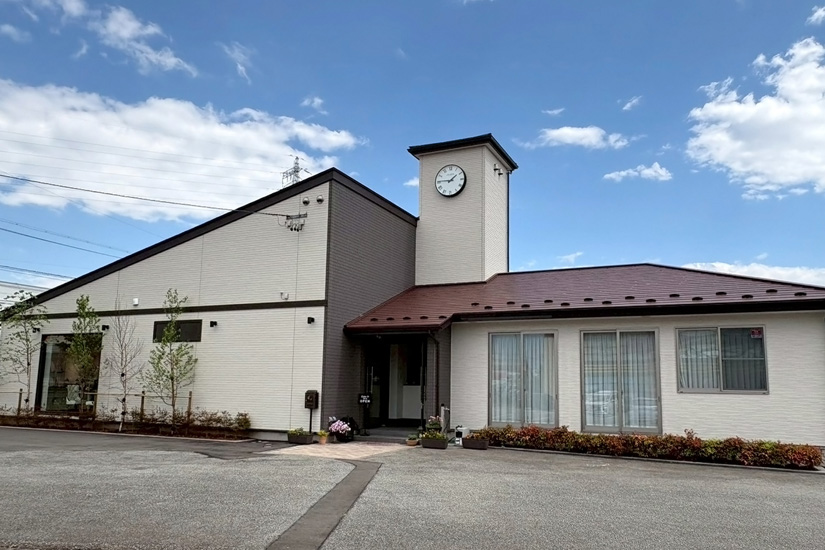
The store’s symbol is a white clock tower that seems to melt into the sky. Designed under the concept of ‘A jewelry store with a clock tower overlooking Mt. Asama,’ its exterior is eye-catching from afar, making it easy for first-time visitors to find.
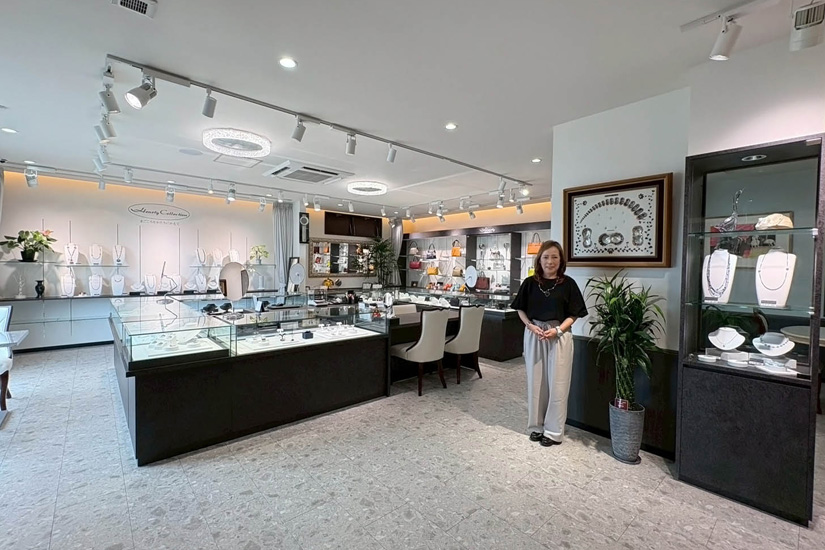
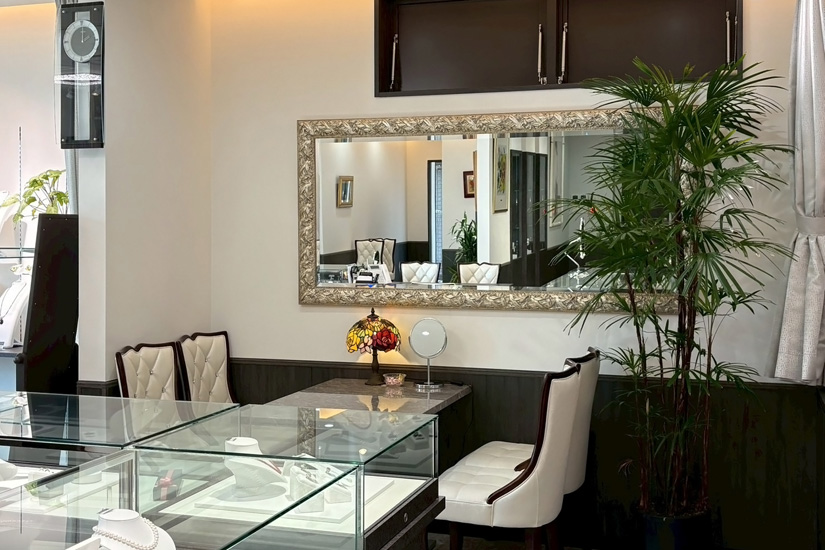
Step inside, and a clean, high-quality space with a white base unfolds. Elegant Italian furniture and tasteful art pieces placed throughout create a refined and calm atmosphere. While gazing at the sparkling jewelry, you can feel time slow down in this relaxing space. The store also offers a beautiful view of Mt. Asama. Enjoying the majestic scenery through large windows while leisurely selecting your favorite jewelry is a unique experience that has become popular.
The reason Miss Hearty Saku Store is supported by many lies in its commitment to jewelry quality. It places high importance on the quality of both gemstones and precious metals, carefully selecting them. For those who prioritize material quality over brand names, this is an ideal jewelry store.
Particularly noteworthy is its selection of colored stones. From classic to rare stones, it boasts one of the largest lineups in the prefecture. If a colored stone is not in stock, you can consult with staff to have it sourced, so those looking for a birthstone for a loved one or themselves are encouraged to ask.
Whether you’re looking for rings, necklaces, or earrings, experienced staff will provide attentive support when you share your preferences. Additionally, the store also handles leather bags, wallets, and clothing, making it a convenient one-stop shop for total fashion for adult women.
The store is also reputed for easily accepting jewelry repairs and remodels, even for items purchased elsewhere. Whether to pass down treasured jewelry to the next generation or to revive genuine jewelry as a forever-shining item, staff with years of knowledge and experience will support your wishes. Feel free to consult them about anything jewelry-related.
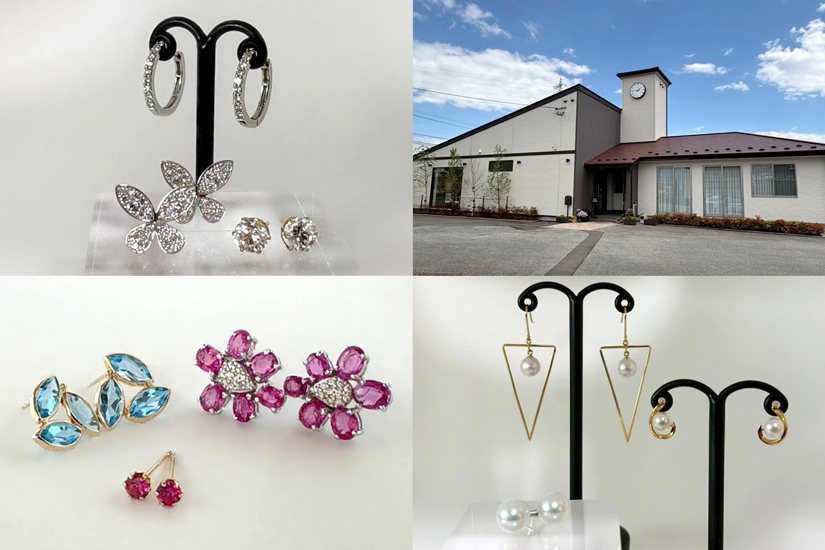
The ‘Earring & Pierce 1,000 Piece Fair’ will be held for five days from July 24 (Fri) to July 28 (Tue), 2026. Notably, a curated selection of 1,000 earrings and piercings will be gathered together exclusively from July 24 (Fri) to July 26 (Sun).
*All photos are for illustrative purposes.
The lineup includes diamond and colored stone pieces that add sparkle to fashion, pearls perfect for milestone occasions, and precious metal pieces like gold and platinum, covering casual to formal designs. Piercing-type earrings are also available for those without pierced ears.
Don’t miss the affordable pricing made possible by direct sourcing. Carefully selected items with high-quality gemstones and metals at value prices are a highlight of this fair.
Starting July 26 (Sun), the ‘Art Glass Fair’ will also be held simultaneously. ‘Art Glass’ is a glasses collection combining frames woven with silk threads and the manufacturer’s unique color lenses with blurred upper and lower eye areas. Its effect is said to beautifully enhance the eyes as if professionally made up. These special items can be called ‘jewelry for the eyes.’
By actually trying them on, you can experience their appeal firsthand. Even regular users can get adjustments and lens replacements during the event, so be sure to stop by.
– Period: July 24 (Fri) – July 28 (Tue), 2026
– Hours: 10:00 – 18:30
– Venue: Miss Hearty Saku Store (2340-1 Iwamurata, Saku City, Nagano Prefecture) → MAP
– Fair Details HP: https://www.miss-hearty.co.jp/category/blog/
Sparkling jewelry elevates oneself. Visit Miss Hearty Saku Store to find that one piece that lifts your spirits and fashion.
Miss Hearty Saku Store
– Address: 2340-1 Iwamurata, Saku City, Nagano Prefecture
– Phone: 0267-88-6414
– Business Hours: 10:00 – 18:30
– Regular Holidays: 2nd and 4th Sundays, Mondays (irregular holidays; check HP for details)
*Open during the ‘Earring & Pierce 1,000 Piece Fair’ period
– HP: https://www.miss-hearty.co.jp/