【Europe】Europe Costume Jewelry Market Size, Share & Trends, 2033

Editor’s Note

This article examines costume jewelry’s evolving role at the intersection of fast fashion and sustainability, highlighting new regulatory pressures within the EU’s circular economy framework.

The Europe costume jewelry market size was calculated to be USD 9.24 billion in 2024 and is anticipated to be worth USD 17.06 billion by 2033

Costume jewelry refers to non-precious wearable accessories crafted from base metals, alloys, synthetic stones, glass, and recycled materials, designed primarily for fashion expression rather than intrinsic material value. This segment occupies a distinct cultural and commercial space where rapid style cycles, sustainability consciousness, and affordability converge. According to the European Environment Agency, the textile and accessory sector generates over 16 million tons of waste annually, prompting heightened scrutiny of material sourcing and end-of-life management. The European Commission’s Circular Economy Action Plan now explicitly includes fashion accessories under extended producer responsibility schemes, requiring brands to disclose the material composition and recyclability of their products. In this context, costume jewelry is evolving from a transient fashion accessory into a design category increasingly evaluated on ethical production transparency and circular potential, reflecting broader European consumer values around conscious consumption and aesthetic democratization.

The instability due to fluctuating costs and availability of key inputs, such as base metals, synthetic resins, and specialty finishes, is additionally hampering the growth of the European costume jewelry market. Brass and zinc core alloys for casting are heavily influenced by global commodity markets and energy prices, which spiked during the 2022 energy crisis. According to Plastics Europe, the cost of acrylic and ABS resins used in faux gemstones rose by 38% between 2021 and 2023 due to natural gas dependency in polymer production. Simultaneously, geopolitical tensions disrupted the supply of critical components, as over 70% of global zirconia (used in simulated diamonds) originates from China and Ukraine, according to the European Raw Materials Alliance, with shipments delayed during 2022 and 2023. These pressures squeeze margins for European assemblers, who operate on thin profitability, typically 15 to 25%, as confirmed by industry data from Italy and Spain. Unlike luxury brands, they cannot easily pass costs to price-sensitive consumers.

Integration of Recycled and Bio-Based Materials Appeals to Eco-Conscious Shoppers

The shift toward circular design in fashion accessories for brands to differentiate through sustainable material innovation is expected to create new opportunities for the growth of the European costume jewelry market. Consumers are increasingly scrutinizing environmental footprints; 62% of EU shoppers now consider material origin a key purchase factor, according to the European Consumer Organisation. The European Environment Agency confirms that jewelry made from post-consumer recycled metal reduces carbon emissions by up to 85% compared to virgin material.

“Italy’s National Association of Goldsmiths reports that over 300 small jewelry workshops now use certified recycled silver and brass supplied by urban mining initiatives that recover metals from electronic waste.”

Furthermore, the EU Ecolabel scheme is developing criteria for fashion accessories, which will reward products with verified recycled content and non-toxic finishes. With Gen Z consumers willing to pay up to 22% more for sustainable fashion, as per a 2023 Eurobarometer study, this ethical premium creates a viable path for value addition beyond price competition in a crowded market.

The digital transformation of retail enables costume jewelry brands to bypass traditional intermediaries and build direct relationships with consumers through personalized e-commerce experiences. The expansion of direct-to-consumer and personalization platforms is ascribed to bolster the growth of the European costume jewellery market. DTC brands leverage customer data to offer bespoke engraving, modular designs, and limited edition drops that foster emotional connection and brand loyalty. According to the European E-Commerce Association, over 55% of independent jewelry brands in Europe now operate primarily through owned websites supplemented by social commerce rather than wholesale.

“In Sweden, the brand Layered uses an online configurator allowing customers to mix chains, pendants, and gem colors, creating over 10000 unique combinations, resulting in 40% higher average order value as confirmed by national retail analytics.”

The rise of made-to-order production also reduces inventory waste, aligning with circular economy principles. Additionally, platforms like Shopify and BigCommerce offer integrated tools for localized language, tax compliance, and EU consumer law adherence, making cross-border DTC feasible even for micro businesses.

Lack of Standardized Sustainability Labelling Impedes Market Growth

Despite high consumer interest in eco-friendly fashion, the absence of harmonized environmental claims for costume jewelry leads to greenwashing and eroded trust. The lack of standardized sustainability labelling is also impeding the growth of Europe’s costume jewelry market. Terms like “eco,” “green,” and “sustainable” are used inconsistently across brands with no mandatory verification or lifecycle assessment requirements. According to the European Consumer Organisation, 68% of EU shoppers find it difficult to verify sustainability claims on fashion accessories due to vague language and missing data on material origin or end-of-life recyclability.

“In 2023, the European Commission’s sweep of online retailers found that 42% of ‘eco-friendly’ jewelry listings lacked substantiating evidence, violating the Unfair Commercial Practices Directive.”

This opacity disadvantages genuinely sustainable brands that invest in certified recycled materials or take-back programs. Italy’s Fashion Chamber notes that only 15% of small jewelry makers can afford third-party certifications like GRS or OEKO-TEX due to cost and complexity. The upcoming EU Green Claims Directive aims to mandate scientific proof for environmental labels by 2026, but until then, the market remains fragmented.

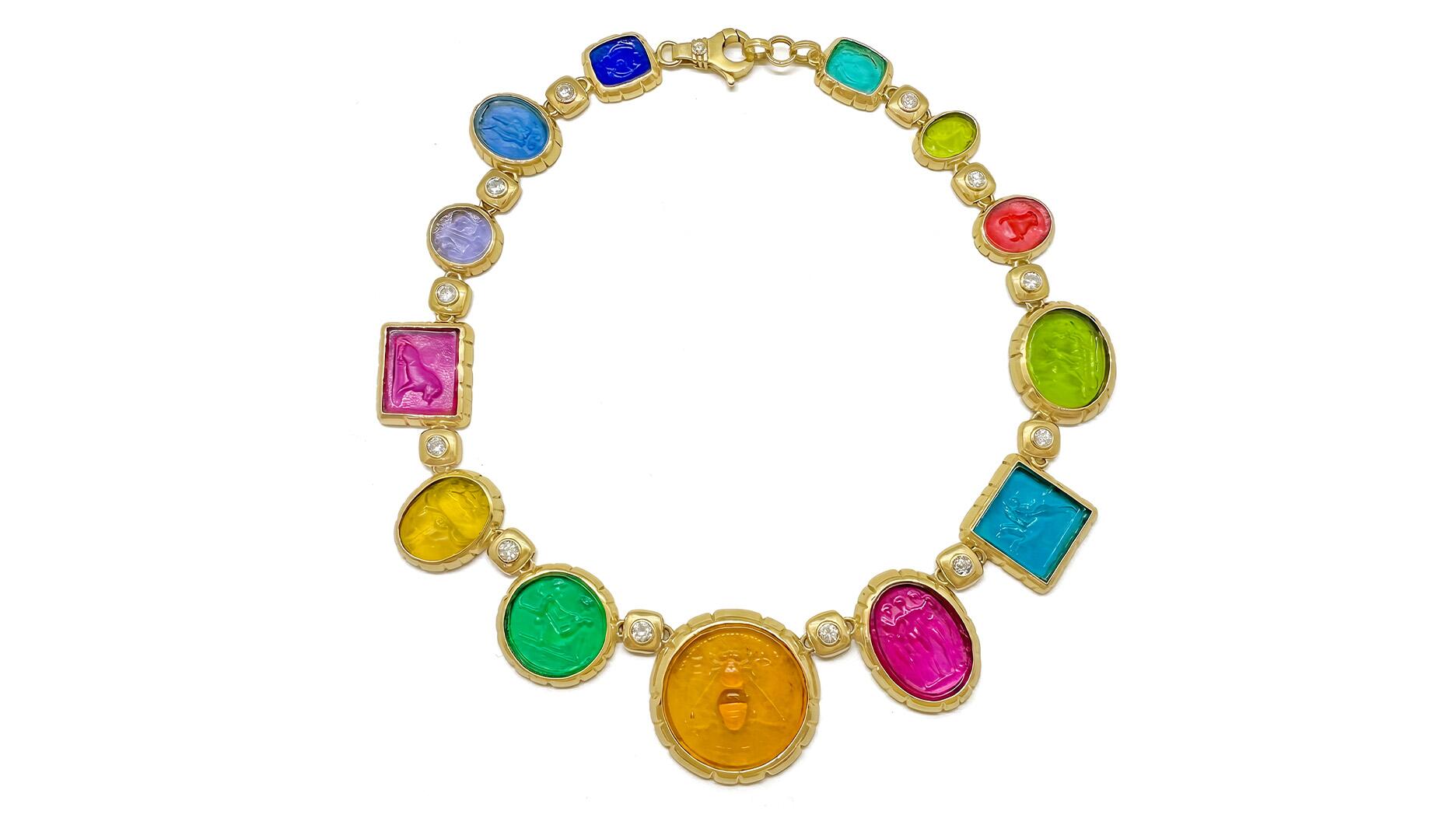
The necklaces and chains segment was the largest by holding 34.3% of the Europe costume jewelry market share in 2024
Full article: View original |
⏰ Published on: January 05, 2026