Editor’s Note
**Editor’s Note:**
This article highlights the rapid growth of the lab-grown diamond market, driven by sustainability, affordability, and shifting consumer values. As eco-consciousness and digital retail reshape the jewelry industry, lab-grown diamonds are emerging as a compelling alternative to mined stones.
Chemicals & Materials
Get Free Sample PDF
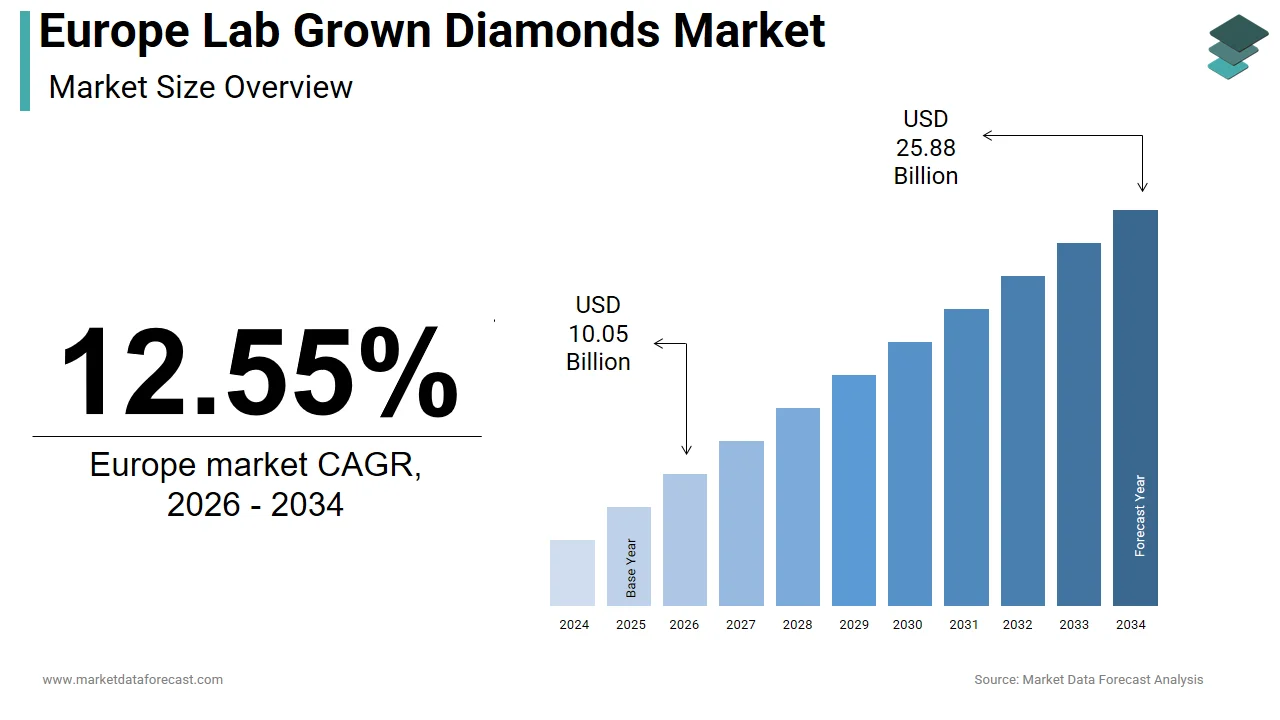
, is estimated to reach
, and is projected to reach
. Market growth is driven by increasing consumer preference for sustainable and ethically sourced diamonds, rising demand for affordable luxury products, and growing awareness of environmental concerns associated with traditional mining. Lab-grown diamonds offer similar physical and chemical properties to natural diamonds while being cost-effective and eco-friendly. The expansion of online retail channels, changing consumer perceptions, and strong demand from the jewelry industry are further supporting market growth across Europe.
affordable luxury jewelry
online jewelry retail platforms
, supported by strong demand for affordable jewelry.
Mini Diamonds, WD Lab Grown Diamonds, Lightbox Jewelry, De Beers Group, Solitario, Adamas One Corp, Diamond Foundry Inc., Element Six UK Ltd, Henan Huanghe Whirlwind Co., Ltd, Swarovski Created Diamonds, LVMH Moët Hennessy Louis Vuitton, Diam Concept, and ABD Diamonds.
Lab-grown diamonds represent a transformative shift in the luxury jewelry sector, characterized by the production of
jewelry
industry is increasingly scrutinized for its environmental footprint and labor practices, which is prompting a transition toward transparent supply chains. The European Union’s commitment to the Circular Economy Action Plan further supports materials that reduce ecological degradation. As per Eurostat, sustainability has become a key factor in consumer purchasing decisions across Europe, which is favoring products that reduce environmental impact. This cultural shift supports lab-grown alternatives, which eliminate the need for extensive mining operations. According to the Gemological Institute of America, lab-grown diamonds are confirmed to possess the same hardness and brilliance as natural diamonds, ensuring consumer confidence in their quality. Furthermore, the Federal Trade Commission in the United States, whose standards often influence global markets, has updated its guidelines to recognize lab-grown diamonds as real diamonds, removing the term synthetic. This regulatory clarity enhances market acceptance in Europe. The sector is not merely a substitute but a distinct category appealing to modern consumers who prioritize ethical sourcing without compromising on aesthetic value or durability.
Ethical consumerism is primarily promoting the adoption of lab-grown diamonds across Europe, which is one of the key market drivers. Modern shoppers are increasingly aware of the human rights issues and environmental degradation associated with traditional diamond mining. As per McKinsey and Company, consumers in Europe consider sustainability and ethical sourcing as critical factors when buying luxury items. This demographic shift is particularly pronounced among Millennials and Generation Z, who constitute a substantial portion of the jewelry-buying population. These consumers prefer brands that offer full transparency regarding the origin of their products. Lab-grown diamonds provide a verifiable chain of custody that eliminates concerns about conflict diamonds or unsafe labor conditions. The Kimberley Process Certification Scheme, while effective in reducing conflict diamonds, has faced criticism for not addressing broader environmental and social issues. Consequently, lab-grown options present a cleaner alternative. According to the World Wildlife Fund, mining activities can lead to biodiversity loss and soil erosion, which environmentally conscious buyers seek to avoid. Jewelry retailers in Europe are responding by highlighting the ethical advantages of lab-grown stones in their marketing campaigns. This alignment with consumer values drives demand and encourages brand loyalty. Companies that fail to address these ethical concerns risk losing market share to competitors who embrace sustainable practices. The desire for guilt free luxury thus propels the growth of the lab-grown diamond segment, as it offers a morally sound choice for celebratory and everyday jewelry.
The cost advantage of lab-grown diamonds compared to mined stones is a significant driver of the lab-grown diamonds market expansion in Europe. Lab-grown diamonds typically retail at 30% to 50% less than natural diamonds of comparable size and quality. This price differential makes high-quality diamond jewelry accessible to a broader segment of the population. As per Bain and Company, the average price per carat for lab-grown diamonds has decreased steadily over the past decade, enhancing their appeal to budget-conscious consumers. This affordability allows buyers to purchase larger or higher clarity stones within their financial limits, increasing the perceived value of the transaction. The economic uncertainty prevalent in various European regions further incentivizes consumers to seek value-driven alternatives without sacrificing luxury. According to the European Central Bank, inflationary pressures have influenced household spending patterns, leading to more deliberate purchasing decisions. In this context, lab-grown diamonds offer an attractive compromise between aspiration and affordability. Retailers leverage this price advantage to attract younger customers who may be entering the engagement ring market for the first time. The ability to offer customizable designs at lower costs also stimulates demand. Furthermore, the reduced entry barrier encourages experimentation with fashion jewelry, where trends change rapidly. This economic accessibility ensures that lab-grown diamonds are not viewed merely as a niche product but as a viable mainstream option for diverse consumer segments across the continent.
Search Keywords: jewelry retailer