Editor’s Note
**Editor’s Note:** This week’s Rapaport Market Comment highlights a mixed diamond landscape: while 1-carat demand picks up and supply tightens, prices remain stagnant. Positive sentiment emerges from India and steady US wholesale activity, offset by production pauses at De Beers’ Venetia mine and the closure of Canada’s Ekati mine. Industry leadership shifts with Mehul Shah elected WFDB president and the Israel Diamond Exchange’s return. A 1,305-carat Lucara discovery underscores ongoing high-end potential amid broader market weakness.
July 16, 2026
1 ct. demand picking up and supply falling, but prices not recovering. Indian sentiment improving. US wholesale active despite summer vacation. India’s Mehul Shah elected WFDB president at eventful World Diamond Congress in Singapore. Israel Diamond Exchange rejoins WFDB. De Beers to pause production at Venetia mine, reflecting weak market for small, low-value diamonds. Canada’s Ekati mine to close. Lucara finds 1,305 ct. diamond, its 10th over 1,000 ct. Belgium 1H polished exports +18% YOY to $3.7B. Dubai 2025 polished trading up c.25% to $18.7B. Richemont fiscal 1Q sales at jewelry maisons (Cartier, Van Cleef) +21% to $5.4B. Rapaport Auctions holds first diamond viewing in India.
Weekly | Monthly | Y2Y
0.30 ct: 0.03% | 3.69% | -22.15%
0.50 ct: 0.22% | 1.02% | -24.82%
1.00 ct: -0.02% | -0.33% | -15.14%
2.00 ct: -0.29% | -0.81% | -6.10%
3.00 ct: 0.06% | 1.08% | -0.54%
United States: Contractors manufacturing for brands busy…
Belgium: Market quiet as summer period sets in…
Israel: WFDB members vote to readmit Israel Diamond Exchange at World Diamond Congress…
India: Buyers more confident, and sellers firmer on prices of sought-after goods amid shortages…
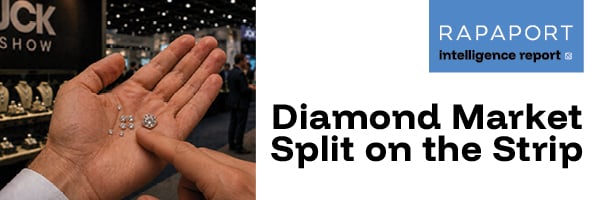
Hong Kong: Chinese consumers increasingly buying diamonds for personal milestones and daily wear rather than marriage, preferring loose diamonds with custom settings…
By Leah Meirovich
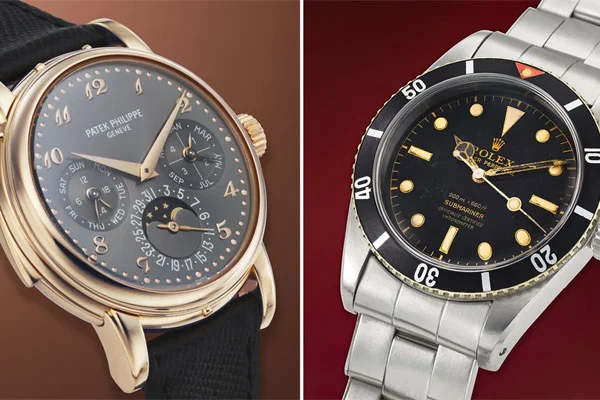
Auction houses, secondhand sellers, and jewelry insurers weigh in on which timepiece brands are the most popular, who’s buying them, and how much they’re paying.
By Joshua Hendren
For Gen Z consumers, buying a luxury timepiece is first and foremost about self-expression and personal aesthetic.
By Richa Goyal Sikri
Though demand slipped after a pandemic-era sales spike, the organic revival of a true collector’s market has led to sustained recovery.
Small-Diamond Recovery Accelerates in June
0.30 ct. RAPI up 4.2%, a bigger gain than in May.
De Beers to Suspend Production at Venetia Mine
Move reflects market shift to higher-value diamonds.
Strong Jewelry Segment Boosts Richemont Sales in First Quarter
Revenue for division up 21%, with growth in all regions.
Watches of Switzerland’s Revenue Continues to Grow
Sales for full year up 11% to $2.44 billion.
Mehul Shah Wins WFDB Presidential Bid
Vice president of Bharat Diamond Bourse will take over from Yoram Dvash.
Ekati Deposit to Close as Buyers Fail to Step Up
Owner Burgundy Diamond Mines will run out of money by July 17, according to legal filings.
Lucara Digs Up Massive 1,305ct. Rough from Karowe
Stone is miner’s 10th over 1,000 carats.
Dubai Sees Record-High Diamond Trade in 2025
Total value up 16% to $41.7 billion for the full year.
Antwerp’s Diamond Trade Sees Positive Momentum
Combined imports and exports up 9% in value and 14% in volume year on year in first half.
FCRF and Cutwise Unveil Pricing Tool for Colored Diamonds

Platform will allow manufacturers to optimize cutting according to market value.