Editor’s Note
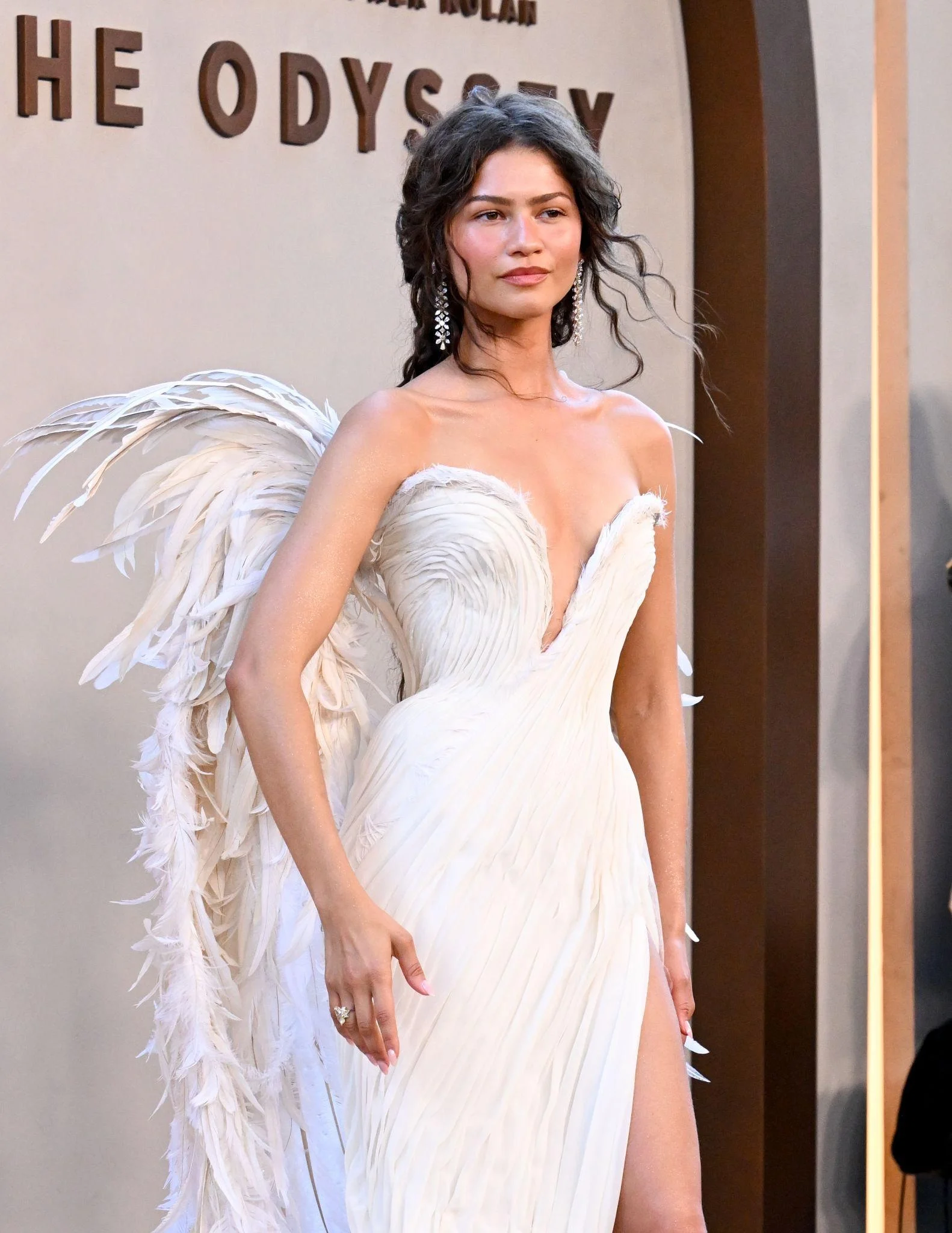
Zendaya channels Athena’s divine elegance during ‘The Odyssey’ press tour, dazzling in Chopard Haute Joaillerie across London and New York. Her three red carpet looks underscore a consistent, captivating image that complements her standout role in the star-studded cast.
During the promotional tour for ‘The Odyssey,’ Zendaya transformed into the goddess Athena, selecting Chopard Haute Joaillerie creations for three notable red carpet appearances in London and New York.
Among the star-studded cast, Zendaya is one of the faces that has particularly captured attention. Beyond her on-screen performance, the promotional campaign for ‘The Odyssey’ also demonstrates the consistency of her image, with her three appearances in London and New York showcasing Chopard Haute Joaillerie pieces.
For her first appearance in London, Zendaya chose a high jewelry necklace in 18-karat white gold set with over 76 carats of diamonds. The centerpiece of this jewel is the central diamond, weighing over 12 carats, set at the lowest point of the multi-tiered composition. The highlight of this creation lies in Chopard’s work on the proportions between the center stone and the surrounding rows of diamonds. The diamonds, of increasing size, are arranged along the natural curve of the neckline, creating a sense of fluidity rather than a succession of distinct layers. With the wearer’s movements, light diffuses evenly across the entire jewel before converging on the center stone, sparkling like a constellation of stars against the backdrop of a sculptural and captivating gown.
For her second appearance on the same promotional day, Zendaya opted for chandelier earrings from the Chopard Haute Joaillerie line. These stunning tiered earrings showcase Chopard’s exceptional craftsmanship in assembly. Instead of forming a single rigid block, the diamond clusters are connected by small, highly flexible links, allowing each element to move independently. The arrangement of the diamonds is harmoniously rhythmic: the larger stones draw the eye, while the smaller ones, acting as links, enlarge the reflective surface. This composition gives the earrings undeniable elegance despite the abundance of diamonds, while enhancing the natural features of the face.
For the New York premiere, Zendaya opted for a pair of long high jewelry earrings in white gold and diamonds, true to her style. Unlike the chandelier earrings seen in London, these are based on a linear structure where the diamonds are arranged vertically. The spacing between each stone is calculated with meticulous precision so that light travels through the entire jewel, creating a uniform sparkle from start to finish. This choice also creates the characteristic visual effect of long pendant jewelry. The diamond chain extends along the neck and delicate face, drawing all eyes to Zendaya’s expression. In this Athena-inspired look, the earrings further accentuate the beauty worthy of the ‘goddess of wisdom’ she embodies.
It is noteworthy that Zendaya’s three appearances feature white diamonds, a color associated with Greek epics. This choice clearly reflects the importance the creator places on light and proportions. Rather than using colored stones to create contrast, Chopard exploits the purity of the diamond to create different plays of reflections, allowing each piece to change appearance depending on the viewing angle and lighting conditions. In Vietnam, the Chopard brand is officially distributed by Tam Son International Company.
