Editor’s Note
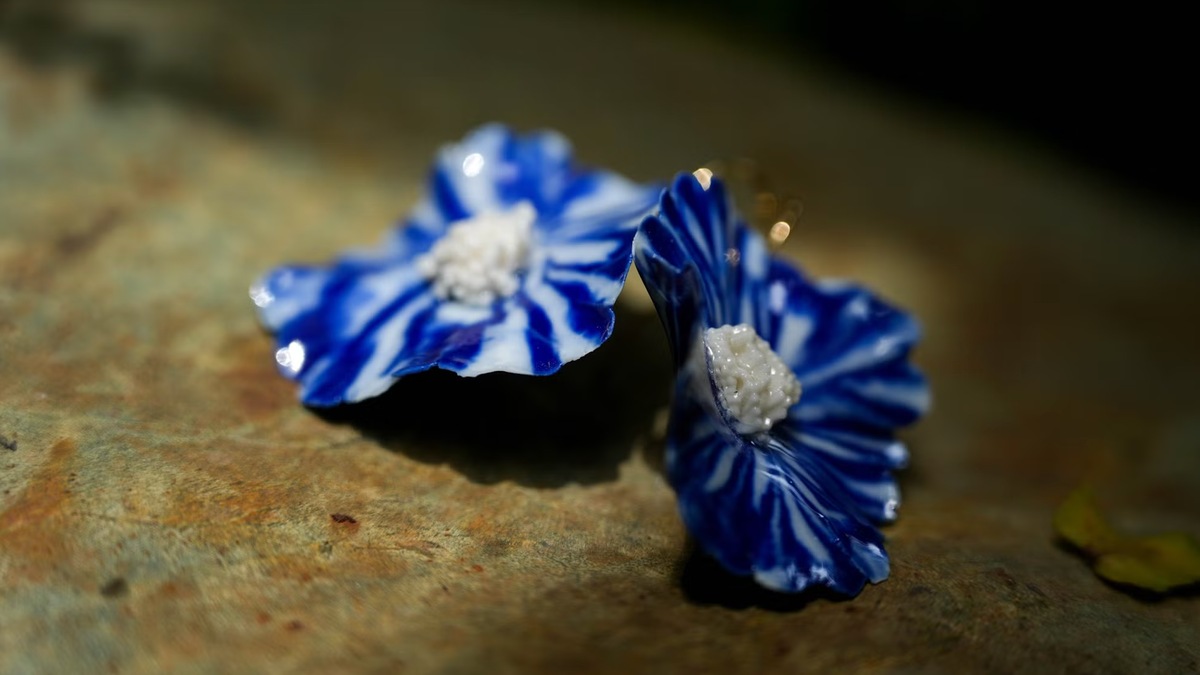
This piece highlights how Ms. Li Li of LeLiLi Studio reimagines everyday household materials into artistic jewelry, blending meticulous craftsmanship with modern design. Each porcelain flower reflects hours of handwork and kiln testing, capturing the delicate essence of real petals.
Thanks to the creativity and skill of Ms. Li Li (founder of LeLiLi Studio), materials originally used for household items are transformed into new, unique, and artistic jewelry, reinterpreted in a modern key.
To achieve the transparency and fragility of real flower petals, each porcelain flower is the result of hours of meticulous handcrafting and rigorous kiln testing.
The most challenging phase is shaping the petals, which requires intense concentration.
Each flower is fired three times, reaching a maximum temperature of 1,250 degrees Celsius.
The transparency and durability of ceramic jewelry depend largely on the quality of the clay and the firing temperature. However, for products with crystalline glaze effects, the artist must apply in-depth knowledge of non-metallic inorganic silicate chemistry to perfect and create unique glazes.
Before the final firing, Li Li skillfully adorns each flower with vibrant colors. The artist’s spontaneous brushstrokes give each flower a unique appearance.
The idea of creating ceramic jewelry had been brewing in Li Li’s mind for 10 years, but she had to put it aside because the concept was still unknown to Vietnamese people. However, with the growing popularity of more sophisticated and detailed handmade products, she realized it was time to bring her unfinished dream to life.
At first sight of the product, many customers were amazed by its exquisite craftsmanship and realism.
Starting with the first products, enthusiastically received by visitors to the Bat Trang Ceramics Museum, Li Li is expanding her promotion on online channels to introduce Vietnamese handmade ceramic jewelry to the public.
The charm of Vietnamese ceramic jewelry has also captivated international tourists.
According to Hoang Thu Hien (25 years old, Hung Yen), the combination of traditional craftsmanship and the artist’s innovative spirit is opening new opportunities for ceramic work.
QUYNH ANH