Editor’s Note
**Editor’s Note:** In this piece, Amrita Katara, our Regional Editor for Watches and Jewellery, explores the growing trend of luxury timepieces as investment assets. Drawing on her deep expertise in Asian market dynamics and global luxury trends, she offers a nuanced perspective on balancing aesthetic pleasure with financial prudence.
As Regional Editor for Watches and Jewellery and Head of Editorial Content for Tatler GMT, Amrita Katara specializes in covering the luxury watch and jewellery industry in Asia, with expertise in editorial strategy, article writing, and interviews with industry leaders. Her previous professional experience ranges from luxury lifestyle media to client partnerships. Based in Mumbai, Amrita’s work bridges global trends with Asian market insights.
Are ‘Luxury Investments’ the Smartest Way to Wear and Protect Your Wealth?
By Amrita Katara
Jul 18, 2026
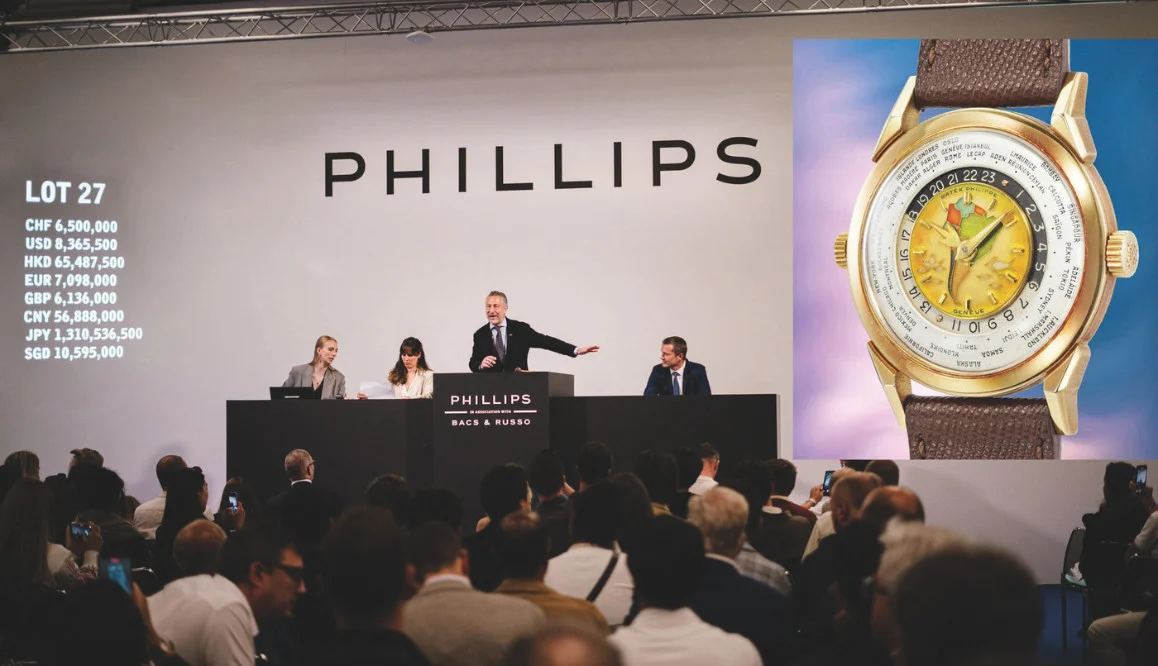
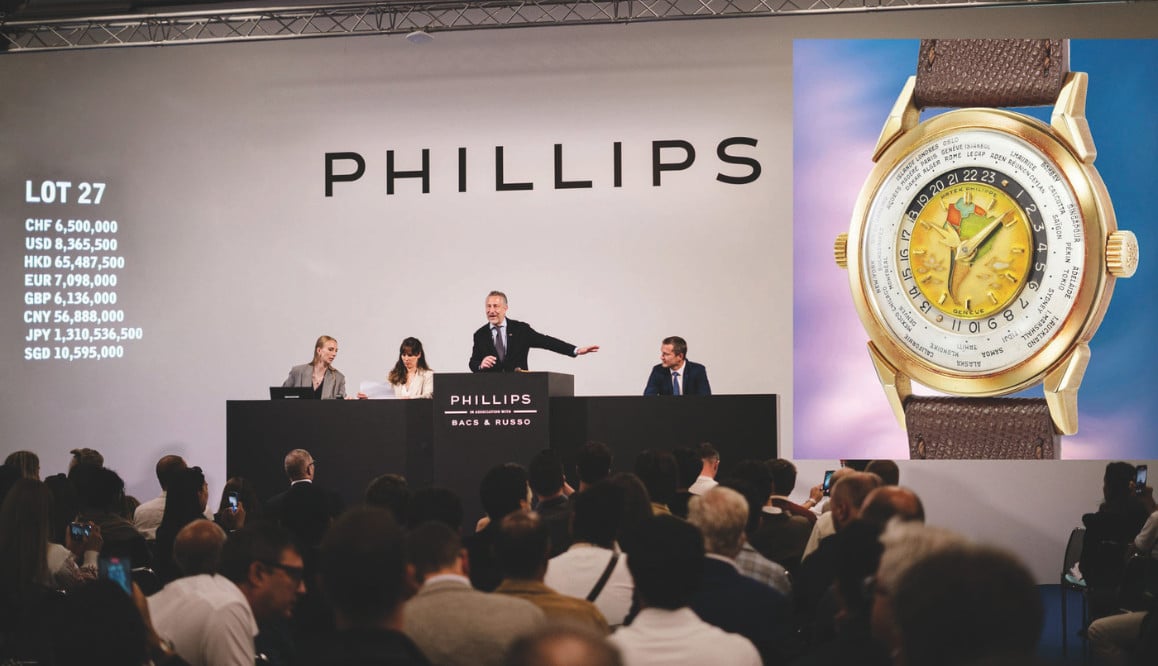
While markets remain volatile, luxury investments in high-end goods are becoming essential for wealth preservation (Photo: courtesy of Phillips Watches)
As stock markets fluctuate and gold continues to break records, the most sophisticated investors are asking a crucial question: what if your portfolio could be worn on your wrist or around your neck? Tatler explores with industry experts why ‘Luxury Investments’ are becoming an increasingly tangible form of wealth.
The price of gold surpassed $5,500 USD at the end of January this year, stabilizing around $4,500 per ounce in June. A figure that, just two years ago, would have seemed pure fantasy; at the start of 2024, the value was $2,063. According to the World Gold Council, the metal gained 67 percent in 2025, recording 53 all-time highs. Despite the slowdown due to tensions in the Middle East, the validity of including physical ‘Luxury Investments’ in one’s portfolio remains indisputable.
Watches, jewellery, gemstones, and works of art: what was once considered merely ‘passion’ is now being reassessed on a large scale. The 2026 Long Angle study found that nine out of ten investors, with an average net worth of $17 million, now hold private or alternative assets, with nearly 30 percent of total wealth outside public markets. The real challenge for those targeting these ‘Luxury Investments’ is to choose wisely and safeguard assets securely.
Mario von Bergen, co-founder of Splint Invest, explains to Tatler:
The entry threshold, however, was often prohibitive. His solution was fractional co-ownership of high-value assets, an approach that attracts those seeking to improve portfolio resilience through selected ‘Luxury Investments’.
In case you missed it:
High jewellery at Paris Couture Week: 101 carats of pure beauty
Sharon Chan, international director of Bonhams, observes a similar logic in auctions. “High-quality watches are increasingly seen as portable assets: collectible and ready to balance a portfolio based on ‘Luxury Investments’. Models like the Rolex Daytona or Submariner, and classic references from Patek Philippe or Audemars Piguet, retain value thanks to constant global demand.” The priority, Chan emphasizes, is not just rarity, but quality and design recognition.
Auction data from 2026 confirms that watches are no longer a niche but an integral part of consumer portfolios. Demand for gold pieces, independent brands, and neo-vintage models highlights how these ‘Luxury Investments’ are taking on a strategic financial role. Knowing the real market value transforms the purchase into a well-considered financial decision.
Even at the top of the market, the dynamic changes, with collectors targeting pieces of historic rarity. Thomas Perazzi of Phillips states:
At the Geneva auction in May, as many as 14 timepieces exceeded one million Swiss francs. The resilience of these ‘Luxury Investments’ also stems from a young and global buyer base.
The Knight Frank 2025 Wealth Report highlighted a 147 percent growth in watch prices over ten years. Gold prices have given further impetus, making solid gold bracelets highly sought after. Investing in these items means protecting capital with assets that appreciate over time.
Read more:

The best tennis bracelets to show off at Wimbledon 2026
Jean Ghika of Bonhams argues that jewellery also acts as a hybrid asset, combining intrinsic value and emotional resonance. In an uncertain economic climate, clients see jewellery as wearable ‘Luxury Investments’. Interest is strong for signed pieces and art deco jewellery with documented provenance. Rarity, in this case, is the key to achieving prices that exceed expectations.