Editor’s Note
**Editor’s Note:** This piece explores the complex valuation of championship rings, where material worth is often eclipsed by rarity and symbolic significance. A recent auction—Kobe Bryant’s 2000 Lakers ring selling for $927,000—underscores how emotional and historical weight can drive prices far beyond craftsmanship and gold.
Determining the exact price is not simple, because the value of such a jewel depends not only on the materials and craftsmanship, but also on its rarity and symbolic significance. A monstrous price, placing the World Cup ring on par with the celebratory jewelry of American leagues. To understand the economic potential of these items, consider that the 2000 NBA championship ring of the Los Angeles Lakers, gifted by Kobe Bryant to his father Joe, was auctioned in 2024 for $927,000. This data suggests that over the years, the symbolic value can far exceed the purely material one.
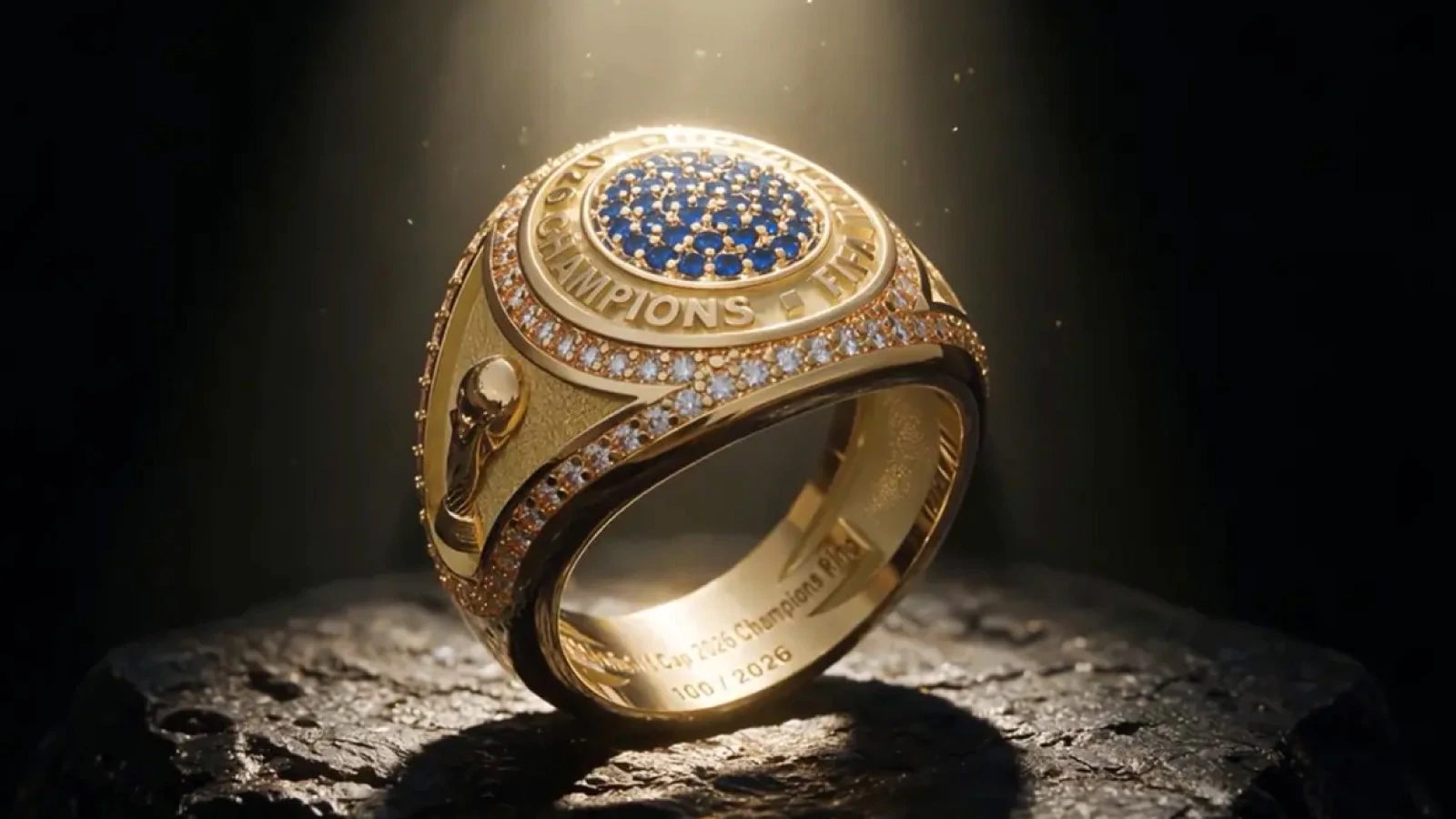
Official images have not yet been released, but renderings circulating among industry insiders reveal a jewel of imposing presence. The structure will be in solid 14 or 18 karat gold, with a diamond pavé covering most of the surface. Completing the design, sapphires and rubies are set to evoke the colors of the FIFA logo and those of the winning federation. On one side of the ring will be the iconic World Cup Trophy, on the other the personalized crest of the champion national team, complete with the name and year of triumph. The chosen style is that of a signet ring, with a medieval spirit, where the jewel served as a seal of authenticity and belonging. A design that certainly does not go unnoticed, in line with the philosophy of American sports jewelry where sobriety has never been the main parameter.
FIFA has announced a limited production of 2,026 specimens, each distinguished by a unique serial number engraved inside. Of these, thirty will be destined for the winning national team: twenty-six for the selected players and four for staff members chosen by the federation. Immediately after the final whistle of the decisive match, the captain and coach of the champion team will receive provisional rings to celebrate the event. The real jewels, personalized with the specific details of each recipient, will be delivered at a later time to ensure the perfect fit of the ring for each protagonist. The remaining 1,996 specimens will instead be put on sale as official merchandise. A commercial move that will allow fans around the world to own a replica of the champions’ jewel, naturally at a far from negligible financial investment.
Estimates from industry experts, reported by specialized magazines and international outlets such as the Daily Mail, speak of a production cost between $30,000 and $50,000 per specimen, a figure that rises considerably when talking about market value. Copies intended for public sale could reach £110,000, equivalent to approximately €130,000 or $150,000.
The introduction of the champions’ ring represents a further crossover between American sports culture and world football. In the NBA, NFL, and MLB, championship rings have been an institution for decades: each year, the winners of their respective finals receive a gold and precious stone band engraved with the team name, league logo, and year of triumph. The production cost of these rings ranges between $30,000 and $150,000, depending on the carats, the stones set, and the complexity of the workmanship. FIFA’s decision to embrace this tradition is no coincidence: the 2026 World Cup is being played precisely in the United States, Canada, and Mexico, three countries where American sports entertainment is dominant. The ring thus joins the World Cup and the gold medal as a third symbol of victory, creating a bridge between two sporting worlds that have traditionally followed separate paths. A choice that amplifies the hype around the final and transforms the jewel into an object of desire for collectors and enthusiasts worldwide.
Each ring intended for the public will be sold with a personalized certificate of authenticity.