Editor’s Note
**Editor’s Note:** Hanoi’s diamond market has stabilized after recent smuggling prosecutions, yet lingering buyer doubts over quality and certification authenticity continue to dampen activity.
Hanoi’s diamond market has calmed following a series of prosecutions of industry companies for smuggling, but many buyers remain concerned about quality and the authenticity of certifications.
Báo Tuổi Trẻ • 19/07/2026
A jewelry store in Hanoi – Photo: N.AN
Observations made on July 19 at several jewelry stores in Hanoi revealed low market activity, with few customers interested in buying diamonds. A reporter from Tuoi Tre newspaper, posing as a customer interested in purchasing diamonds, noted that each store had a different sales policy for these products.
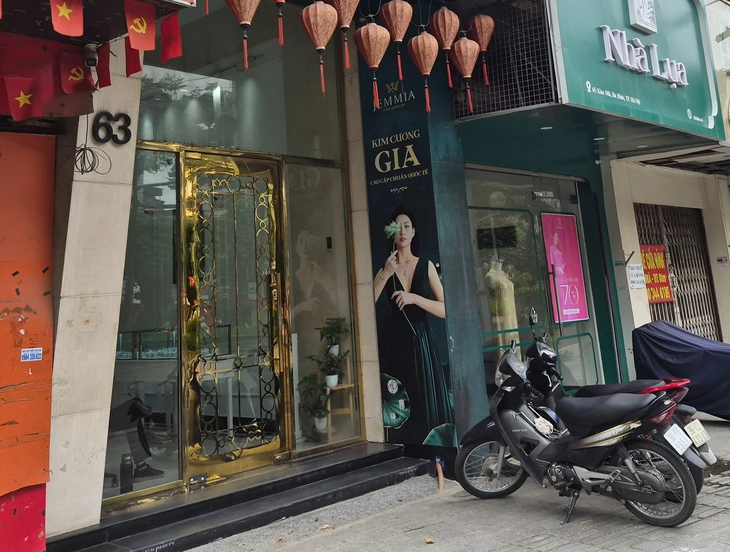
On Kim Ma Street, Jemmia Diamond, a Vietnamese diamond brand recommended by experts as one of the most prestigious jewelers in Hanoi, displayed numerous diamonds around midday, but there were no customers looking or buying anything; only two employees and a security guard were present.

According to staff, diamonds are mainly imported from India. Each product comes with documents such as GIA certification (a diamond quality grading and evaluation certificate issued by the Gemological Institute of America), a VAT invoice, etc.
Staff members present a QR code to verify product quality – Photo: N.AN
According to staff, each diamond (with a minimum size of 3.6 mm) will have a unique verification code for comparison and cannot be counterfeited.
Each certificate includes a scannable code that displays full information, allowing buyers to verify it on the GIA website. According to the company’s sellers, if the diamonds are of the right quality, most must undergo a quality certificate.
However, not all diamonds have GIA certification. Some jewelry stores in a prestigious Hanoi shopping center stated that GIA certification only applies to certain large diamonds that meet certification standards.

On the afternoon of July 16, Phu Nhuan Jewelry Joint Stock Company (PNJ) sent a document to the Ho Chi Minh City Stock Exchange (HOSE) revealing unusual information related to diamond quality testing, business process audits, and loan guarantees for its subsidiaries.
A customer expressed concern about whether product quality was guaranteed even with a certificate. The employee explained that when purchasing a product, customers receive a certificate whose QR code they can scan to access the certifying body’s website and check product specifications.
PNJ products undergo quality checks conducted by the company, and only products with a diameter of 4.2 mm or larger are inspected, according to information from an employee at a Hanoi store. Photo: N.AN
A Thai-brand jewelry store stated that only some of the diamond lines it distributes have GIA certification, mainly products with sizes starting from 3.6 mm.
For smaller products, quality checks will be performed using a standard test pen instead of testing small pieces, and a product warranty card will be provided.

The problem is that each place has a different inspection method.
Nearby, Diamond World of Dojo also displays products with GIA certification, applicable to items with a size of 3.6 mm or larger. For some high-end diamond lines, IGI (International Gemological Institute) certification will be applied.