Editor’s Note
The Vietnamese diamond market faces a deepening crisis as a surge in buyback demands and quality disputes force major brands to suspend operations, signaling a broader industry restructuring.
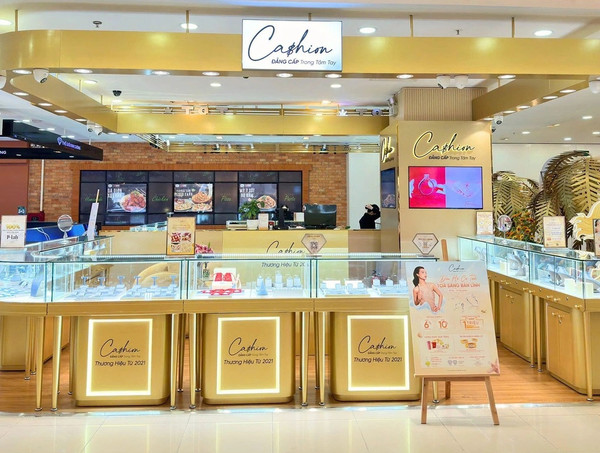
Cashion, a diamond brand with stores in major shopping malls nationwide including Ho Chi Minh City and Hanoi, has temporarily suspended operations. Photo: Cashion.
[ASEAN DAILY = Reporter Kim Seong-ho]
The Vietnamese diamond market is facing a severe crisis of trust, as a wave of large-scale buyback demands from consumers coincides with quality controversies. Major brands are successively suspending operations or halting buyback services, signaling a widespread restructuring movement across the industry.
According to industry sources in Vietnam on the 19th, diamond brand Cashion announced it would suspend operations for approximately two months, citing a deteriorating market environment.
Cashion, which operates stores in major shopping malls nationwide including Ho Chi Minh City and Hanoi, stated that it is “difficult to maintain the current business model” and hinted at the possibility of resuming operations in a new form after restructuring.
Quế Jewelry and Hoàng Thứ Jewelry, diamond specialists in Ho Chi Minh City, also recently suspended operations temporarily. Both companies explained that the measures are aimed at reorganizing internal operations and restructuring their business structures amid increasing market uncertainty.
Earlier, PJA Diamond & Jewelry was unable to withstand a liquidity crisis after over 90% of its customers simultaneously demanded diamond buybacks, ultimately leading to the closure of its business. Some other companies have also temporarily suspended buyback services due to the burden of rapid cash outflows.
The current turmoil is analyzed to have been triggered by a combination of diamond quality controversies that recently spread on social media and an investigation into a diamond smuggling case involving approximately 30,000 stones, which has rapidly heightened consumer anxiety. Industry reports indicate a significant increase in consumers requesting diamond appraisals and quality re-inspections.
In particular, this incident is casting doubt on the sustainability of the ‘buyback system,’ a core sales method in the Vietnamese diamond market. Until now, the promise that “you can resell anytime” has been a crucial trust mechanism driving consumer purchases. However, when large-scale buyback requests materialized, some companies failed to handle them, shaking the trust in the entire market.
Local experts view this incident as a test of the trust system in Vietnam’s diamond market, beyond just the financial difficulties of a few companies.
Consumers have long purchased diamonds trusting the buyback policy that “you can resell anytime.” However, as large-scale buyback demands became a reality, some companies were unable to cope. Going forward, it is predicted that not only diamond quality but also a company’s financial strength and trustworthiness in fulfilling buyback promises will become key criteria determining brand competitiveness.
Keywords
#Vietnam
#vietnam
#ASEANDAILY
#aseandaily
#VietnamDiamond
#kimcuong
#Cashion
#QueJewelry
#HoangThuJewelry
Reporter Kim Seong-ho
[email protected]
View other articles