Editor’s Note
**Editor’s Note:** This piece explores the dynamic chemistry between actors Yuki Uchida and Taisuke Fujigaya, whose friendship—forged on set—translates into a striking summer safari aesthetic. Elevated by Hermès jewelry, their style transcends generational and gender boundaries, offering a fresh take on seasonal elegance.
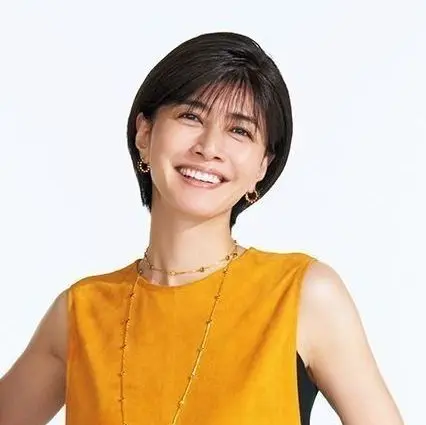
Actors Yuki Uchida and Taisuke Fujigaya, who deepened their friendship after co-starring in a drama, resonate across generations and genders. Their summer style, paired with dazzling Hermès jewelry, creates a brilliant harmony.
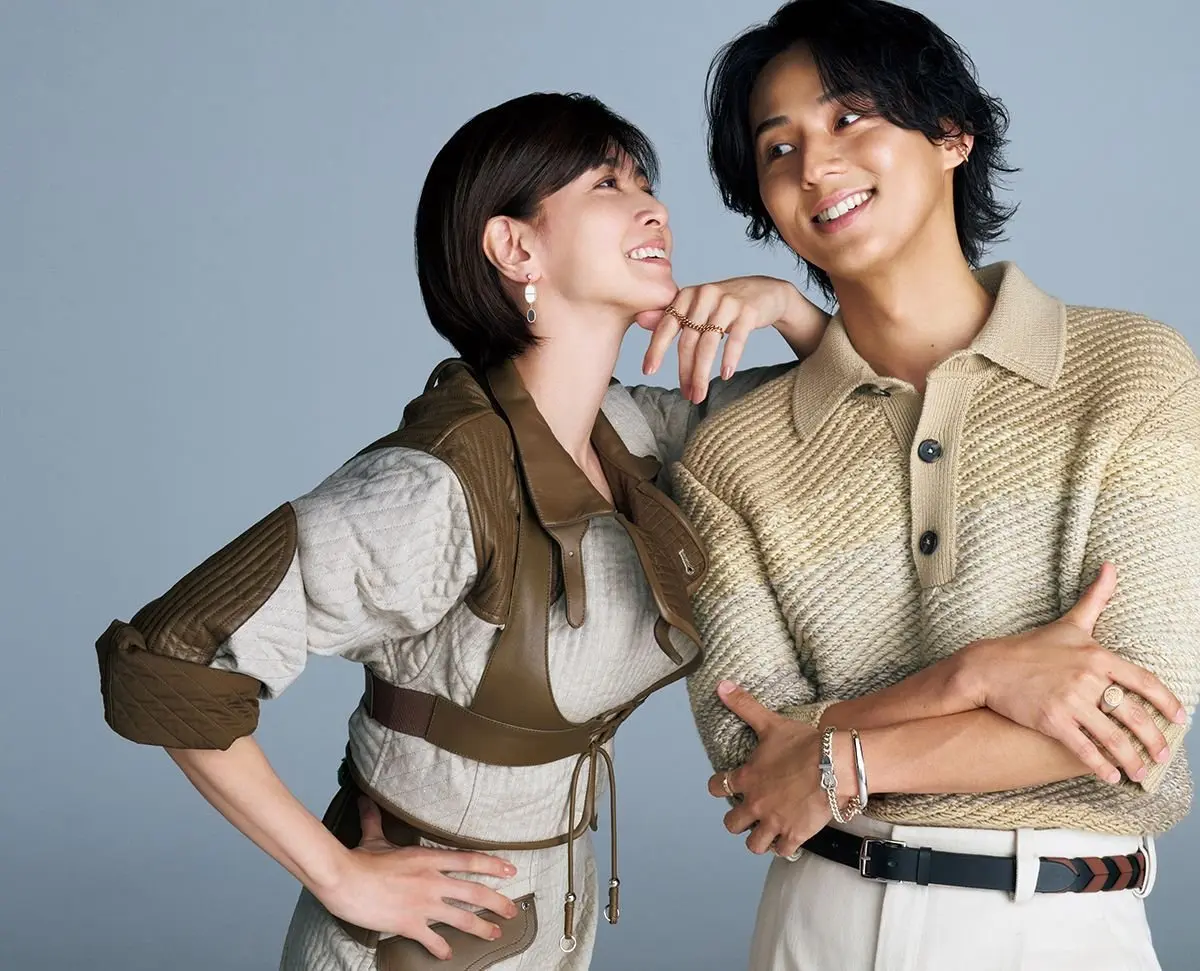
Mr. Fujigaya says the secret to sublimating a summer safari style into a mode is Hermès’ unisex jewelry, infused with Pierre Hardy’s playful spirit. Mix iconic motifs to complete your own jewelry style. Mr. Fujigaya wore diamond ear cuffs for the first time.
“Vertige” ear cuff (PG×D) ¥920,700 · [Left hand] “Bouclerie Sellier Inflexible” Double Tour bracelet (SV) ¥422,400 · [Index finger] “Hermès Clou de H” ring (PG×SV) ¥300,300 · [Right hand] [Middle finger] “Ex-Libris” ring (PG×SV) ¥290,400 · Top ¥540,100 · Pants ¥180,400 · Belt ¥445,500 / Hermès Japon (Hermès)
Ms. Uchida adds a twist to her chic equestrian-inspired outfit with surprising motif jewelry.
“Chaîne d’Ancre Verso” earrings (PG×White Ceramic×D) ¥1,771,000 · “Mix and H” Triple Finger Ring (PG×SV×D) ¥1,584,000 · Jacket ¥1,980,000 · Harness ¥800,800 · Skirt ¥1,298,000 / Hermès Japon (Hermès)
Yuki Uchida and Taisuke Fujigaya deepened their friendship after co-starring in the 2021 drama “The Grand Family.”
When asked about his impression of Uchida, Fujigaya says,
Uchida praises Fujigaya as
Resonating across generations, genders, and careers, they share a commonality regarding jewelry: they reflect their personalities through jewelry, add color to daily life, and cherish it like a talisman.
Fujigaya says,
On this day, he wore a distressed denim jacket, perfectly complemented by a sparkling crystal brooch on his chest.
Uchida, who usually prefers simple attire, has long cherished a single-diamond necklace she acquired over 15 years ago.
During their jewelry conversation, Uchida mentioned Audrey Hepburn as an idol. She vividly remembers the diamond necklace wrapping around the neck in the film “My Fair Lady.”
In contrast, Fujigaya insists on choosing jewelry based on his own sensibility, rather than being influenced by others.
Born in 1975 in Tokyo. Started her acting career in 1992. Starred in numerous masterpieces including the drama “Doctor X: Surgeon Michiko Daimon.” In 2024, won the Best Supporting Actress Award at the Tokyo Drama Awards. Popular as an idol among women of her generation.
Born in 1987 in Kanagawa Prefecture. Debuted as Kis-My-Ft2 in 2011, celebrating 15 years this year. As an actor, starred in the film “Pride and Kindness” and performed in the musical “Don Juan.” Also co-hosts the TV show “A-Studio+” (TBS).
Photography: Masashi Ikuta (hannah) · Hair & Makeup: Takuma Itakura (Uchida), Chiemi Oshima (Fujigaya) · Stylist: Keiko Miyazawa (Uchida), Katsuhiro Yokota (YKP/Fujigaya) · Models: Yuki Uchida, Taisuke Fujigaya · Jewelry Styling & Editing: Shunsuke Okabe. *Abbreviations: WG=White Gold, PG=Pink Gold, YG=Yellow Gold, BG=Beige Gold, RG=Rose Gold, SV=Silver, D=Diamond. *Published in eclat July-August 2026 combined issue.