Editor’s Note
Hanoi’s diamond market faces a downturn amid smuggling prosecutions and lingering doubts over product quality and certification reliability.
Hanoi’s diamond market has remained subdued following a series of smuggling-related prosecutions involving jewelry businesses, while concerns over product quality and the reliability of diamond certificates continue to weigh on buyers.
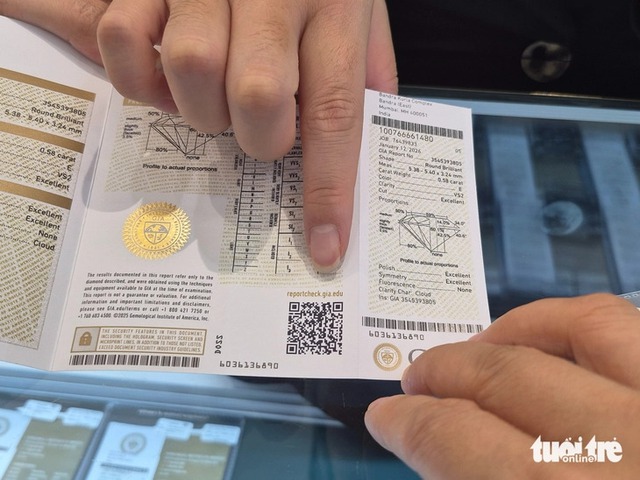
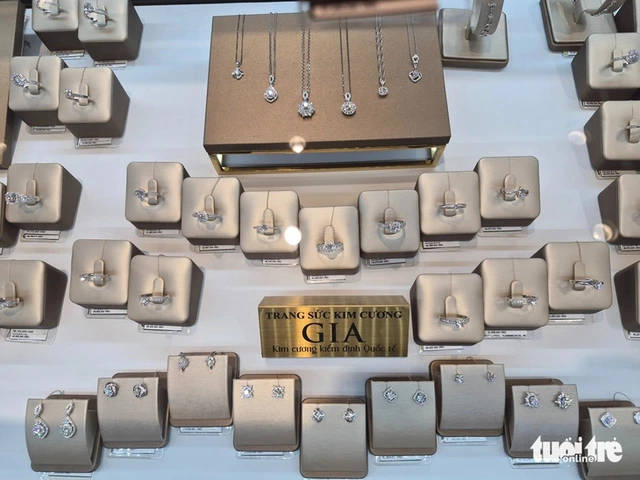
At around noon, the 15-square-meter store had a range of diamond products on display, but no customers were browsing or making purchases. Only two staff members and a security guard were present. A salesperson said most of the diamonds were imported from India. Each product was accompanied by documents, including a GIA grading report issued by the Gemological Institute of America and a value-added tax invoice.
Each diamond measuring 3.6 millimeters or more carries a unique grading number that buyers can use for verification and comparison. The number cannot be duplicated or falsified. Each grading report also includes a scannable code containing the diamond’s full details, allowing buyers to cross-check the information on the GIA website. The salesperson added that diamonds imported through legitimate channels and meeting required quality standards generally come with grading reports.
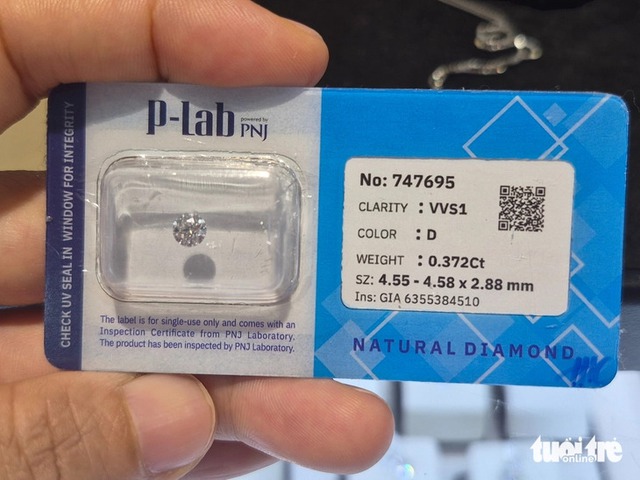
However, not all diamond products come with GIA reports. Several retailers at a well-known shopping mall in Hanoi said GIA grading was generally available only for larger diamonds that met the institute’s assessment requirements. Smaller diamonds were typically checked using a standard diamond tester instead of being sent for independent grading, and were sold with product warranty cards instead.
Many diamond products are advertised as carrying GIA grading reports to reassure customers. Some higher-end diamonds were graded by the International Gemological Institute, or IGI. When a customer questioned whether a diamond’s quality could be guaranteed even with a grading report, a salesperson said buyers would receive a certificate bearing a QR code linked to the grading institution’s website, where they could verify the product’s specifications. The diamond also carries an identification number engraved on its girdle, allowing customers to look up further information about the stone.
At a PNJ store in Hanoi, a salesperson said not all diamond products came with GIA reports.

A survey of diamond retailers also found wide variations in buyback policies. A common arrangement was to repurchase products at 80 percent of their original value, or offer 90 percent of the value when customers traded them in for new items. Some brands, however, offered to buy back diamonds at 70 percent of the purchase price during the first three years and at 100 percent after that period.