Editor’s Note
The integration of advanced technologies like additive manufacturing is fundamentally transforming healthcare, driving innovation and precision in medical applications. This article explores how the sector’s rapid growth and specialized demands are pushing companies to deepen their technical expertise, reshaping the future of medical solutions.

The medical field remains one of the strongest drivers for additive manufacturing applications, maintaining double-digit annual growth and reaching a scale of tens of billions of dollars. Its industry influence and technological maturity now rival those of the aerospace and automotive sectors. Consequently, it is unsurprising that additive manufacturing companies are deepening their technical capabilities to meet the highly specialized demands of this field.
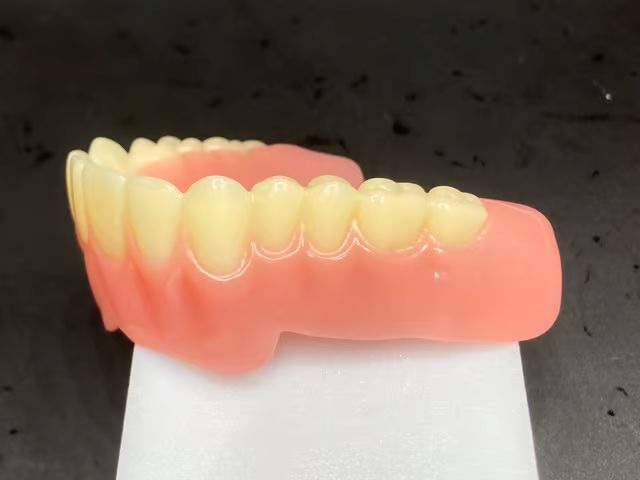
Digital dentistry continues to be one of the most mature application areas. With its rich portfolio of integrated solutions, 3D Systems consistently supports dental laboratories and clinics in producing patient-specific devices. In 2025, the company upgraded its NextDent® Jet Denture solution for multi-material, single-unit dentures, which is now commercialized in the US market. The core of this solution is the NextDent® 300 multi-jet 3D printer. This system is designed for the rapid production of fully cured, custom dentures without requiring additional post-curing steps.
Alongside hardware upgrades, the company also introduced new materials such as NextDent® Jet Teeth and NextDent® Jet Base. These materials were developed for applications like night guards, a niche area receiving increasing attention from dental professionals.
Furthermore, the clinically validated NextDent 3D printing resin product line now covers over 30 application scenarios, including specialized areas of dental restoration. For example, NextDent C&B MFH (Micro-Filled Hybrid resin) is specifically developed for crown and bridge restorations, enabling the efficient fabrication of strong and durable patient-specific devices.
The commonality among motorsports, foundries, and service bureaus is their application of additive manufacturing technology for rapid prototyping, lightweight high-performance component production, and on-demand manufacturing.
However, a closer look reveals differences between these industries. Motorsports pursues the speed and performance breakthroughs offered by additive manufacturing, the foundry industry focuses on mold optimization and casting process innovation, while service bureaus act as crucial support, helping companies lacking internal resources to access advanced additive manufacturing capabilities.
In 2025, 3D Systems notably strengthened its Stereolithography (SLA) technology offerings for these areas. Its SLA 825 Dual model became the company’s most advanced large-format printer to date, designed to meet the demands of high-performance industrial applications.
It is worth noting that the large-scale 3D printing domain is typically dominated by other technologies, such as Laser Powder Bed Fusion (LPBF), Directed Energy Deposition (DED), and even Fused Filament Fabrication (FFF). Although SLA technology currently struggles to match the massive build volumes of DED systems, resin-based manufacturers are increasingly expanding into large-scale applications, signaling a market shift towards applications requiring high precision and superior surface quality at scale.
The SLA 825 Dual printer achieves technological upgrades through an 830×830×550mm³ build volume (a 20% increase over its predecessor), a dual-laser architecture, and a simplified workflow. Given 3D Systems’ nearly four-decade leadership in high-throughput SLA manufacturing, there is reason to believe the SLA 825 Dual will continue this technological legacy.
The jewelry industry remains a classic example of additive manufacturing technology reshaping centuries-old craft traditions. Where aesthetics meet technology, materials once considered difficult to work with can now create unprecedented luxury, artistry, and craftsmanship. In 2025, this additive manufacturing solutions provider incorporated the MJP 300W Plus device into its jewelry manufacturing product line. This equipment can print extremely precise wax patterns for the casting process of precious metal jewelry.
Although the jewelry market remains highly niche compared to other verticals, the pursuit of extreme detail and high-quality production ensures its continued strategic position within 3D Systems’ resin-based product matrix.

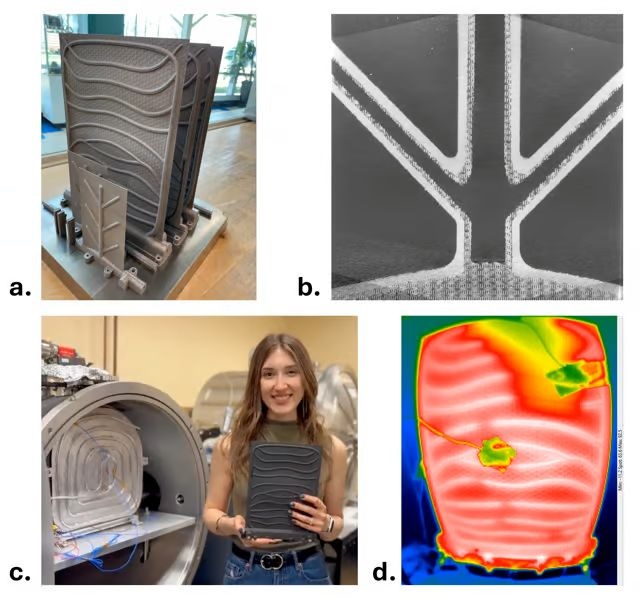
As a core driving force for additive manufacturing applications, 3D Systems’ technology was validated in practice through two NASA-funded research projects. In the first project, 3D Systems’ Direct Metal Printing (DMP) technology, using a titanium alloy substrate, integrally manufactured high-temperature passive heat pipe structures inside a radiator. Compared to current radiators, this heat pipe radiator achieved a 50% reduction in weight per unit area while operating at a higher temperature range, providing more efficient thermal dissipation for high-power systems.
In the second project, the company’s metal 3D printing technology was used to develop an additive manufacturing process for functional components made of nickel-titanium (Nitinol) shape memory alloy. This component can achieve passive actuation and deployment when heated, representing one of the first functional additive manufactured parts in this material system.
Thermal management has quietly become one of the most influential drivers propelling metal additive manufacturing applications. This trend is particularly evident as spacecraft, satellites, and high-power propulsion systems become increasingly compact while generating significantly more heat. Therefore, it is inevitable that 3D Systems’ Direct Metal Printing platform has become a core production solution for the next generation of thermal control architectures.
In 2026, it will be worth watching how the company expands its technological boundaries in two dimensions: first, by expanding its material systems and process capabilities to meet the growing market demand for multifunctional integrated components; and second, by accelerating the translation of research results into scalable production workflows—especially as leading aerospace and space companies continuously pursue higher production efficiency and qualified material processes, making this translation speed crucial.
According to 3D Systems’ product development roadmap for 2025, the company is not pursuing an expansion in the number of platforms but is instead deepening its focus on existing platforms that have already proven their value in regulated fields such as dentistry, patient-specific devices, aerospace, and space.
The defense sector is expected to continue being a key driver for the additive manufacturing market. Therefore, this area will be a strategic vertical focus for 3D Systems in 2026. Additionally, Shepard pointed out other factors driving additive manufacturing adoption, including the following.
New designs of high complexity and high integration. In such applications, additive manufacturing may be the only method to achieve the target component. Designing with an additive manufacturing mindset can reduce weight, shrink size, or enhance performance. For additive manufacturing, significant benefits are gained when approached with a “clean-slate” design philosophy.
Supply chain challenges. The characteristics of long lead times and low-volume production make additive manufacturing effective for optimizing supply chains in aerospace and defense, or as an alternative when suppliers are unwilling to take on small-batch business. Taking certain naval applications (like CuNi30 castings with lead times of 1-2 years) as an example, CuNi30 parts can be printed via Laser Powder Bed Fusion systems in less than a week.
Additive manufacturing is maturing and becoming an accepted production process. As process methods mature, related workflows and material systems become increasingly robust, and many organizations have accumulated best practices and engineering skills to apply additive manufacturing more efficiently. While this factor is important, it more reflects the gradual lowering of industry entry barriers rather than being a core driver directly spurring technology adoption.