Editor’s Note
This article highlights the significant economic impact of counterfeit goods, using the example of Valentine’s Day jewelry sales. While consumers seek value, the prevalence of fakes poses a substantial threat to legitimate retailers and brand integrity.

The National Retail Federation (NRF), the world’s largest retail association representing discount and department stores, home goods and variety stores, grocery stores, wholesalers, chain stores, and internet retailers in the United States and over 45 countries, estimated last year that consumers planned to purchase $4.3 billion (approximately 4.6 trillion KRW) worth of jewelry for Valentine’s Day. However, while price is important to buyers, they are reportedly even more concerned about the authenticity and value of the products.
Accurately verifying the authenticity and origin of valuable goods like precious metals is essential for maintaining customer trust and is a key business concern. According to recent data from The Consumer Goods Forum, some imitation or counterfeit products can cause an annual loss of $250 billion (approximately 269 trillion KRW) to the global economy, and insurance companies spend as much as $2.5 billion (approximately 2.7 trillion KRW) annually on product defects.
It is precisely due to such economic losses that new methods are being sought to trace diamonds and gemstones at every stage of the global supply chain, from mine to retailer. Currently, diamonds, gemstones, gold, and silver move through complex supply chains, making it extremely difficult to identify the source of each supply.
Retailers are turning to blockchain as a more effective, easy, and secure solution to manage these transactions. Blockchain is a trusted, shared record-keeping system that creates a permanent, digitized series of transactions and provides all parties with the ability to accurately and quickly track products worldwide.
Blockchain is increasingly becoming a good method for tracking product authenticity. A new IBM Institute for Business Value (IBV) research report published in January, which surveyed 203 organizations in the consumer goods industry, found that 18% of consumer goods organizations are currently using blockchain. The highest-rated consumer area among survey participants indicated that blockchain best ensures product safety and trustworthiness.
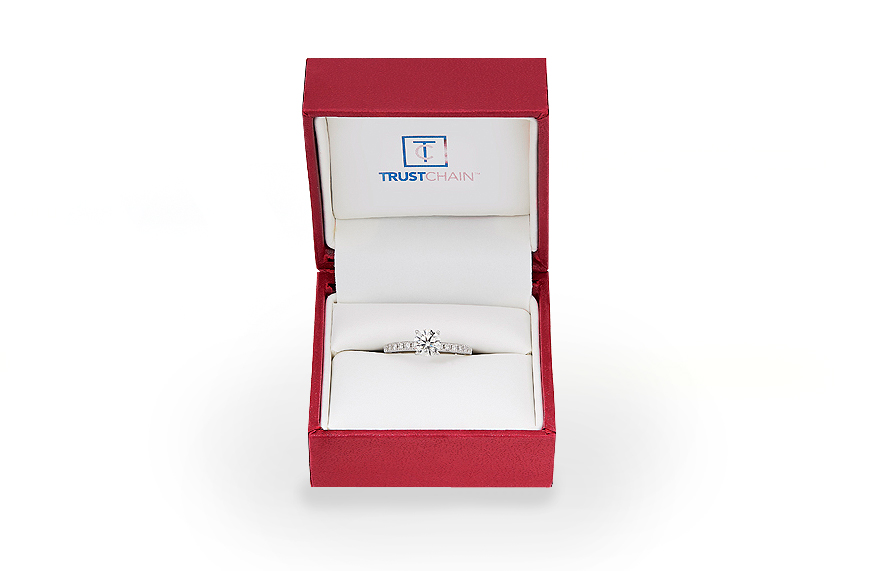
For example, according to a recent cross-industry initiative using blockchain to trace the origin of processed jewelry by the gold and diamond industry association, precious metal refiners (Asahi Refining), US jewelry retailers (Helzberg Diamonds), precious metal suppliers (LeachGarner), and global jewelry manufacturers (Richline Group) are using a blockchain platform provided through the ‘TrustChain Initiative on IBM Cloud’.
The TrustChain Initiative tracks and authenticates diamonds and precious metals at every stage of the supply chain until they are used in finished jewelry. It provides digital verification, physical product and process verification, and third-party oversight on a single platform. The initiative has already fully tracked six styles of diamond and gold rings on the blockchain network. The goal is for the entire jewelry ecosystem—including mines, manufacturers, wholesale suppliers, and retailers in the complex, multi-layered jewelry supply chain—to provide superior quality assurance and trustworthiness on a single digital platform.
Meanwhile, the TrustChain Initiative platform spans various industries including financial services, supply chain, logistics, distribution, public sector, and healthcare. It is built on successful blockchain work provided to over 400 companies, leveraging insights gained from building blockchain networks. Having undergone extensive testing and pilot operations, this platform addresses various challenges faced by enterprises, including business and technical requirements that other blockchain platforms fail to implement, such as security, performance, collaboration, and privacy. It also includes innovations developed through open-source collaboration within Hyperledger, including the latest Hyperledger Fabric v1.0 framework hosted by the Linux Foundation and Hyperledger Composer blockchain tools.