Editor’s Note
As lab-grown diamond prices fall dramatically—now roughly one-tenth the cost of comparable natural stones—consumer demand is rising sharply. This shift highlights how affordability and changing perceptions are reshaping the jewelry market.
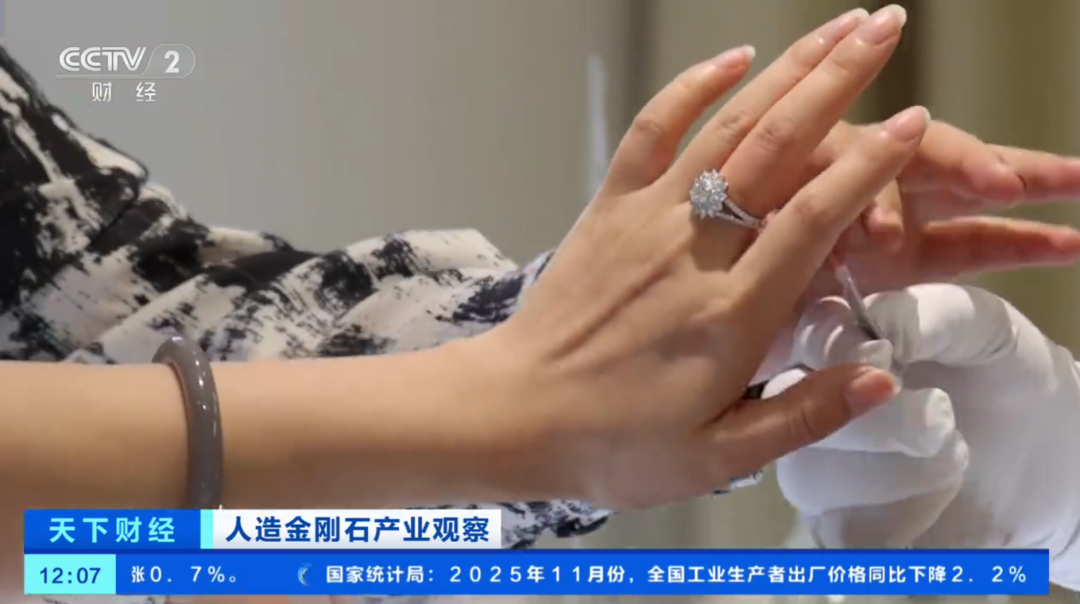
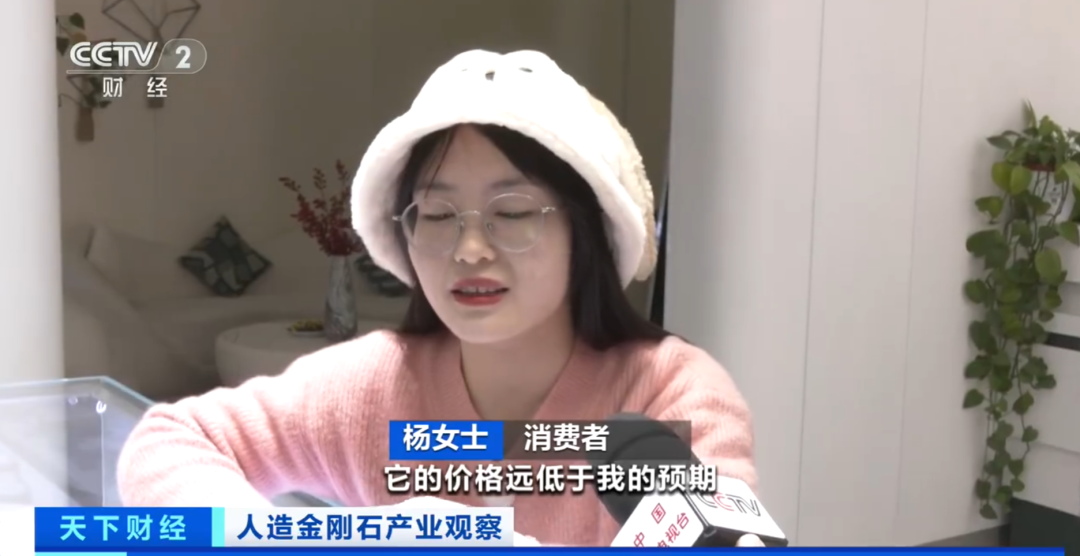
“Diamonds are beautiful, and the styles are fashionable,” “The price is far lower than expected”… In recent years, the price of cultured diamonds has continued to decline. The price of a 1-carat cultured diamond has now dropped from 8,000 yuan to 3,500 yuan, less than one-tenth the price of a natural diamond of comparable quality.
Natural diamond is the hardest substance in nature, while graphite can also form synthetic diamond under high temperature and pressure. Currently, China’s synthetic diamond industry scale leads the world, with increasingly diverse downstream products. The “2024 China Jewelry Industry Development Report” mentions that, according to incomplete statistics, China’s cultured diamond output in 2024 was about 22 million carats, a year-on-year increase of 144.44%, accounting for 63% of global total output.
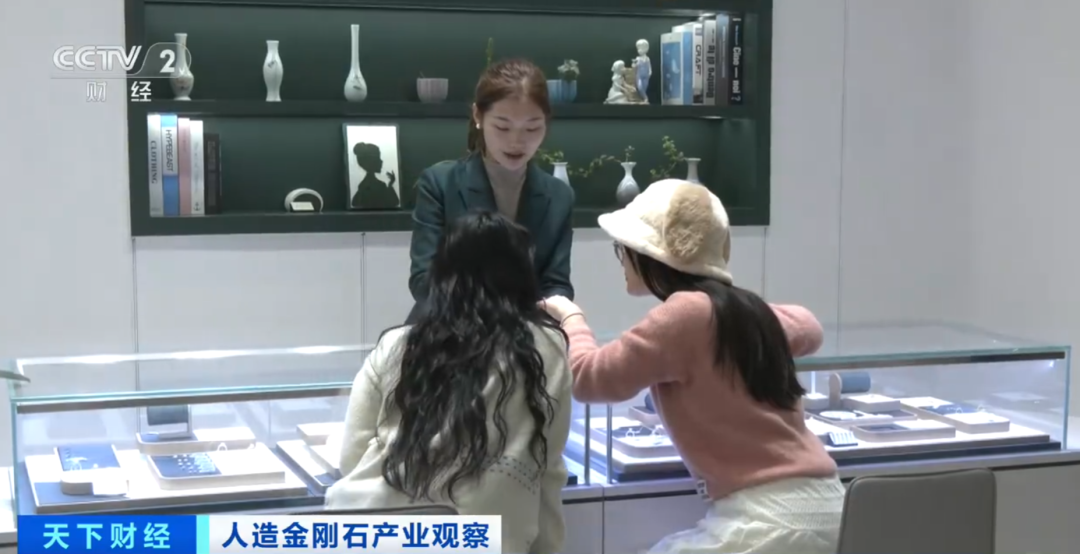
At a store specializing in cultured diamonds in Nanyang, Henan, the reporter saw a steady stream of consumers coming for inquiries and purchases, mainly young people. The store manager stated that young people account for about 70%, and sales this year have doubled compared to last year.

Staff indicated that the clarity, color, and other indicators of these cultured diamonds are completely comparable to natural diamonds, difficult to distinguish with the naked eye, but the price is only one-fifth or even lower than that of natural diamonds.
Data shows that in recent years, the retail price of cultured diamonds has fallen by more than 50% from its peak. Taking a 1-carat high-quality cultured diamond as an example, the selling price was about 8,000 yuan in 2020, but now it’s only around 3,500 yuan, while a natural diamond of comparable quality still costs over 40,000 yuan.
Meanwhile, in 2025, cultured diamonds accounted for over 40% of the global diamond jewelry market sales, an increase of more than 8 times compared to 2019.
“A diamond is forever.” This was once a familiar advertising slogan. However, influenced by the impact of cultured diamonds, soaring gold prices, and other factors, the price of natural diamonds has also been “driven down” in recent years.
According to Cover News, ten years ago, Ms. Li from Chengdu spent 100,000 yuan to buy a one-carat diamond ring. Now, after consulting multiple recyclers, the highest valuation she received was only 30,000 yuan. The brilliance of the ring in her hand has been overshadowed by the chill of depreciation. A woman from Anhui who spent 18,000 yuan on a diamond ring ten years ago shared on social media that she can now only get a 180 yuan recycling price, a depreciation of up to 99%.
This is not an isolated case. In Xichang, Sichuan, a 34-year-old woman found that the two wedding rings she bought for 14,000 yuan ten years ago can now be sold for less than 200 yuan combined. She bluntly stated:
If we turn back time to 2012, when the gold price was about 338 yuan per gram, spending 18,000 yuan to buy gold could now be sold for over 45,000 yuan; while diamonds of the same value can now only be exchanged for around a thousand yuan.
As early as September 2023, CCTV Finance reported that in the previous year, the price of certified diamonds had fallen by 35% to 40%. Among them, diamonds from 0.5 to 3 carats were hit the hardest, with sales also falling by 30% to 35% during the same period. Diamond giant De Beers cut the price of its mainstream products, natural diamonds from 2 to 4 carats, by 40%.
Subsequently, in January 2024, De Beers cut the price of rough diamonds by about 10%, and in December of that year, it cut the price of rough diamonds sold on the secondary market by 10% to 15%.
According to Yicai, “Basically no one will recycle small diamonds, unless it’s at a very cheap price.” A trader in the jewelry industry told the reporter that generally only large-carat (referring to over one carat) natural diamonds are eligible for recycling. But at this point, people realize that those diamonds bought at high prices earlier are actually not value-preserving. The general recycling market price is 40-60% of the original price, depending on the quality and brand of the item.