Editor’s Note
This excerpt highlights the transformative potential of Bihar as a future hub for semiconductor research, emphasizing the strategic importance of its riverine geography. The discussion underscores how these foundational components, which precisely control electrical flow, are critical to modern technology.
He explained that conductors allow electricity to flow completely, while insulators block it. A semiconductor operates in a state where, upon applying controlled energy or pressure, it either allows or stops the flow of electricity as needed. This very control enables electronic devices to think and respond.
Today, nearly 80% of the world’s semiconductors are made from silicon, which is purified from sand. Millions and billions of transistors are being placed on a chip smaller than one square centimeter. The real power of semiconductors is evident in Integrated Circuits (ICs). Active components like transistors and diodes, along with passive components like resistors and capacitors, are interconnected on a small silicon chip. This IC becomes the brain of mobile phones, computers, cars, medical machines, and communication equipment.
Mobile phones, the internet, electric vehicles, and medical equipment all depend on semiconductors. Dr. Vikramaditya described AI as a hardware-based revolution, stating that imagining a digital future without it is impossible. The semiconductor is a complete value chain encompassing materials, design, intellectual property, electronic design automation, fabrication, equipment, packaging, testing, and system integration.
India currently holds a strong position in design and the fabless model. However, the lack of fabrication tools and machines remains a major challenge.
Referring to the India Semiconductor Mission launched by the government as an effort to tackle this challenge, Dr. Vikramaditya said the government’s goal is to make India a manufacturing nation. In this direction, different semiconductor clusters are being developed across the country, and large-scale investments have been announced.
This sector is also extremely important from an employment perspective. In the coming years, millions of opportunities will be created in the semiconductor industry related to design, fabrication, packaging, testing, and supply chain. There is still a need for nearly 250,000 skilled youth, but they are not available. For youth, this field can become a means of sustainable employment along with technical skills.
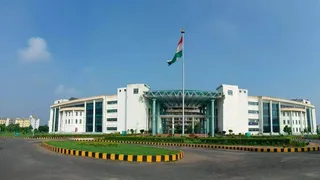
Regarding Bihar, he said that IIT Patna has a thin-film lab, and semiconductor research is still in its early stages, but the potential is clearly visible. Efforts have been underway for the past two years to establish a Semiconductor Research and Design Center, capacity building, and packaging-testing units.
Preparations are underway to form BISA (Bihar Semiconductor Association), which will include various semiconductor CEOs and professionals from across the country. Its aim is to establish a training, design, research, and industry-based semiconductor ecosystem in Bihar. In the coming times, Bihar can establish its strong identity in this field only through the coordination of technology, education, and industry.