Editor’s Note
This analysis highlights the complex, often unintended consequences of sanctions on Russia, revealing how global trade networks are adapting. The significant role of third countries in sustaining Russian oil revenues underscores the challenges of enforcing economic measures, while the reshuffling of supply chains in critical industries points to a lasting geopolitical realignment.
Sanctions against Russia have caused major restructuring of global supply chains, especially in the oil and precious gem industries.
The price cap coalition members imported $9 billion worth of Russian oil products from third countries in 2023. Sanctioning Russian oil, even at the expense of raising global oil prices, might be the only way of reducing Russia’s oil revenues.
India is now the second largest provider of restricted technology to Russia and a primary transshipment hub for highly advanced US-trademarked chips.
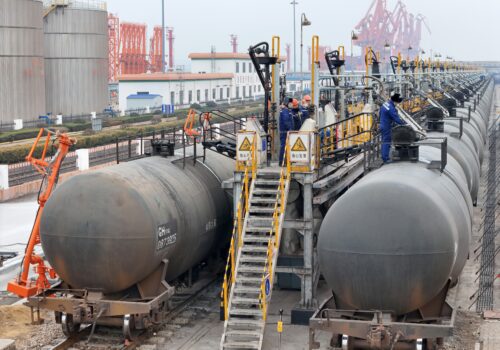
Restrictive economic measures against Russia’s energy sector have caused major restructuring of the global oil market and lengthening of oil trade routes, but Russia is still generating revenue from oil exports to India and China.
When the European Union (EU) banned seaborne Russian oil imports, the United States stepped in and became the largest supplier of crude oil to Europe. US crude oil exports to Europe increased by 23 percent in June 2024 year on year. However, as the United States became the top oil exporter to Europe, it lost half of its share of the Indian market. India opted for cheaper Russian oil as a result of the oil price cap and cut US crude oil imports by 47 percent in 2023.
This reshuffling in the global energy market resulted in the lengthening of oil trade routes: The United States and the Middle East are shipping oil to Europe, while Russia is shipping oil to India and China, which in some cases re-export refined Russian oil to Europe.
Longer oil trade routes created new loopholes in the Group of Seven (G7) sanctions regime. For example, since the G7 does not have import restrictions on refined Russian oil from third countries, Europe has been buying Russian oil products such as fuel from India, lengthening the supply chain even more. Between December 2022 and December 2023, the price cap coalition members imported about nine billion dollars worth of Russian-origin oil products from India and other third countries.
Additionally, longer, multiparty trade routes are also ultimately related to enforcement issues. In response to the oil price cap, Russia has built up a shadow fleet of tankers that can easily take advantage of these routes. At the same time, Russia has developed a multiparty blending market against which sanctions are proving more complicated to enforce.
The price cap leaves much room for maneuvering both for Russia and third countries to profit from re-exporting. Sanctioning Russian oil would significantly increase global oil prices and negatively impact the global economy. However, if India were to stop importing Russian oil, Russia would lose a significant market for its crude oil, perhaps even becoming fully dependent on China just like Iran, who has to sell oil at a much lower price than Russia.
The Treasury Department’s November 21 action designating Gazprombank demonstrates the Biden administration’s resolve to restrict Russia’s ability to generate revenue from commodity exports. Gazprombank was previously designated by the United Kingdom, Australia, New Zealand, and Canada.
The G7 has introduced phased prohibitions on the imports of Russian-origin non-industrial diamonds. They are likely to cause shock waves in the global diamond industry, but it is unclear whether they would weaken Moscow’s ability to finance the war on Ukraine. Russia’s diamond industry generates about $3.8 billion in revenue annually, a minuscule amount compared to the about $100 billion Russia received in oil and gas revenues last year. While not being a critical commodity exporter for Russia, the Russian state-owned diamond mining company Alrosa has the largest share of the global diamond market (31 percent).