Editor’s Note
This article explores the intersection of geopolitics and high-tech manufacturing, examining how export controls on industrial diamonds could impact the semiconductor industry and, by extension, the artificial intelligence sector.
Not every wafer is cut this way. Older or lower-end manufacturing lines sometimes use slurry-based wire saws, where loose abrasives like silicon carbide are suspended in fluid to do the cutting. But over the past decade, diamond-coated wires have become the preferred choice, since they cut faster, waste less silicon, and leave cleaner, flatter surfaces. Synthetic diamonds, grown under controlled conditions, are uniform in size and hardness, allowing the wire to stay cool and cut with consistent precision.
Last week, China placed export controls on a wide range of rare earths and industrial inputs. Today, we’re taking a deep dive into the controls on lab-grown diamonds and why they matter.
Beijing’s restrictions target only industrial-grade synthetics used in chip fabrication and precision manufacturing. They can be important for wafer-slicing saws, polishing tools, and lithography optics, where extreme hardness and heat resistance are critical. Without them, producing advanced semiconductors and other high-tech components becomes significantly more difficult.
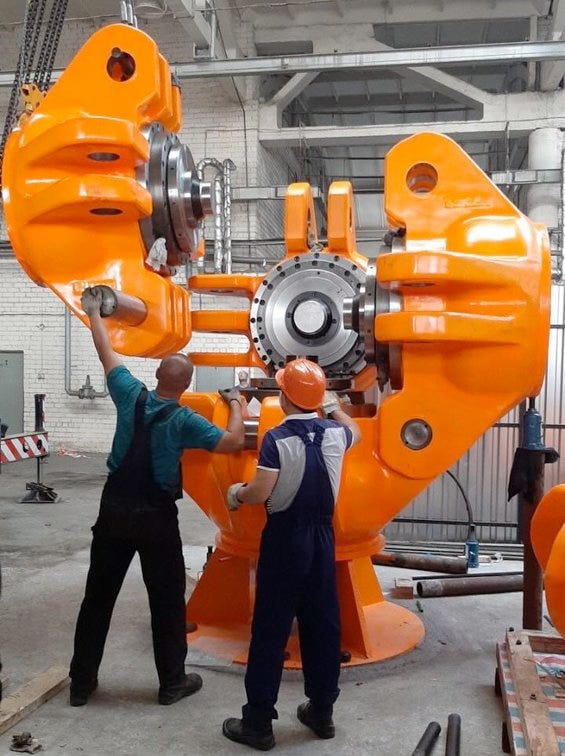
China is the world leader in synthetic diamond production, though by how much depends on whom you ask. Industry analyses suggest it accounts for roughly half of global output, while China Daily has claimed as high as 95% (this is too high..). It also dominates the manufacturing of key machinery such as high-pressure, high-temperature (HPHT) presses. This mix of capacity and machinery could let China squeeze parts of the chip supply chain, though its edge is less dramatic than some RREs like Terbium and Dysprosium.
A diamond is made entirely of carbon atoms, each one tightly bonded to four others in a neat, repeating lattice. That structure gives it an uncommon mix of traits: it’s both the hardest material on Earth and one of the best conductors of heat. In practice, that means diamond can withstand enormous pressure without deforming and transfer heat faster than copper while remaining an electrical insulator.
These qualities are what brought synthetic diamonds into the semiconductor world. As chips for AI training grow hotter and denser, synthetic diamonds are becoming increasingly valuable for managing the resulting thermal load.
Since the 1950s, scientists have been able to make diamonds from scratch. These synthetic diamonds are molecularly identical to natural ones, but are grown in labs instead of forming underground. By recreating the extreme heat and pressure found inside the Earth’s mantle, or by building them atom by atom in controlled chambers, manufacturers can now produce crystals tailored for industry. That breakthrough allows the diamond industry to scale, no longer solely dependent on what can be dug out of the ground. Synthetic diamonds are now a critical component in slicing semiconductor wafers, printing chip designs, and improving radar capabilities (see the ‘Applications’ section for details).
China’s work on lab-grown diamonds began in the early 1960s, when researchers set out to make the country self-reliant in what were then called “superhard materials.” At the time, China couldn’t easily import industrial abrasives or natural diamonds, so it built its own high-pressure, high-temperature presses to produce them domestically. In 1963, China created its first synthetic diamond, becoming the fifth country in the world to do so. The effort echoed a broader post-war ambition to dominate foundational materials, such as rare earths and magnets, that technology and industry increasingly depended on.
Over the following decades, provinces like Henan and Shandong industrialized around diamond production, helped by cheap energy, access to carbon feedstocks (the raw materials that provide carbon atoms), and state support for superhard materials. By the 2000s, China was already producing the most synthetic diamonds in the world and had built an entire supply chain ecosystem around them.
There are various places in China that have become the global hub for something highly specific. In the rare earth industry, the city of Baotou (包头市) in Inner Mongolia processes more than half of China’s rare earth minerals. Similarly, Dan Wang’s Breakneck describes how Zheng’an (正安) in Guizhou became “guitar city,” a small inland county that now makes about one in every seven guitars worldwide.
If Baotou is the rare-earth powerhouse, Zhecheng County (柘城县) in Henan Province plays the same role for synthetic diamonds. Home to fewer than a million people — very small, by Chinese standards — it has transformed from an agricultural county into China’s “Diamond Capital.” Local factories produce everything from micron-sized diamond powders to gemstone-quality crystals. Zhecheng now accounts for around half of China’s synthetic diamond output — roughly 4 million carats annually — and exports to more than 50 countries, amounting to an estimated 25–40% of global production.
Zhecheng also has the advantage of local clustering. Raw carbon feedstock suppliers, HPHT press makers, polishing workshops, and logistics firms all sit within literally a few square kilometers. That concentration lowers transaction costs, spurs reinvestment, and locks in process knowledge.