Editor’s Note
This article highlights how shifting consumer preferences toward sustainability are creating significant opportunities in the European jewelry sector. Brands that prioritize ethical sourcing and transparent production methods are well-positioned to capture this growing market segment.

The growing emphasis on sustainability is a major opportunity for the Europe jewelry market. According to a study by McKinsey & Company, over 70% of European consumers prefer eco-friendly products, creating a lucrative avenue for brands prioritizing ethical sourcing and production. For instance, in the UK, companies like Pandora have committed to using recycled gold and silver in their collections, reducing their carbon footprint by 30%, as per the British Sustainability Council. As per the European Environment Agency, sustainable jewelry sales grew by 25% in 2022, reflecting consumer demand for transparency and accountability. Additionally, certifications like Fairtrade Gold have enhanced brand credibility, attracting eco-conscious buyers. These innovations highlight the immense potential of sustainable jewelry to reshape the market landscape.
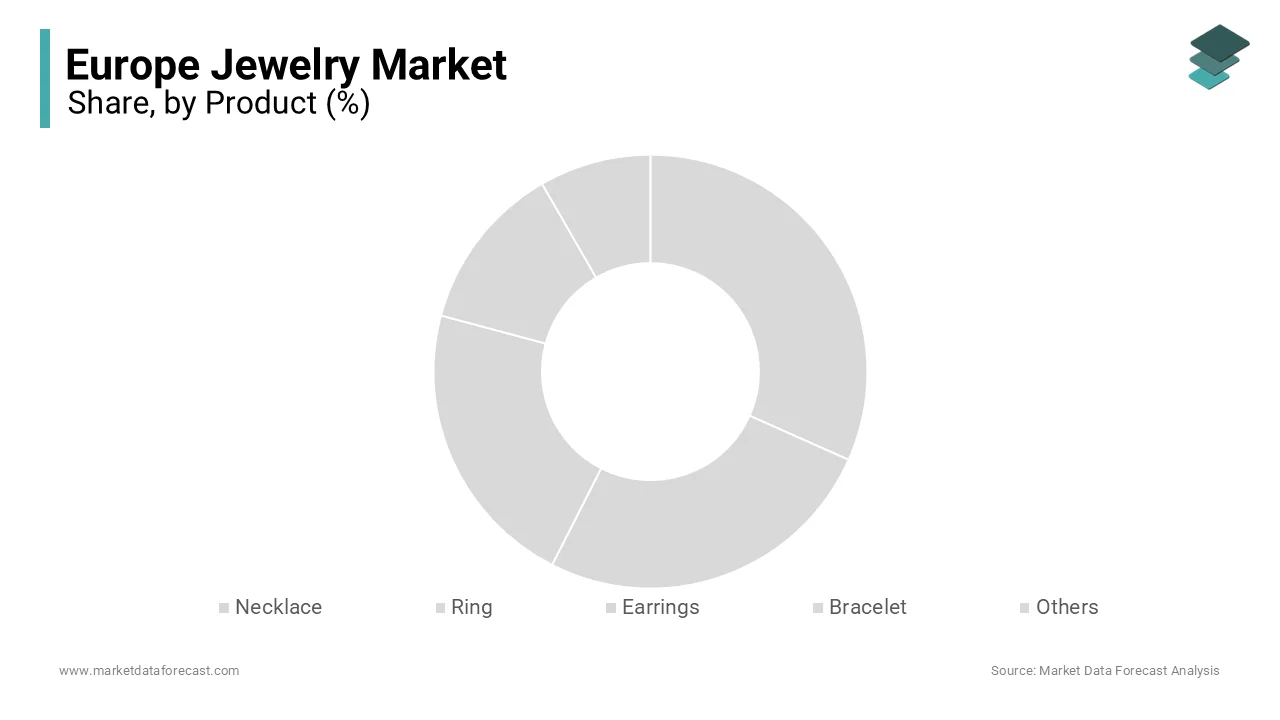
The earrings segment is another promising segment and is predicted to grow at a CAGR of 7.7% over the forecast period owing to their versatility and affordability, appealing to younger demographics. For example, in Germany, online sales of earrings surged by 30% in 2022, as per the German Retail Federation. The rising emphasis on self-expression and fashion trends is further favouring the growth of the earrings segment in the European market. According to the European Fashion Council, over 50% of millennials and Gen Z consumers prioritize statement earrings, creating a niche for bold and innovative designs. Furthermore, the integration of lightweight materials, such as titanium and resin, has improved comfort and accessibility. These innovations highlight the transformative potential of earrings in addressing evolving consumer preferences.
The UK held a substantial share of the European jewelry market in 2024 and is predicted to continue to play a promising role in the European market throughout the forecast period. London, Birmingham, and Manchester are key markets, where consumer preferences lean toward bridal jewelry and personalized designs. Millennials and Gen Z consumers drive demand for bespoke pieces, often incorporating lab-grown diamonds and recycled metals. Online retailers like Blue Nile have capitalized on this trend, capturing 25% of the market through digital platforms. Economic uncertainty has shifted consumer behavior, with a 15% increase in demand for affordable yet stylish costume jewelry since 2021. Moreover, the UK’s robust retail infrastructure supports both high-street brands and luxury boutiques. Sustainability initiatives, such as conflict-free sourcing, resonate with environmentally conscious buyers. By catering to diverse tastes and embracing digital transformation, the UK maintains its prominence in the European jewelry landscape.
Switzerland is anticipated to account for a noteworthy share of the European jewelry market over the forecast period and is popular for its precision and prestige, Geneva and Zurich are hubs for luxury brands like Chopard and Piaget, which cater to affluent buyers seeking exclusivity. Swiss-made jewelry is synonymous with quality, with watches and gemstone-studded pieces accounting for 60% of total sales. The country’s affluent population drives domestic demand, while tourism boosts international sales, particularly among Middle Eastern and Asian visitors. Sustainability is a growing focus, with Swiss brands adopting conflict-free diamonds and recycled metals. Additionally, the rise of customizable jewelry has attracted younger consumers, who value uniqueness and personalization. The Swiss government’s support for artisanal craftsmanship ensures the preservation of traditional techniques. By combining precision engineering with artistic flair, Switzerland continues to thrive in Europe’s jewelry market.
Key players in the Europe jewelry market employ diverse strategies to strengthen their positions. One prominent strategy is sustainability initiatives.