Editor’s Note
This article highlights how Richemont’s powerhouse jewellery maisons, Cartier and Van Cleef & Arpels, provided crucial resilience in the first quarter, driving growth despite softer demand in some regions and segments.

Cartier and Van Cleef & Arpels led the quarter with double-digit growth, offsetting weaker segments. Growth in the Americas and Japan helped balance softer demand in Asia. Specialist watchmakers saw modest declines, though resilience was noted in high watchmaking.
Richemont’s jewellery stars Cartier and Van Cleef & Arpels are leading a glittering first quarter within the luxury group, with an 11% growth reported in the company’s Q1 FY26 report. This is in contrast to Richemont’s Specialist Watchmakers’ sales, which reported a drop of 7%. Although this figure does represent a drop for watchmaking, it also reflects an improvement over the previous quarter’s drop of 11%.
All in all, the overall mood at Richemont remains upbeat, with the results described as a “solid start to the year” in the recently published report. In the group’s 2025 report, Richemont Chairman Johann Rupert had outlined the group’s vision ahead, saying:
The group’s glimmering confidence in anticipating 2026 is certainly courtesy of its precious jewellery division. Richemont’s focus on high jewellery caters to ultra-wealthy clients, a demographic that has traditionally proved relatively immune to broader market sentiments. Jewellery is perceived as a timeless investment, and a time-tested one, with unique pieces appealing to global high-net-worth clients.
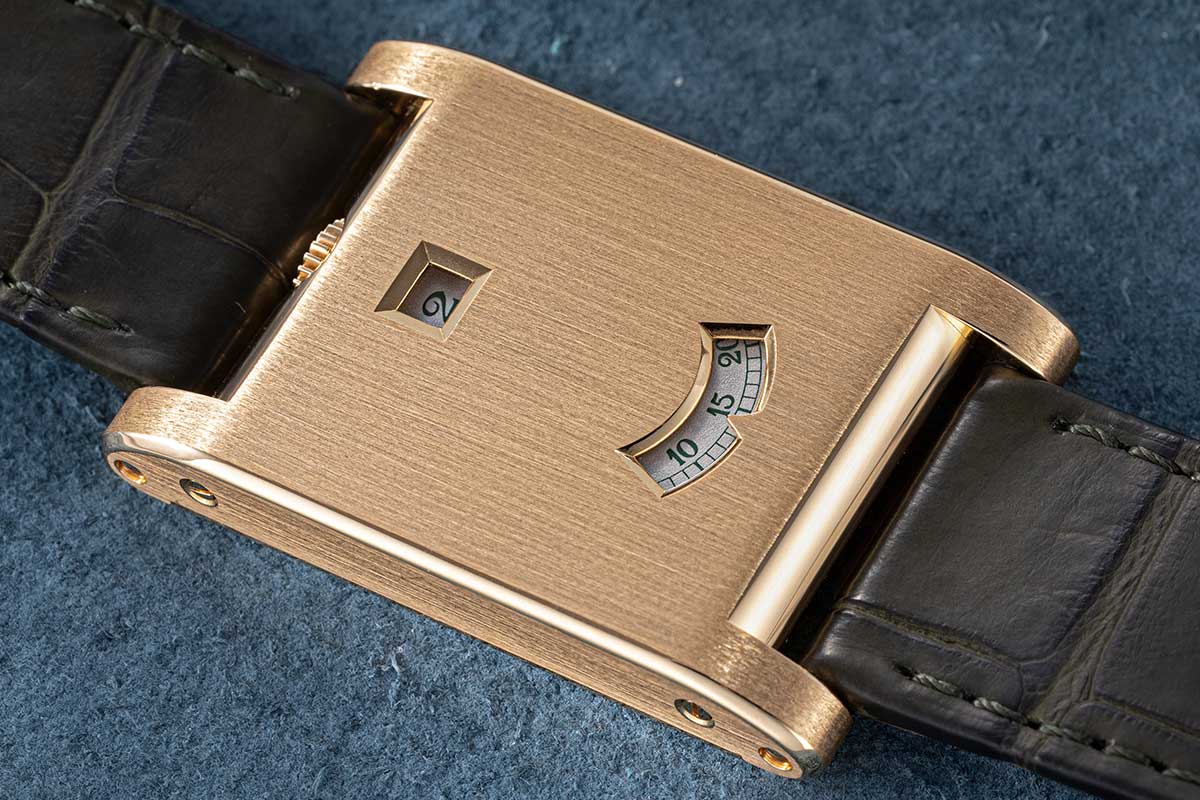
At Watches and Wonders, precious novelties sparkled. Cartier’s Privé Tank à Guichets was one of the talks of the fair — a conversation-starting piece that took the brand’s iconic Tank and reimagined it for a modern audience by way of a design that reduces the display to the bare essentials — indicators revealed through small window displays on a solid metal dial. Cartier’s bold minimalist was pleasurably offset with its highly decorated Panthère Bangle, described by the brand as ‘hybrid architecture’ — a restrained way of articulating a high-jewellery confection version in white gold and lacquer is set on every visible surface with tiny diamonds, a statement piece for the ages. Cartier fans can also enjoy it in a yellow gold version — both amply anticipate high consumer confidence in this lux segment.
This sentiment is no more clearly announced in its watchmaking than at Vacheron Constantin, where one of the leading contenders for ‘watch of the fair’ made its debut. Vacheron Constantin’s Les Cabinotiers Solaria Ultra Complication is officially the world’s most complicated wristwatch with a total of 43 complications and released in an edition of just one, an investment intended to delight both the purchaser and Richemont’s balance books.
Group sales reached €5.412 billion for the quarter ending 30 June 2025, up +6% year-on-year at constant exchange rates (+3% at actual rates). Sales at the jewellery maisons (Cartier, Van Cleef & Arpels, Buccellati, and Vhernier) rose +11% at constant FX to €3.914 billion. This double-digit growth outpaced all other divisions and was supported by demand across all regions except Japan. It is the third straight quarter the jewellery houses have achieved double-digit increases.

In Europe, sales rose 11% on the back of robust local demand and tourist spend, helped by high jewellery events. Sales in the Americas, Middle East and Africa rose by 17%, with standout results courtesy of strong performance in the UAE. Japan sales declined 15% against a very competitive prior year performance of 59% — the strengthening Yen impacted tourist spend. Asia Pacific remained flat overall, as a 7% decline in Greater China was balanced by double-digit growth in markets like South Korea and Australia.
Dubai, which has cemented its reputation as a global luxury hub and globally attractive tourism destination, led a MEA +17% growth — oil revenues and thriving tourism underpinning local luxury consumption and the Middle East remains an oasis of luxury in the desert.
Asia Pacific sales were net stable — a 7% decline in China, Hong Kong and Macau were compensated for by growth in other Asian markets. The post-lockdown excitement has abated, and tourism sales are not quite back to those pre-pandemic levels. On the other hand, Australia and South Korea were up double digits, and markets like Singapore, Taiwan, Thailand likely saw strong demand too. Southeast Asian and Pacific consumers (and intra-Asia tourists) helped compensate for China’s dip.
Meanwhile, after a star performance last year, Japan reported a -15% sales drop at constant FX, the weakest among Richemont’s regions. This was expected, as local demand and inbound tourists (especially from China) drove a huge boom. In Q1 FY2026, Japan’s local demand remains
