Editor’s Note
This article introduces the Hong Kong Watch & Clock Fair, Asia’s largest trade event for the timepiece industry. Organized by the HKTDC, the 2025 edition showcased the latest trends and innovations over a five-day run at the Hong Kong Convention and Exhibition Centre.
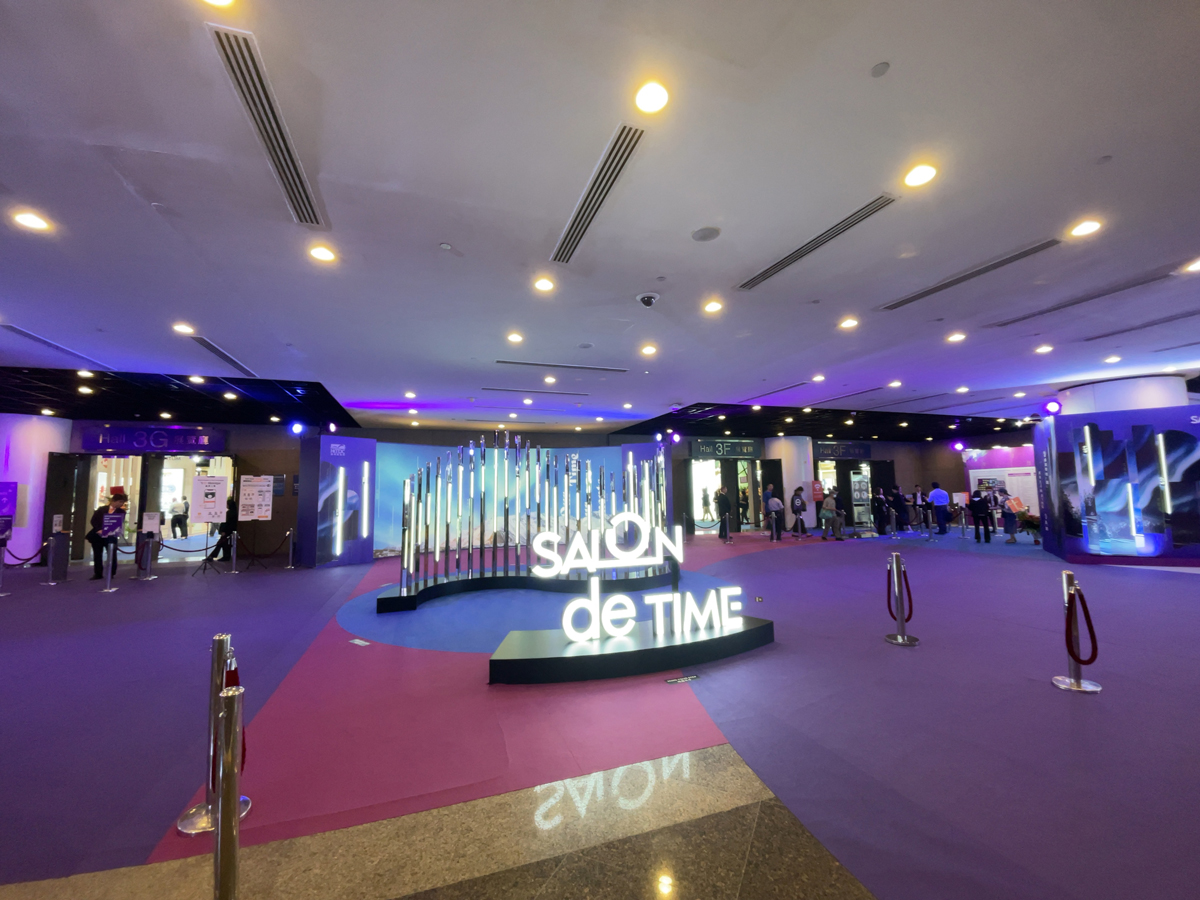
When it comes to Asia’s largest watch trade show, it is the “Hong Kong Watch & Clock Fair” organized by the Hong Kong Trade Development Council (HKTDC). This “Hong Kong Watch & Clock Fair 2025” and the concurrently held “Salon de TIME” took place over five days from September 2nd to 6th, 2025, at the Hong Kong Convention and Exhibition Centre (HKCEC).
The Hong Kong Watch & Clock Fair (hereafter referred to as the Hong Kong Fair) is a historic exhibition celebrating its 44th edition this year. Salon de TIME is in its 13th edition. While the former is primarily a B2B trade fair with booths covering everything from watch and clock parts to finished products, the latter gathers so-called “high-end lines” and attracts many general visitors. The venues for each are on separate floors. Since the demise of Baselworld (formerly the Basel Fair) in 2020, this Hong Kong Fair has become, in effect, one of the world’s largest watch trade shows, not just in Asia.
While the editorial department of ‘Chronos Japan Edition’ conducted on-site coverage of this fair in 2023, this time, perhaps because the dates were close to the Geneva Watch Days held in Switzerland, the editorial team did not visit. Therefore, I came to Hong Kong on my own as a self-appointed special correspondent.
Needless to say, Hong Kong has long held a crucial position as a hub for watch trade connecting Switzerland, various Asian countries, and mainland China. Even for Swiss watches, Hong Kong and mainland China have been the 2nd and 3rd largest export destinations in recent years (with the US being the undisputed top), and it made news when Japan rose to 2nd place this year, but the importance of Hong Kong and China remains unchanged. Particularly, the Hong Kong Fair, being held in such a significant location, can be said to serve not merely as an exhibition but as a “mirror” for deciphering the present and future of the watch industry.
According to the organizer HKTDC, the 2025 edition gathered over 650 exhibiting brands and manufacturers from more than 15 countries worldwide, with buyers from 95 countries exceeding 16,000 visitors. The HKTDC-operated online business matching platform “CLICK2MATCH,” which allows business negotiations without physical attendance, was also held concurrently, facilitating active international business talks in a hybrid format during the period. The combination of real and online is likely one solution for the format of international trade shows in the post-pandemic era.
The theme for this year’s Hong Kong Fair was “Our Time. Our Moments.” However, honestly, I didn’t feel that strong of a thematic presence within the venue.
The Hong Kong Convention and Exhibition Centre is massive, and the venues are not all on one level. The setup had Salon de TIME on the upper floors and the Watch & Clock Fair on the ground floor. On my first day, I started with Salon de TIME.
“Salon de TIME” is one of the highlights of the Hong Kong Fair, essentially the high-end watch section. It gathers independent brands from Hong Kong, Singapore, Japan, etc., as well as exhibiting established brands from Switzerland and France.
This salon featured five themed zones: “World Brand Piazza” centered on Swiss luxury brands, “Chic & Trendy” focusing on fashion trends, “Craft Treasure” gathering watches crafted with artisanal skill, “Renaissance Moment” displaying classic watches, and “Wearable Tech” introducing smartwatches and similar items.
What surprised me was that the “World Brand Piazza” was an exhibition by “PRINCE Jewellery & Watch Company Limited,” a major authorized watch and jewelry retailer with 15 stores in Hong Kong. They displayed brands familiar to us and Swiss brands rarely seen now.
I also briefly lined up to peek at this inventory sale corner. Brands not widely available in Japan were offered at considerable discount rates, making me try them on impulsively. However, I came to my senses after calculating the exchange rate. The Japanese yen is just too weak…
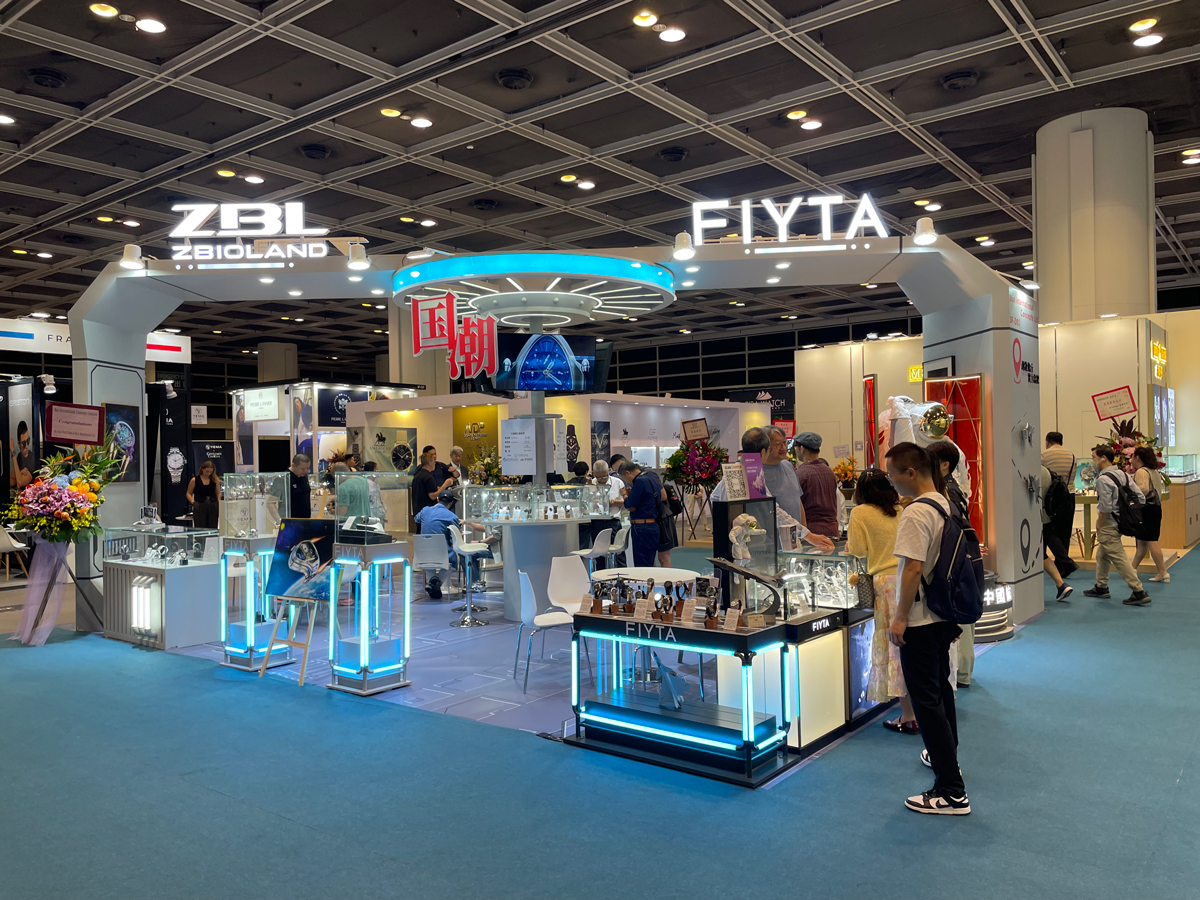
Several Swiss and French brands exhibited independently, but there was little novelty. Amidst this, what caught my eye the most were the numerous mechanical watches from Chinese brands.
To describe the model I liked: it’s made of 316L stainless steel, in a so-called “sports lug” specification. Besides this piece, new models with titanium cases and bracelets were also added. The dials are beautifully decorated with guilloché patterns or hammer-tone embossing, with color variations available. Featuring a big date, the overall style is quite attractive, but the highlight is that it’s equipped with an “Hour Striking” function. The wholesale price for this model by the brand LUCKEY HARVEY is USD 1,499, which is tempting.
I also felt a notable evolution in decorative techniques, akin to what Swiss watches call “Métiers d’Art,” among mainland brands. Various brands showcased elaborate designs, but what I personally found most appealing was enamel work.
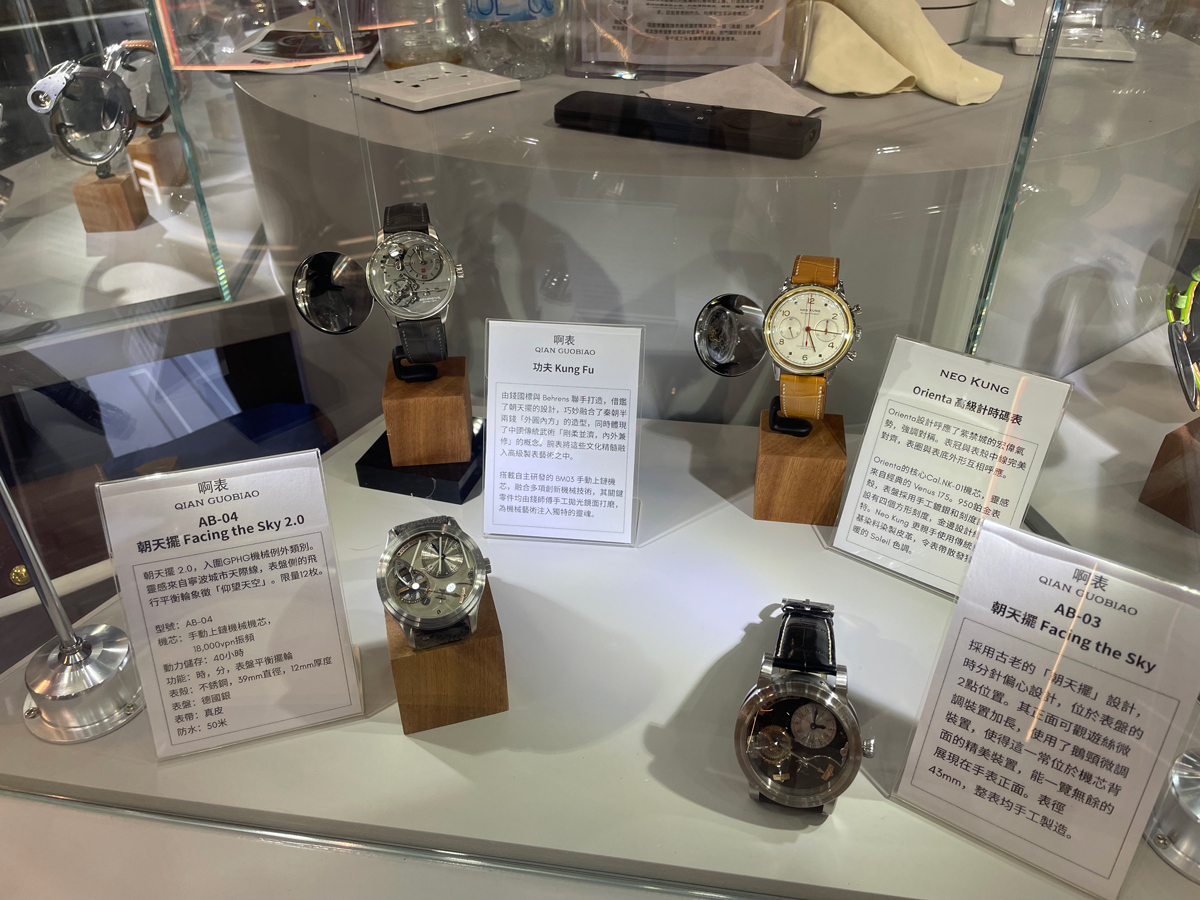
Honestly, before the COVID-19 pandemic, it was undeniable that there was a sense of immaturity both in design and technically. However, the enamel on the models I saw at this venue had evolved to a level that should not be underestimated at all. Perhaps enamel artisans have shifted their brush tips from unsellable crafts to watchmaking.