Editor’s Note
This article highlights the growing market for lab-grown diamonds, exemplified by the recent sale of a record-setting stone. As these gems offer comparable brilliance at a significantly lower cost, they are reshaping consumer preferences and challenging the traditional diamond industry.
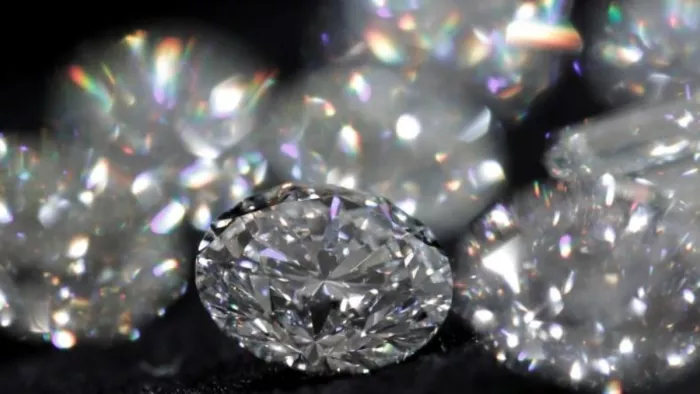
Lab-grown diamonds are giving natural diamonds a tough competition. While lab-grown diamonds look like original diamonds, their price is 20 to 30 percent lower, which is why their trend is rapidly increasing.
Krishniah Chetty Group of Jewellers has set a special record by selling the largest lab-grown diamond. This is a 20.06-carat emerald-cut gemstone. An emerald cut is typically rectangular in shape. This diamond comes with an F color grade and VS1 clarity.
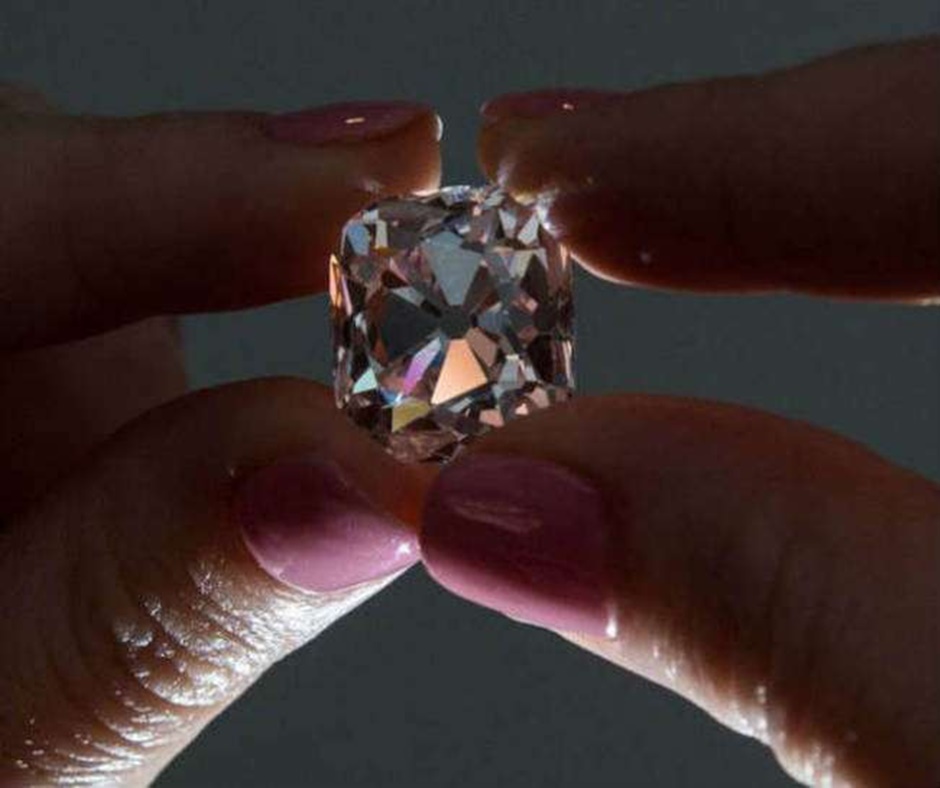
The F color grade indicates that this lab-grown diamond is nearly colorless, with minimal visible traces of color. The VS1 clarity indicates that this diamond has very minor inclusions like tiny crystals, clouds, or feathers that are almost difficult to identify. This also ensures that the diamond has exceptional clarity and brilliance.
Natural diamonds and lab-grown diamonds are essentially the same. Naturally, diamonds take millions of years to form. However, lab-grown diamonds can be created in just 1 to 4 weeks. To create artificial diamonds, an environment similar to the Earth’s inner core is replicated in the lab.
In the lab, diamonds are created using the High-Pressure High-Temperature (HPHT) process. After creation, the diamond is cut and polished. People associated with the diamond industry say it is difficult to differentiate between natural and lab-grown diamonds. Typically, lab-grown diamonds are sold with a certificate.

The main difference between lab-grown and natural diamonds is their formation process. In a lab, artificial diamonds are created by subjecting a carbon seed or graphite to high pressure and high temperature in a controlled environment. In contrast, natural diamonds are extracted from beneath the Earth’s surface. Natural diamonds take billions of years to form, while lab-grown ones can be created in just a few weeks.