Editor’s Note
The rise of lab-grown diamonds, now accounting for one in five sold globally, is reshaping the market and challenging traditional notions of value based on rarity. This article explores the implications for consumers and the industry.
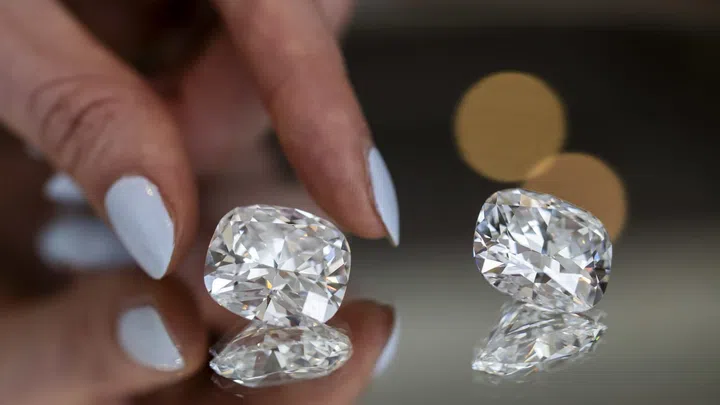
One in five diamonds sold worldwide is now grown in a laboratory. This is putting pressure on prices – including those of the natural product.
Diamonds are valuable because they are rare. This is especially true for large diamonds. However, perfect imitations are now being grown in laboratories. They are visually identical and do not differ physically or chemically from the natural version. And they can be produced in any quantity: More producers have entered the market in recent years. Currently, one in five diamonds sold is lab-grown. Consequently, diamond prices are under pressure.
Gilles Walthert, CEO of Edigem, a subsidiary of the jewelry and watch retailer Gübelin, says lab-grown diamonds of this quality have been on the market for about five years. He adds that unlike the natural product, there is almost no secondary market for the artificial variety where purchased diamonds could be resold.
It is also currently uncertain how the secondary market for natural diamonds will develop. Will wealthy customers continue to buy the expensive natural product when the stones can only be distinguished from the lab-grown version in a laboratory? Walthert says:
A piece of jewelry that is also intended to be passed down.
Monika Balbinot, CEO of Green World Diamonds, a Zurich-based startup, sees it differently:
The former banker would never invest in a diamond. But she has a fondness for their beauty: That’s why she sells jewelry with lab-grown diamonds. She sells mostly engagement rings to customers around 30.
she says.
For her, diamonds are comparatively affordable: Balbinot sells a ring with a large 3-carat diamond starting at 8,000 Swiss francs, while such a ring with a natural diamond would cost between 100,000 and 150,000 francs. Yet she feels the price pressure: Online, you can buy 3-carat lab-grown diamond rings for much less money.
In the USA, the world’s largest diamond market, the market is flooded with lab-grown diamonds. At the Walmart chain, diamond rings start at 50 US dollars. Balbinot says these are cheap discounters buying poor quality. For example, diamonds that have grown too quickly:
she says, something could chip off, and the brilliance is sometimes different. One should choose carefully from whom to buy, as there is a lot of fraud in the industry.
The producers of natural diamonds are under pressure. The world’s largest producer, De Beers, first entered the lab-grown diamond business itself. However, it has since discontinued production. According to the Wall Street Journal, its CEO wants to spend 25 percent more on marketing than before. The Natural Diamond Council, to which De Beers also belongs, is trying to position mined diamonds as the only real ones and to disparage those from the lab as cultivated duplicates.
A lot is at stake for diamond producers. The gemstone, a symbol of timeless beauty, has gained competition from the laboratory.
Monika Balbinot from Green World Diamonds says another customer segment for lab-grown diamonds are people who want a sustainable diamond. She is fully focused on this affluent customer segment. Because at least the history of mined diamonds is bloody, marked by forced labor and exploitation. In countries like Angola, Liberia, and Sierra Leone, they have also financed civil wars. Because large diamonds are so rare, a lot of mountain must be mined to find one. Mining requires a lot of water and energy.
But the production of lab-grown diamonds also requires a lot of energy, as the process demands high temperatures and pressure. However, compared to mining, this is likely negligible. Regarding working conditions in the industry around lab-grown diamonds, Balbinot says she knows her suppliers well and can stand behind them:
This statement cannot be independently verified.