Editor’s Note
This article explores the complex shift in the diamond market, contrasting the rapid rise of affordable lab-grown stones in some regions with enduring skepticism in others. It questions whether this trend represents a sustainable future or a fundamental change in how we perceive value and luxury.
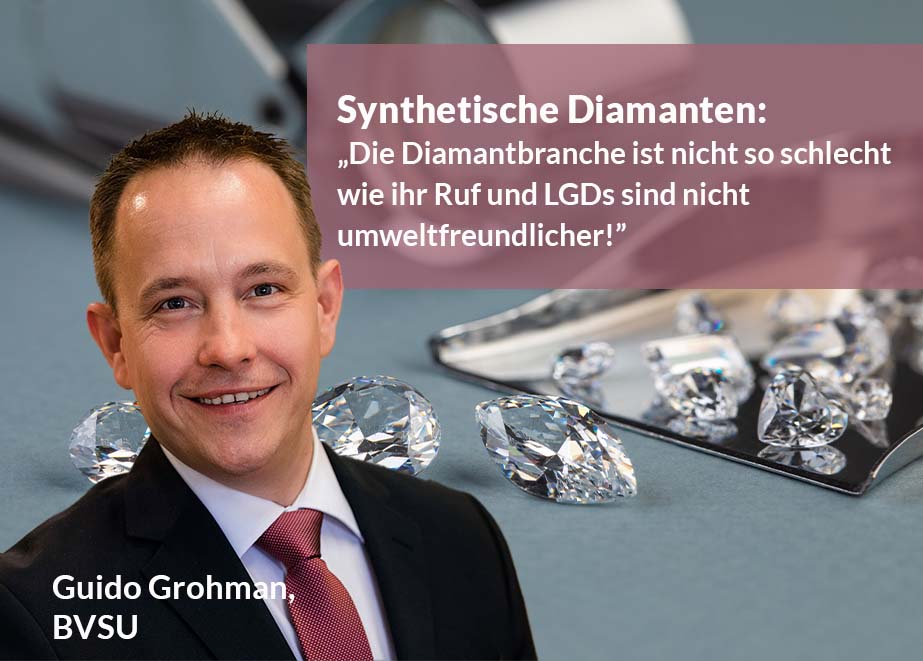
The global market for diamond jewelry is booming, but the growing popularity of synthetic diamonds raises questions. While lab-grown diamonds are offered at bargain prices in North America, the German market remains skeptical. Why do many jewelers prefer natural stones, and how does price competition affect the perception of value and sustainability? Is the future of diamond jewelry truly green or just a shiny misconception?
The global market for diamond jewelry is growing rapidly and has quadrupled in the last five years. In 2023, $12 billion of global sales came from artificial diamonds, compared to only $3 billion in 2018. Most of the business is concentrated in North America, particularly in the wedding and engagement ring segment. There, lab-grown stones are significantly cheaper than natural diamonds.
Guido Grohmann, Managing Director of the BSVU, reported on extreme price competition at the jewelry fair in Las Vegas, where synthetic diamonds were sold for only $99 per carat, while natural diamonds cost seven to nine times that amount depending on quality.
In Germany, however, the market for artificial diamonds is still very small and hardly measurable. Many major jewelers, such as the Wempe Group, refuse to include synthetic stones in their range, preferring the value retention of natural diamonds. Swiss brands Chopard and Bucherer also offer only natural diamonds, while CHRIST has its own line with artificial diamonds under the “green jewelry” label.
— Kim-Eva Wempe, Owner, Wempe
Grohmann criticizes the marketing of jewelry with synthetic stones as sustainable and ethically sound. He believes the diamond industry is not as bad as its reputation and that the production of synthetic diamonds is not necessarily more environmentally friendly.

Estimates suggest that producing one carat requires about 750 kilowatt-hours of electricity, roughly equivalent to what a German two-person household consumes in three months. However, the CO2 intensity is relativized if production uses renewable energy, and at least there is no need to dig deep into the earth.
Jeanette Fiedler, Managing Director of the German Diamond Institute (DDI) in Pforzheim, highlights the uniqueness of natural diamonds, which gain value long-term due to their rarity. Although she does not reject synthetic diamonds, which have been used in various industries for decades, there are reservations in the jewelry sector. Fiedler notes that synthetic gemstones like rubies and sapphires are already widespread, but there is particular skepticism regarding diamonds. She observes that while the market for synthetic stones will grow, their value will likely continue to decline.
Grohmann, in turn, sees synthetic diamonds as an opportunity to attract new customers, but not as an investment. He emphasizes that synthetic diamonds should not be seen as a replacement for natural diamonds, but as a distinct alternative that could bridge the price gap between expensive natural stones and cheap glass stones.
Clear communication is crucial, as many dealers are not transparent. Grohmann criticizes the lack of uniform regulations on how synthetic diamonds may be labeled, leading to confusion. The difference between natural and synthetic diamonds is often not discernible to laypeople, underscoring the importance of authenticity testing. Furthermore, one must not forget that purchasing a real diamond is also associated with emotions and trust.