Editor’s Note
In an era of economic uncertainty, this article explores a fascinating exception within the luxury market: items whose value—rooted in symbolism and culture—not only endures but appreciates. It’s a compelling look at what constitutes true resilience.
The luxury industry is not immune to the economic fluctuations shaking the globe. All of it? No. There are pieces that, even in turbulent times, increase in price. Their value is not only material but also symbolic and cultural.
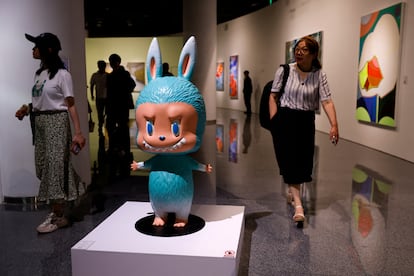
This summer, journalist Elizabeth Gulino posed this question in New York magazine regarding one of those extravagant news stories that sometimes emerge from the world of collecting. The Yongle auction house in Beijing had held its first specialized sale of Labubu dolls, the little monsters with rabbit ears and toothy smiles marketed by the Chinese company Pop Mart. The stars of the event were two life-sized figures that sold for €147,000 and €112,000, in a sale that reached a total of 3.73 million yuan (about €450,000). Undoubtedly, a not insignificant sum for a phenomenon born from collectible dolls whose most basic version costs €30.
The rise of Labubu could be considered another risky drift of pop capitalism, but, as happened not long ago with NFT art, its long-term profitability is doubtful. Investing in such recent objects is a risky maneuver.
In a different league is the star lot from the Geneva-based house Numismatica Genevensis SA for this autumn: a 1609 Segovian centén, a huge gold coin minted in Spain under Philip III with a starting price of two million Swiss francs (about €2.1 million), which finally sold for over three million euros (specifically, €3,025,739), making it the most expensive European coin ever sold at auction. Facing crypto-skepticism, a 340-gram gold coin, the largest of the 17th century.
Baldacci confirms that, once the passion for digital artworks and pop art has passed, “more and more people are incorporating this type of object to diversify their collections.” He refers to ancient coins, though not all are valuable.
In 2025, even crypto bros recognize that gold is still gold. Precious stones, too.
However, she points out, not all that glitters is gold, nor does any jewelry maintain its value over the years.
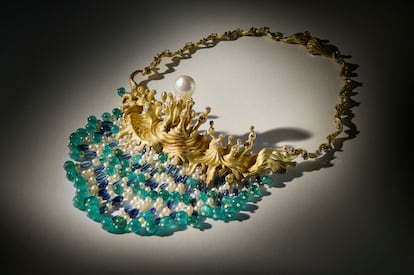
She mentions the case of a choker that Salvador Dalí made in the sixties for São Schlumberger, which was auctioned at Sotheby’s in October for €736,000. Its materials are unquestionable: gold, diamonds, emeralds, sapphires, and a large pearl.
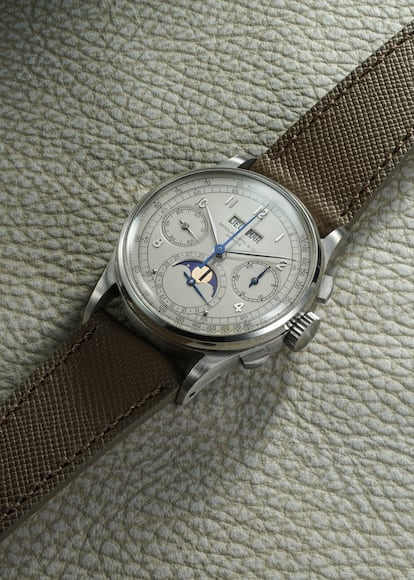
In the world of investment and collecting, uniqueness is the most prized. Such is the case of the Patek Philippe watch sold in November for over 12 million Swiss francs (over €13 million). It is not made of rose or white gold, but of steel.
Technology also imposes its own dynamic. The arrival of lab-grown diamonds, created in machines that replicate the pressure and temperature conditions found inside the earth, threatens to shake one of the world’s most lucrative markets.