Editor’s Note
While broader luxury fashion faces headwinds, the fine jewelry segment demonstrates remarkable resilience. This article examines the steady growth trajectory forecasted by industry analysts, highlighting its increasing importance within the global luxury landscape.
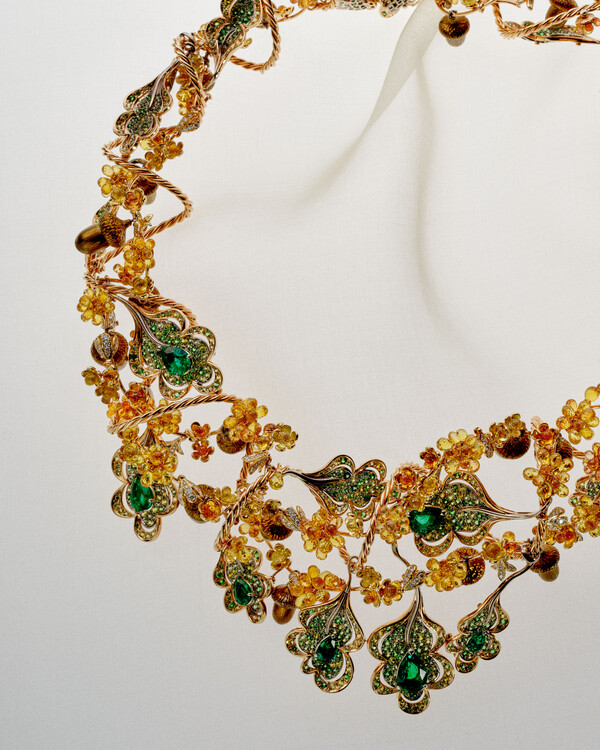
Amid uncertain trends in the luxury fashion market, fine jewelry continues to show relatively stable sales. Global consulting firm Bain & Company and the Italian luxury goods association Altagamma forecast that the jewelry category will grow by 4-6% in 2025, which is expected to lead to an increased share within the overall luxury market. Global market research firm Grand View Research anticipates the global luxury jewelry market will grow at an average annual rate of 8.7% through 2030.
Growth factors include not only the intrinsic value of precious metals but also the intangible value formed by the combination of design and brand image. Mario Ortelli, Managing Partner of global luxury industry strategy advisory firm Ortelli & Co., stated:
This trend is encouraging not only established high jewelry houses but also fashion and lifestyle brands to enter the jewelry market. Mario Ortelli added:
However, raw material prices are a burden in the production process. The rise in gold prices has been particularly notable. Driven by central bank and investment fund purchases, along with volatile U.S. tariff policies, the price of gold reached a record high of $4,524.40 per ounce on December 24, 2025. On the same day, silver rose to $71.66 per ounce, more than doubling since the beginning of the year. As of January 2, 2026, gold adjusted to $4,369.81 per ounce, while silver continued its upward trend to $73.84.
Global financial institution JPMorgan suggested that the rise in gold prices may not be a short-term phenomenon. Natasha Kaneva, Head of Global Commodities Strategy, stated in a report:
She forecasted the possibility of gold reaching around $5,000 per ounce by the end of 2026. JPMorgan expects an average of $5,055 in Q4 2026 and $5,400 by the end of 2027.
The higher gold price is leading to changes in production methods. Designers are lightening designs to reduce gold usage or utilizing alternative materials like platinum and silver. Jewelry designer Stephen Webster said:
He transitioned his bridal jewelry line from white gold to platinum. Currently, platinum prices are about half that of gold.
In contrast, diamonds have shown a different trend. Since 2021, diamond prices have fallen by up to 40%. Contributing factors include the proliferation of relatively cheaper lab-grown diamonds, traceability issues in the supply chain, sanctions on Russian rough stones, and a slowdown in luxury consumption in China.
In this environment, the De Beers Group discontinued its own lab-grown brand, Lightbox, and chose a natural diamond-focused strategy. De Beers reaffirmed its position that “lab-grown diamonds, with their sharp price declines, and natural diamonds, with their high scarcity, are separate categories.”
Changes are also continuing on the supply side. Following the closure of the Australian Argyle Mine, famous for pink, red, and violet stones, in 2020, global mining company Rio Tinto plans to close its last remaining diamond mine, the Canadian Diavik Mine, in early 2026. The company plans to subsequently restructure its portfolio to focus on minerals in demand for smartphones, laptops, and electric vehicles.
In an environment of increased price volatility, jewelry houses are securing competitiveness by focusing more on design and brand storytelling. Mario Ortelli explained:
The growth of Chinese jewelry brands is also noteworthy. Laopu Gold, which grew rapidly in the Chinese market, attracted the attention of LVMH Chairman Bernard Arnault. Borland, which emphasizes goldsmithing details, secured investment from Kering Ventures in December 2025. Both brands are expanding with 24K-focused products and designs that reflect the tastes of young consumers.
Mario Ortelli mentioned that Chinese design motifs have historically served as important references in high jewelry. He explained that jewelry featuring traditional Chinese motifs like dragons or jade, created by Cartier and Van Cleef & Arpels, has long been worn by the European upper class.