Editor’s Note
This article highlights EOS, a pioneering force in additive manufacturing since 1989. The company’s commitment to innovation and sustainability is reflected in its comprehensive range of 3D printing systems, materials, and services for both polymers and metals.
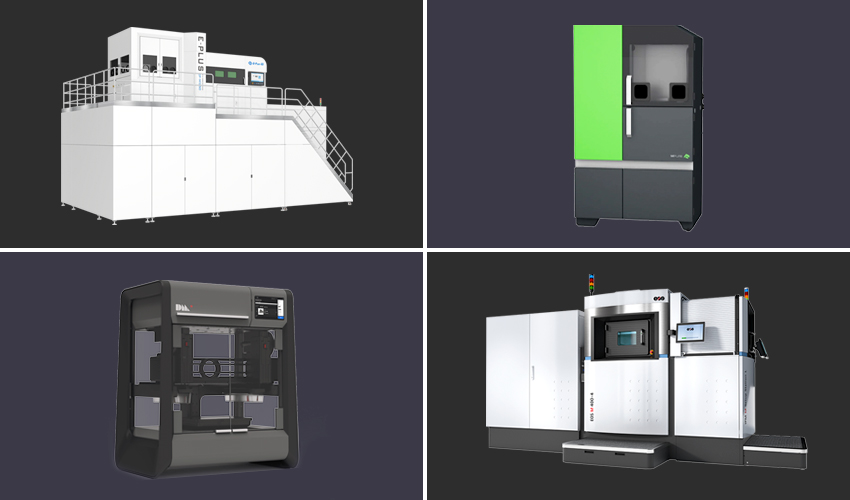
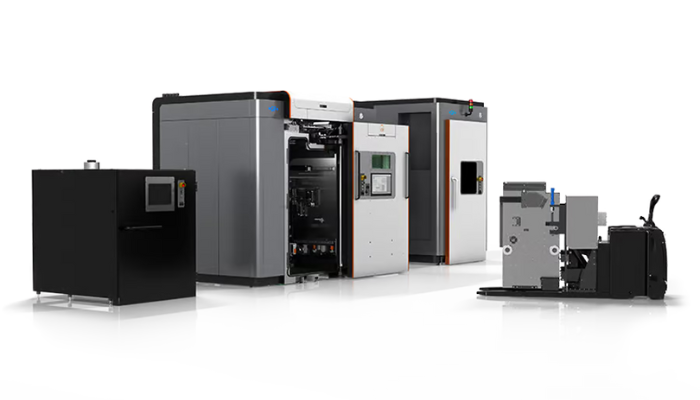
EOS, based in Krailling near Munich, is one of the pioneers of additive manufacturing. With its 3D printing systems for polymers and metals, its services, and materials, EOS offers a broad spectrum of AM products. The family-owned company was founded in 1989, and since then, sustainability, innovation, and responsibility have been at the center of EOS’s work. Its flagship solutions include its DMLS offerings: the EOS M 290 series, the EOS 300 series for high productivity, and the EOS M 400 series. More than 20 alloys have been validated for all these systems to date. This allows customers to additively process aluminum, cobalt-chrome, copper, nickel-based alloys, stainless steels, and many more. The EOS Group also includes AMCM (Additive Manufacturing Customized Machines). This sister company was founded to offer customers further AM solutions not met by standard products.
Eplus3D already has over 30 years of experience in the additive manufacturing industry. The Chinese company has positioned itself internationally, as evidenced by its locations in Stuttgart and Houston. Eplus3D’s focus is on industrial 3D printing solutions. In this context, Eplus3D covers both polymers and metals, which are processed additively via powder bed fusion. With its industrial 3D printers, Eplus3D addresses a wide spectrum of industries: aerospace, automotive, medical, energy, and many more. In addition to printing systems, Eplus3D also focuses on software, services, and the research and development of advanced materials for additive manufacturing. In the past, Eplus3D has demonstrated its expertise in numerous collaborations. For example, at Formnext 2024, together with LEAP 71, it presented the world’s largest 3D-printed rocket engine.
Another important player from China is Zrapid, whose iSLM product line is currently conquering the world of 3D printing. The provider of powder bed solutions, which works with technologies such as SLM and LPBF for metal and SLA for polymers, has experienced rapid expansion in recent years. In fact, the company currently has more than 5,500 industrial 3D printers installed in China and even more in over 40 other countries. This includes a growing presence in Europe, particularly thanks to the collaboration with the Greek company ANiMA on the iSLM series of 3D metal printers. This line includes four machines that differ in build volume – from the iSLM160 with 160 mm x 160 mm x 210 mm to the iSLM600QN, which has a build volume of 600 mm x 600 mm x (600 – 1300 mm) and is optimized for automated industrial production of large parts. The company is characterized by its increasing focus on innovative design, including robotics and artificial intelligence for the additive manufacturing of the future.
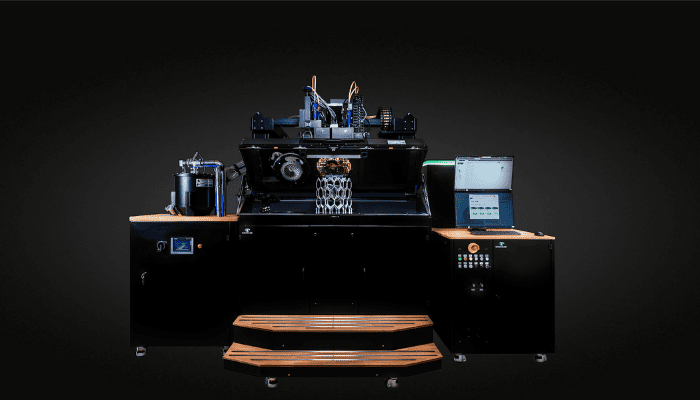
Triditive is a Spanish company founded in 2013 that initially focused on training in FDM technologies and developing 3D printer kits. Today, the startup is best known for its additive manufacturing solution for metals called AMCELL. The AMCELL 8300 is an industrial 3D printer compatible with metals, polymers, and composite materials – and even simultaneously. This is achieved through automated modules based on AMD technology (Automated Multimaterial Deposition), which also enable the production of metal parts via metal extrusion. After manufacturing a component, a sintering process is performed to obtain a 100% metal part with improved surface quality. Triditive’s printing system has undoubtedly demonstrated the potential of additive manufacturing, particularly the production of metal parts with more optimal and flexible processes.
The additive manufacturing of metals encompasses a range of processes that are becoming increasingly attractive for numerous industries. For several years now, we have seen industrial giants equipping themselves with 3D printing systems to produce more powerful, lighter, customized, and more energy-efficient parts. The Wohlers Report 2024 reports that sales of 3D metal printers increased by 24.4% compared to the previous year. But which devices are currently available on the market? To give you an overview of the industry, we have divided the 3D metal printers by manufacturing process: Laser Powder Bed Fusion, DED (Directed Energy Deposition), Material Extrusion, Electron Beam Melting, Binder Jetting, and other technologies. Simply click directly on the technology that interests you to go straight to the associated printers!