Editor’s Note
As global trade tensions intensify, supply chain realignments present a complex landscape for key export sectors. This report examines the dual impact on Thailand’s gem and jewellery industry, which recorded a 53% export surge in the first 11 months of 2025.
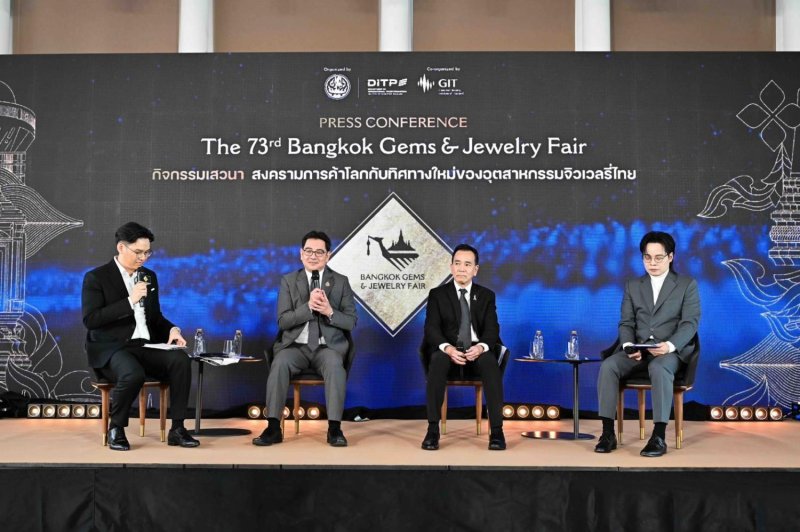
Escalating trade conflicts between major economies are reshaping global supply chains, creating both challenges and opportunities for the Thai gem and jewellery sector, according to the Department of International Trade Promotion (DITP).
According to the DITP, during the first 11 months of 2025, exports in this category reached US$12.1 billion, representing growth of 53%.
Surinthorn Sunthornsanan, deputy director-general of the DITP, said reciprocal tariffs are essentially a battle for better trade deals with the US, aimed at securing competitive advantages and entry into global supply chains.
The department’s export promotion strategy now emphasises building supply chain resilience, particularly in the gem and jewellery market, said Mr Surinthorn.
Beyond promoting exports, the agency is focusing on sourcing high-quality raw materials at competitive prices and appropriate scale, while strengthening networking among operators.
The DITP also plans to diversify export markets, targeting the Middle East and emerging economies, while accelerating free trade agreement utilisation, branding support and digital trade platforms.
Sumed Prasongpongchai, director-general of the Gem and Jewelry Institute of Thailand, said reciprocal tariffs have hurt US consumers, but he urged Thai entrepreneurs in this market to explore new markets and identify their strengths.
He stressed the importance of verifying product origin and addressing non-tariff barriers such as quality standards.
He acknowledged the strong baht remains a structural challenge, especially for small businesses reliant on price competitiveness.
Rising tariffs and stricter rules of origin are forcing manufacturers to rethink sourcing and production processes. Yet the pressure is driving the industry towards higher standards, traceability and innovation, said Mr Sumed.
Suriyon Sriorathaikul, chairman of the Gem and Jewelry Industry Club under the Federation of Thai Industries, said many recent trade measures, particularly tariff hikes, are aimed at addressing transshipment.
For Thai entrepreneurs, this means greater caution is required in verifying the origin of raw materials and products. Traceability and compliance are becoming more critical than ever.
Mr Suriyon urged the private sector to adapt by expanding into niche and luxury segments, improving productivity and investing in branding.
Mr Suriyon pointed to Thailand’s tourism power as a driver for the gem and jewellery market.
Occupying more than 53,000 square metres, the fair is scheduled for Feb 22-26 at the Queen Sirikit National Convention Center, featuring more than 1,300 companies and 2,800 booths from as least 20 countries. The event is expected to attract more than 45,000 visitors and generate trade value exceeding $150 million.