Editor’s Note
This article discusses Prime Minister Narendra Modi’s visit to China for the SCO Summit and his meeting with President Xi Jinping, highlighting its potential impact on bilateral economic relations. The headline has been adjusted for clarity and focus.
New Delhi.
Prime Minister Narendra Modi arrived in China on Saturday for the first time in seven years, where he will participate in the important SCO Summit. The Prime Minister will stay in China until September 1 and will hold a crucial meeting with Chinese President Xi Jinping. The two leaders may discuss India-China economic relations and deliberate on steps to further normalize bilateral ties.
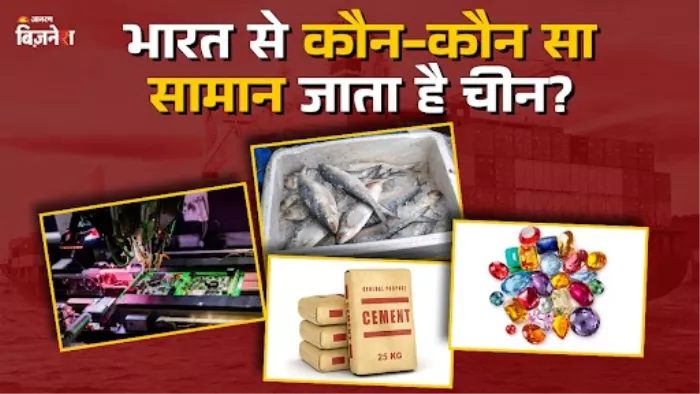
PM Modi’s visit to China is also considered significant because the US has imposed tariffs of up to 50% on India, and India is focusing on new markets for its goods exports. Let’s find out what China already buys from India.
According to the United Nations COMTRADE database on international trade, during 2024, India sent goods worth $18 billion to China. This amounts to approximately ₹1.59 lakh crore in Indian currency. The item China imported the most from India last year was ores, slag, and ash. China imported $3.54 billion worth of ores, slag, and ash.
• Organic chemicals: $1.47 billion
• Electrical, electronic equipment: $1.37 billion
• Machinery, nuclear reactors, boilers: $1.24 billion
• Fish, crustaceans, mollusks, aquatic invertebrates: $1.15 billion
• Salt, sulfur, earth, stone, plaster, lime, and cement: $1.13 billion
• Animal, vegetable fats and oils, cleavage products: $867.96 million
• Pearls, precious stones, metals, coins: $866.92 million
• Coffee, tea, mate, and spices: $673.74 million
• Bird skin, feathers, artificial flowers, human hair: $491.55 million
• Cotton: $470.26 million
• Copper: $443.29 million
In addition to the items mentioned above, China imported many other products from India last year. These include plastics, aluminum, and mineral fuels, as well as oils, iron and steel, pharmaceutical products, footwear, gaiters and similar articles, edible vegetables and certain roots and tubers, animal feed, inorganic chemicals, and rubber.