Editor’s Note
As U.S.-China tensions over advanced industry supply chains escalate, South Korea’s pivotal battery and semiconductor sectors face increasing risks of collateral damage. This analysis examines the potential fallout for these critical industries.
As the conflict between the US and China over advanced industry supply chains intensifies, concerns are growing that South Korea’s key industries, batteries and semiconductors, could be caught in the crossfire.
Tensions are particularly high following foreign media reports that the Chinese government will implement export controls on lithium-ion batteries and synthetic diamonds, following similar measures on rare earths. Hong Kong’s Ming Pao reported on the 13th that China is expected to implement export control measures on high-end lithium-ion batteries and synthetic diamonds starting November 8th, in response to the high tariffs imposed by the Trump administration. Lithium-ion batteries are considered an essential power source widely used in smartphones, laptops, electric vehicles, power tools, medical devices, and renewable energy storage.
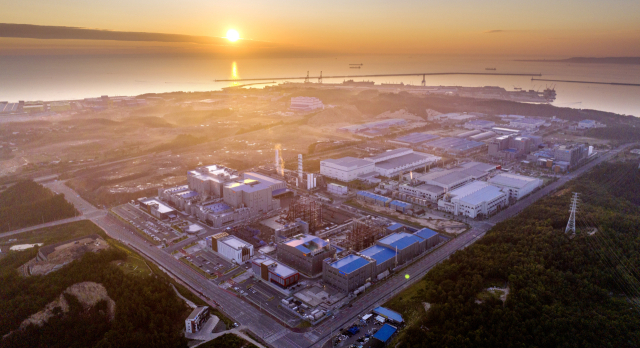
This move represents a stronger measure following the inclusion of strategic minerals like rare earths and related technologies, as well as items related to cathode materials and synthetic graphite anode materials, in the export control list.
If China’s export controls are fully implemented, domestic Korean companies with production bases in China are also expected to be affected. Battery majors like LG Energy Solution, Samsung SDI, and SK On, along with material companies, have factories in China and could face delays in permit procedures or logistics disruptions.
Furthermore, if supply chain risks materialize, battery material companies in the Daegu-Gyeongbuk region, which have a high dependence on Chinese minerals, could also be negatively impacted. This is because most of the precursor, a key raw material for cathode materials, is imported from China.
Additionally, there are concerns about supply disruptions in the machinery and equipment sector needed for semiconductor manufacturing due to China’s export controls. The synthetic diamond added to the import control list this time is used in advanced semiconductor chip manufacturing, ultra-strong material polishing, and laser optical devices.
Rare earths are also a crucial material for components like ultra-precise lasers and magnets needed to make advanced semiconductor equipment, with China accounting for 70% of global production. Currently, companies like Samsung Electronics and SK Hynix rely on equipment from companies like America’s Applied Materials (AMAT) and the Netherlands’ ASML to make semiconductors.
Bloomberg reported that ASML could face product shipment delays of several weeks immediately due to China’s strengthened rare earth export controls.