Editor’s Note
This article outlines Tanzania’s strategic move to integrate youth into the mining sector’s future through a new licensing initiative and infrastructure development, aligning with national goals for economic transformation and inclusive growth.
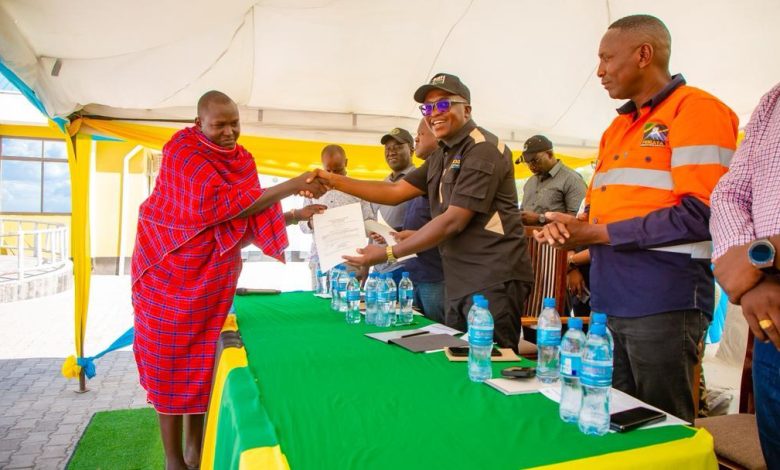
Tanzania has initiated a pivotal shift in its mining sector by placing young people at the forefront of future growth. The Minister for Minerals, Anthony Mavunde, recently launched a youth-focused licensing initiative and announced the construction of a new mineral buying centre in Lemshuku, Simanjiro District.
These measures support the broader national strategy to transform Lemshuku into a thriving centre for coloured gemstones and strengthen youth participation not as labourers but as rights holders in an increasingly lucrative sector.
During a stakeholders’ engagement with miners, youth groups and local leaders, Mr Mavunde underscored that government policy under President Samia Suluhu Hassan seeks to elevate young Tanzanians from low-income, informal mining roles to formal owners of mining licences and gemstone blocks.
He stated that the youth-focused licensing programme will begin in Lemshuku and expand gradually to other gemstone-producing areas as part of a systematic inclusion strategy.
In practice, the Minister’s visit resulted in the issuance of licences to 21 organised groups comprising 423 small-scale miners. Seven youth and community groups with a combined membership of 127 individuals received Primary Mining Licences (PMLs) specifically for tanzanite extraction.
Additionally, 14 groups consisting of 296 members were issued small trading licences, enabling them to participate legitimately in gemstone trade and gain formal recognition along the local value chain. These measures expand legal access for young miners, stabilise participation and enhance transparency in gemstone transactions.
To reinforce the licensing drive, Mr Mavunde announced the establishment of a structured mineral buying centre in Lemshuku.
This centre is intended to reduce informal trade, limit loss of value through unregulated middlemen and provide a nearby point of sale for small-scale miners who often travel long distances with valuable stones. Bringing the market closer to production sites aims to safeguard miners, encourage official trading practices and improve revenue streams for both local communities and the government.
Access to capital has long posed a barrier for small miners, who traditionally rely on foreign buyers offering advance payments in exchange for undervalued stones. To break this dependency, the Minister introduced a government-backed export guarantee scheme designed to give miners and traders access to working capital supported by a national guarantee fund.
This policy shift aims to ensure that Tanzanians retain more value from their own minerals and reduce the longstanding flow of profits out of the country.
The government’s goal is to anchor economic benefits domestically while enabling miners to operate independently of exploitative financing arrangements.
Forward-looking efforts also include geophysical exploration. Mr Mavunde revealed that the specialised exploration drone previously deployed in Mererani will conduct a survey over Lemshuku before February 2026.
The drone will identify fractures and geological indicators associated with coloured gemstones, particularly green garnet, which early studies suggest may have considerable potential in the area.
This scientific mapping is intended to improve mining efficiency, enhance safety and guide smarter investment decisions. It reflects a shift from guesswork toward technology-driven exploration in small-scale mining zones.
The Minister highlighted the national impact of recent reforms, tighter regulatory oversight and the transition toward formal markets. For the first time since independence, the mining sector has delivered 1 trillion Tanzanian shillings to government revenues.
Collections in the current financial year have already exceeded 500 billion shillings out of a target of 1.2 trillion. The Mirerani Resident Mining Office briefed the Minister that 1.57 billion shillings was collected in just four months from royalties, inspections and other statutory charges.
Increased exports of tanzanite, green garnet and graphite further indicate stronger formalisation and improved control along the Mirerani security fence, reducing smuggling and leakages that previously cost the state considerable revenue.
Local leaders in Lemshuku used the engagement to present long-standing challenges that continue to constrain the community despite the area’s growing importance in gemstone extraction.
Youth representatives cited limitations such as the lack of proper mining equipment, the presence of exploitative buyers who manipulate prices, poor road infrastructure and the absence of electricity and mobile network coverage.
Women’s groups raised concerns over chronic water shortages that force households to buy water at high prices and endure days without supply. These issues undermine local resilience and reduce the capacity of residents to take full advantage of the emerging gemstone economy.