Editor’s Note
This article highlights the extreme complexity and opacity of the global gold supply chain, which spans multiple jurisdictions with varying regulations. This lack of transparency hinders traceability and enables smuggling and other illicit activities, particularly following sanctions on major producers.
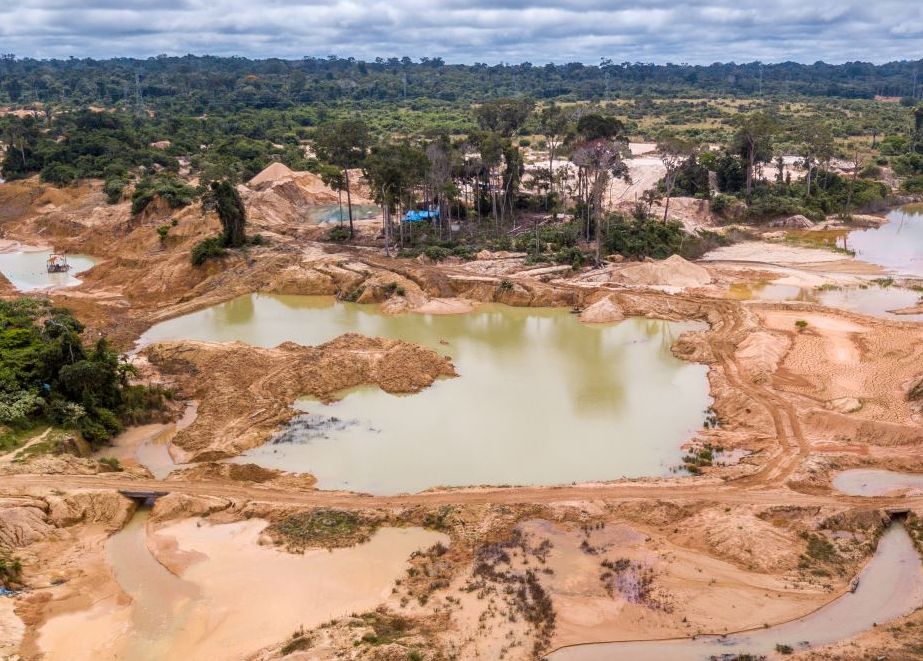
Gold extraction occurs worldwide. From the mine to the jeweler, the precious metal undergoes numerous processing steps across several countries with different legal regulations regarding standards, controls, and import requirements. This high complexity of the supply chain makes clear traceability practically impossible and favors smuggling and numerous other criminal activities.
Since many Western countries have banned the use of gold from Russia—the largest source of the precious metal after China and Australia—due to the war in Ukraine, the problem of inadequate traceability has come into even sharper focus.

At the Global Precious Metals Conference in mid-October in Lisbon, numerous major players from the gold industry, on the initiative of the London Bullion Market (LBMA)—one of the largest gold trading venues—and the World Gold Council, signed a joint declaration on ten central sustainability goals. These include commitments to responsible sourcing standards, respect for human rights, promotion of the UN Sustainable Development Goals, as well as measures and disclosures on climate change.
Furthermore, based on a report by Gregory Mthembu-Salter and Thomas Salter of Phuzumoya Consulting, the LBMA has proposed a series of concrete steps to promote the inclusion of gold from artisanal and small-scale mining (ASM) into regular supply chains. Previous initiatives to legitimize ASM production, which accounts for about 20 percent of annual gold extraction, have had little success. Stricter standards in the gold industry have—albeit unintentionally—further marginalized the sector and pushed it even further into illegality, with corresponding negative impacts.

A system-inherent problem in ASM gold mining is violence, as a recent analysis by the U.S. Government Accountability Office (GAO) for the Congo shows. The conflict in the eastern provinces of the African country was the reason for creating the OECD Due Diligence Guidance for Responsible Supply Chains of Minerals from Conflict-Affected and High-Risk Areas. Since its implementation in 2012, Western governments, the gold industry, and civil society groups have invested much time and resources in measures to improve the situation. Nevertheless, the number of security incidents in the mines and civilian casualties has increased.
Workers and the population are also exposed to a high potential for violence and danger in all other areas where ASM gold mining is conducted. This is due to inadequate or absent occupational safety and the use of toxic substances because of low legal standards and lax controls.
In his report presented at the end of September, Marcos Orellana, UN Special Rapporteur on Toxics and Human Rights, states that well over a third of the mercury used worldwide is attributable to ASM gold mining.

The highly toxic substance enters the air, water bodies, and the food chain even in regions far from the mines, leading to serious health damage to humans, animals, and plants.