Editor’s Note
This article examines how luxury brands like Piaget are navigating market headwinds by embedding sustainability into their core operations, proving that long-term vision can thrive even amid short-term uncertainty.
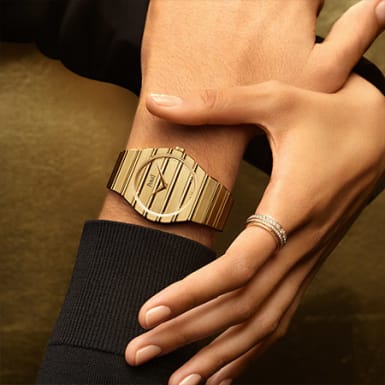
Transformation Towards Sustainability in Luxury Watchmaking and High-End Jewelry – Piaget at the Forefront
In 2024, the total market value of the luxury sector was estimated at EUR 1,480 billion, a decrease of approximately 1% compared to 2023. After two years of spectacular growth, many players in the sector had announced a period of consolidation for 2024, mainly due to geopolitical tensions and macroeconomic uncertainty.

Despite these short-term headwinds, the luxury market remains solid, and 2025 is expected to mark a return to robust growth. The sector thus plans to reach a value of EUR 2,000 to 2,500 billion by 2030. However, this success is not without effect on the planet: globally, the luxury sector is responsible for 20% of industrial water pollution and 6% of greenhouse gas emissions.
In response, sector leaders recognize that they must reduce their environmental impact. But what progress has been made? And how do luxury brands find the balance between sustainability goals and growth? For groups like LVMH, Kering, and Richemont, which owns Piaget, sustainability is no longer just an “accessory.” On the contrary, it is an essential pillar of brand loyalty and long-term business strategy.

Several macroeconomic trends are reshaping the luxury sector. While growth previously relied on China, due to a slowdown in luxury spending by both Chinese tourists and domestic buyers, the country fell to fourth place globally in 2024, recording a decline of 20-22% compared to 2023. Meanwhile, Europe maintained its position as the top luxury consumer, while Japan emerged as a growth champion, with a 12% increase in sales.
In addition to this shift in the regional landscape, companies are now facing a new challenge, explains Gosia Eggimann, Buy-side analyst, Consumer goods at Lombard Odier. Given the generational handover of purchasing power, by the end of 2025, Millennials and Generation Z will represent 45% of the global personal luxury market.
explains Eggimann, who emphasizes the importance of building connections with a growing audience on social networks such as Instagram and TikTok.
The “Insta effect” does not, however, denote a lack of sophistication. In the luxury watch sector, for example, which maintained a value of USD 46 billion in 2024, Eggimann states that

Christophe Bourrié, Global High Jewellery & High-End Watchmaking Director at the Swiss luxury watchmaker and jeweler Piaget, confirms this:
For traditional brands like Piaget, social media is now a priority. This is where connections with new consumers are forged. Facing the generational shift, brands are also seeking to secure the loyalty of younger consumers by turning to sustainability. Piaget stands out in this area. Even though the company celebrated its 150th anniversary in 2024, it continues to innovate and attract a new, more demanding clientele by paying greater attention to the environmental impact of its materials and practices.