Editor’s Note
This article examines the dual impact of the COVID-19 pandemic on the mechanical engineering sector, highlighting both the contraction in youth employment opportunities and the emergence of new industry trends driven by digital and technological integration.
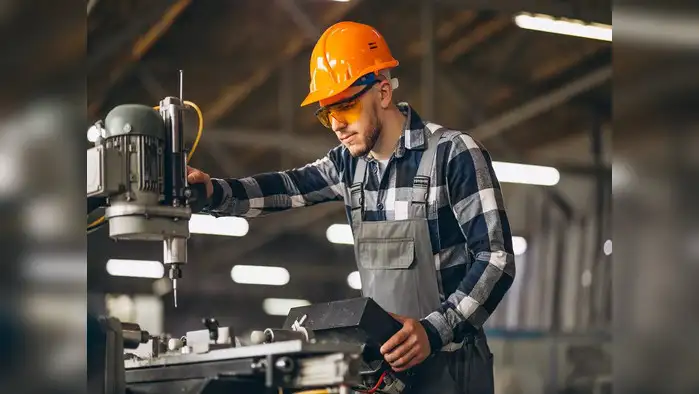
The COVID-19 pandemic has shifted many businesses to online platforms and directed people to work from home. This pandemic has shown its impact not only in the digital revolution but also in technological integration, bringing many industries together. Consequently, there has been a significant decline in job opportunities for youth. One of the major sectors affected by COVID-19 is the field of mechanical engineering, where, alongside a shortage of jobs, new trends have also developed.
Mechanical engineering is considered one of the oldest and broadest fields of engineering. It involves knowledge about the design, construction, and use of machines. During courses in this field, students are taught about the design of automobiles, electric motors, aircraft, and other heavy vehicles. Mechanical engineers design everything from new athletic equipment and medical devices to computers, air conditioners, automobile engines, and power plants. These engineers design every machine, whether new or old. Therefore, it is a favorite field among youth.
CAD/CAM are software that use computer-based methods to encode geometric data. In this, the processes for designing and manufacturing automated machinery are highly integrated. While CAD is primarily used for creating designs, CAM controls machine tools in the manufacturing of parts. It helps previous designers while reducing manufacturing costs. Both software require a powerful computer.
Heat exchangers are systems that work to transfer heat from one place to another between two or more fluids. It is a system that facilitates heat transfer in an easy way without actually moving the fluid directly. They are highly critical parts of fuel cell systems for thermal management tasks. The mechanical engineering field has recently seen significant potential in designing energy-efficient, effective, and lasting heat exchangers.
Smart manufacturing can easily be called a manufacturing system. In which all ends of the supply chain can be fully integrated and have speed, structural accountability to solve any issue. It ensures coordination in the constantly increasing demands of customers and changing conditions of the supply network. It is called Industry 4.0 because it is the fourth industrial revolution focusing on smart manufacturing. This smart industry has helped improve product quality and profits with IoT. It is a system connecting devices, mechanical machines, manpower, objects, etc., together to help transfer data over the network using UIDs.
AI is a technology in which a machine tries to simulate human behavior. This technology is definitely the future of the industry in the coming times. Because now AI is being used in most upcoming technical fields like robotics, VR, IoT, etc. Machine learning is one of those applications of AI that gives the system automatic knowledge about the machine without being explicitly programmed beforehand.
In today’s time, the highest demand for mechanical engineers is in the field of automobiles along with hybrid and autonomous technology, data science, embedded systems, smart cities, and city analysts, etc. Even after some changes and pressures, the future of mechanical engineering looks bright because many industries now have a strict need for youth with deep understanding of technology along with analytical skills.