Editor’s Note
This analysis examines the sudden imposition of 39% US tariffs on Swiss luxury watches in August 2025, a policy shift that has abruptly ended the American market’s role as a critical growth engine for the watchmaking industry.
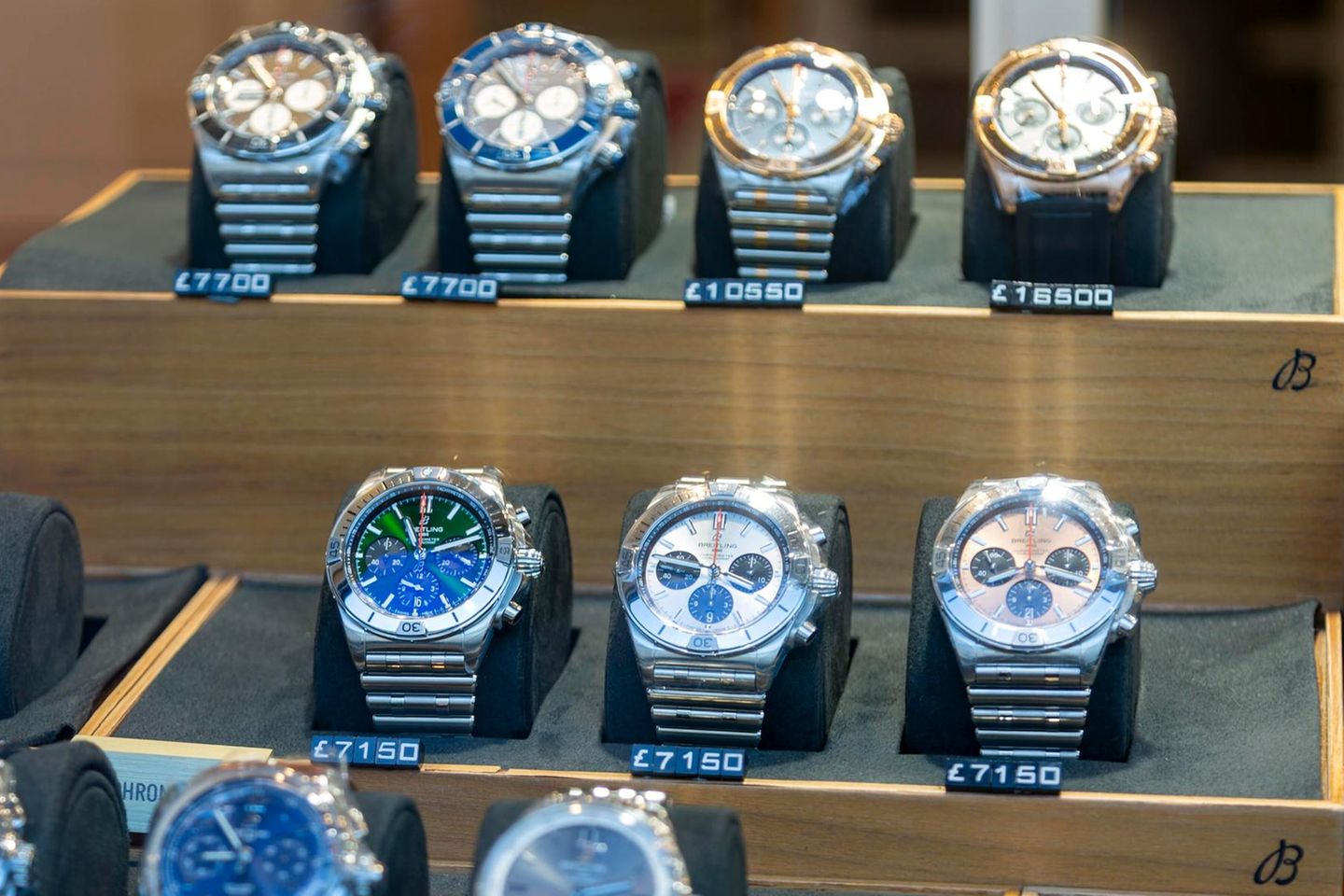
The US market had long been considered the last bastion of growth for both large and small manufacturers of mechanical timepieces. While China’s engine already sputtered in 2024 – exports there plummeted by 25.8 percent – American consumers kept Geneva’s balance sheets afloat. Until the summer of 2025.
The introduction of 39 percent tariffs on Swiss luxury goods by the Trump administration on August 7th caught the CEOs of watch brands completely unprepared. The announcement had reached them in April, during the most important trade fair, Watches and Wonders – a timing perceived in the industry as a targeted blow. The result was a logistical drama: After a “boom” from last-minute deliveries before the deadline, US exports already fell by 16.5 percent in August, and by 56 percent in September. Only the diplomatic agreement on 15 percent in mid-November brought relief.
The export data from the Federation of the Swiss Watch Industry (FH) paints a nuanced picture. In November 2025, exports fell by 7.3 percent to 2.2 billion Swiss francs. Cumulatively, the annual decline thus stands at 2.2 percent so far, though December data is still pending.

However, the overall decline figure masks massive divergences. Exports to the USA fell by only two percent despite the tariff chaos, while exports to China fell by 12.7 percent and to Hong Kong by 6.2 percent. These gaps were filled by Saudi Arabia, the United Arab Emirates, and India – markets that were mere footnotes five to seven years ago.
Even more revealing for the industry’s health is the volume. In the first half of 2025, approximately 420,000 fewer watches were exported, a decline of 5.7 percent compared to the previous year. This is a historically low level. The industry is thus maintaining its revenue solely through continuous price increases and a clear shift towards value-enhancing precious metals.
Two long-term observable trends intensified dramatically in 2025. First, manufacturers are focusing on increasingly expensive watches for a growing clientele of ultra-wealthy individuals and “super-collectors.” Two decades ago, the segment of watches priced over 3,000 francs accounted for about 45 percent of export value; by 2024, it was already 80 percent – representing only 13 percent of the volume.
Second, demand is consolidating around a handful of brands: Rolex, Patek Philippe, Audemars Piguet, and Richard Mille. Cartier also held a top position and likely gained further market share. In contrast, several corporate brands from LVMH, Richemont, and the Swatch Group continued to lose ground.
Primarily under pressure is the segment between 5,000 and 15,000 euros, the traditional domain of Omega, IWC, TAG Heuer, or Hublot. These brands have excellent products and a loyal customer base but face a significant structural challenge: Their unit numbers are high – Omega produces an estimated 500,000 watches annually – while their natural target group, the affluent middle class, hesitates to consume in uncertain times. Today, someone investing a five-figure sum often wants the one piece for life. And that path frequently leads to Rolex.
While corporate headquarters were still fixated on tariff tables, another, perhaps strategically more important, shift was taking place on the streets. Under the buzzword “Analog Lifestyle,” the smartwatch is considered a symbol of permanent surveillance in trend-conscious circles and therefore “uncool.” The mechanical watch is becoming the ultimate instrument for a conscious digital detox.
Rob Corder from the industry service “WatchPro” described the year 2025 this way. It sounds paradoxical but hits the core of events. Despite all geopolitical shocks, the power dynamics in the (luxury) watch industry have by no means shifted – they have been virtually cemented. In 2026, the industry in Switzerland and elsewhere is starting leaner and strategically sharper. That in itself is quite an achievement.