Editor’s Note
LVMH’s landmark acquisition of Tiffany & Co. marks a significant consolidation in the luxury sector, adding a storied American jeweler to its portfolio. This move is poised to reshape the group’s competitive standing in high-end watches and jewelry.

On January 7, French luxury giant Louis Vuitton-Moët Hennessy (LVMH) announced the completion of its acquisition of the American high-end jewelry house Tiffany & Co. Tiffany has officially become the 75th luxury brand under the LVMH Group. LVMH stated that Tiffany’s addition “will profoundly transform LVMH’s Watches and Jewelry division.”
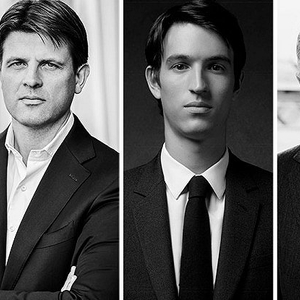
With the completion of the acquisition, LVMH immediately initiated a change in Tiffany’s management. LVMH announced the appointment of Anthony Ledru, former Executive Vice President of Global Commercial Activities at Louis Vuitton, as the new CEO of Tiffany, effective immediately.
Prior to joining Louis Vuitton, Anthony Ledru served as Senior Vice President of Tiffany’s North America region for nearly two years. In December 2014, Ledru moved to Louis Vuitton as President and CEO of the brand’s North American operations.
Simultaneously, Alexandre Arnault, former CEO of LVMH’s high-end travel luggage brand RIMOWA, will immediately assume the role of Executive Vice President at Tiffany, becoming the second-in-command to assist Anthony Ledru in overseeing Tiffany’s product and communications businesses.
Notably, Alexandre Arnault is the second son of LVMH Chairman Bernard Arnault, aged only 28. He has been managing the RIMOWA brand since 2016 and played a pivotal role in LVMH’s €640 million acquisition of the German luxury luggage brand.
The third executive appointed in this round is Michael Burke, who will serve as Chairman of Tiffany’s Board of Directors. Michael Burke has long served as Chairman and CEO of Louis Vuitton.
These three heavyweight executives will initiate a series of reform measures to boost Tiffany’s performance. As a 183-year-old jewelry house, Tiffany is globally renowned for its iconic “Tiffany Blue” shopping bags and robin’s egg blue gift boxes. Its most famous products include diamond rings, crystal glass ornaments, and other high-end gifts.

Currently, Tiffany has 320 stores worldwide, with nearly two-thirds located in international markets outside the United States. In recent years, as growth in the US market has weakened and consumer power in China and other Asian countries has risen, the Asian market has become a key driver of Tiffany’s performance growth.
Analysts believe the Asian market will be a key focus for LVMH after taking control of Tiffany. However, Tiffany also needs to upgrade its store image and increase investment in online channels.
The appointment of Alexandre Arnault as Tiffany’s second-in-command signifies the Arnault family’s further penetration into LVMH’s high jewelry and watch business. In July 2020, Bernard Arnault appointed his third son, 25-year-old Frédéric Arnault, as President of LVMH’s Watches and Jewelry division.
With Tiffany’s formal addition, LVMH’s high jewelry business landscape in North America will undergo significant changes. The appointment of experienced executives and family members also reflects Bernard Arnault’s determination to streamline, reform, and expand the hard luxury sector in North America.
While LVMH holds absolute sway in high-end retail sectors such as fashion, leather goods, and travel retail, it has yet to conquer the hard luxury market represented by high jewelry and watches. Its biggest threat and competitor in this field is the Swiss Richemont Group, which owns top jewelry and professional watchmaking brands like Cartier, Piaget, Vacheron Constantin, and Van Cleef & Arpels, holding a significant market share globally.
In 2011, LVMH acquired the Italian high jewelry house Bulgari. After a series of reforms, Bulgari’s sales and profits have significantly improved. Analysts predict that LVMH will draw on the experience of acquiring and reforming Bulgari, including streamlining product lines to reposition the Tiffany brand.
According to LVMH’s recent statement, in addition to the departure of Tiffany’s current CEO Alessandro Bogliolo, current Creative Director Reed Krakoff and Chief Brand Officer Daniella Vitale will also leave after a transition period. LVMH has not yet announced who will succeed the Creative Director role.
With LVMH formally completing the acquisition of Tiffany, the year-long $15.8 billion “marriage of the century” drama has officially concluded. The deal, initially agreed upon in November 2019 at $135 per share (approximately $16.2 billion), faced significant challenges in 2020 due to the COVID-19 pandemic, leading to renegotiations and legal disputes.
After threats of termination and lawsuits filed by both parties in Delaware court, the two sides reached a revised agreement in late October 2020. LVMH agreed to acquire Tiffany at a 2.6% discount, reducing the total price to $15.8 billion, with “other terms remaining unchanged.”
On December 30, 2020, the revised acquisition received approval from Tiffany’s shareholders. Following this second shareholder vote, the deal was finalized. Upon completion of the acquisition, five senior executives of Tiffany were set to receive a total of $100 million in severance compensation, known as “golden parachutes.”
According to Tiffany’s latest quarterly report, its performance is gradually recovering from the COVID-19 pandemic. Sales in the Chinese market increased by 70% during the reporting period, while e-commerce channel sales rose by 92% year-on-year.