Editor’s Note
Silver’s surge past $41 an ounce marks a significant milestone not seen since 2011. This rally, fueled by expectations of monetary easing and strong industrial use, underscores its dual role as both a strategic commodity and a financial safe haven in turbulent times.
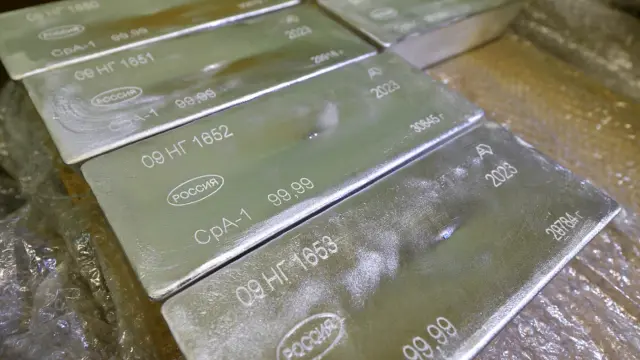
Silver has surpassed $41 per ounce for the first time since 2011, driven by investor appetite for potential interest rate cuts and robust industrial demand. With a gain of over 40% in 2025, silver is solidifying its position as a safe haven for investors amid geopolitical tensions and economic uncertainty.
The price of silver has returned to the center of the financial stage after exceeding $40 per ounce for the first time since 2011. It is now approaching its all-time highs—recorded in 1980—albeit with some delay compared to other metals like gold, platinum, or palladium, and also to stock markets in general. After five consecutive months of gains, its dollar-denominated price has appreciated by 42% so far in 2025.
This movement comes amid expectations of an imminent interest rate cut by the U.S. Federal Reserve (Fed), which has strengthened investor appetite for precious metals. It also follows a notable decline of the dollar against other currencies like the euro.
Furthermore, its resurgence is occurring in a scenario of uncertainty surrounding economic growth or inflation in the U.S. or Europe, with the effect of tariffs extending the shadow of uncertainty. In the wake of gold, the price of silver has gone even further.
In this sense, precious metals have become a refuge against geopolitical tensions and financial instability, in a context also marked by constant criticism from U.S. President Donald Trump towards the Fed, which has fueled doubts about the central bank’s independence.
Markets are closely awaiting the Fed’s next monetary policy meeting this month, where bets on a rate cut are growing. A key U.S. employment report to be released on Friday could reinforce those expectations. As experts point out, lower borrowing costs typically benefit precious metals, which do not generate interest.
Beyond its financial role, silver has an additional value: its industrial utility. It is a key component in clean energy technologies like solar panels.
In this context, the market is heading towards a fifth consecutive year of supply deficit, according to Silver Institute data cited by Jupiter AM.
This is compounded by growing investor interest, which has poured capital into silver-backed exchange-traded funds. In August alone, holdings increased for the seventh consecutive month, the longest streak of inflows since 2020, which has reduced available inventories in London and caused scarcity in the market.
That tension between limited supply and booming demand is what has given an extra boost to the white metal.