Editor’s Note
The impending closure of Rio Tinto’s Argyle Mine, the world’s largest diamond producer, marks the end of an era. While its famed pink diamonds captivated the market, the story underscores a fundamental economic reality: even the most celebrated resources are finite when extraction becomes unprofitable. This closure will reshape global supply and serves as a poignant case study in resource economics.

The occasion that prompted this article is actually a sad one. Next year, the world’s largest diamond mine will close in Western Australia as it has become unprofitable. Rio Tinto’s Argyle Mine has been active since 1983 and, during its over 36-year existence, contributed approximately 10% to the world’s annual diamond production. It also gained worldwide recognition for its pink diamonds, which commanded top prices on the market, even though they accounted for only 0.01% of the mine’s total output. After 36 years of productivity, its reserves are now depleted. What is currently being extracted from the ground are low-quality brown diamonds, which at about $15 to $25 per carat show no economic viability. These meager sales revenues are far below the market average of $171 per carat that De Beers earned with its high-quality diamonds in 2018. For Rio Tinto, this loss is manageable, as diamond revenue accounted for only about 2% of the group’s total revenue, and Rio Tinto has a secure foundation through iron ore mining, which makes up 60% of the company’s revenue.
Even though Rio Tinto still extracts diamonds from other mines and is the world’s third-largest producer, and was from 2020 onwards, the following chart shows the significance of the Argyle Mine’s capacity. But it also shows the supply gap it will leave behind.
The fact is that due to the loss of the Argyle Mine and the scarcity of new projects, approximately 11 million carats will be missing from the world market annually from 2020. Experts estimate the annual supply gap could rise to about 35 million carats by 2023. As many experts estimate, this could make a significant contribution to halting the years-long decline in diamond prices and reversing it into a positive trend, because supply and demand regulate this market as well. The following chart shows the diamond price development of recent years.
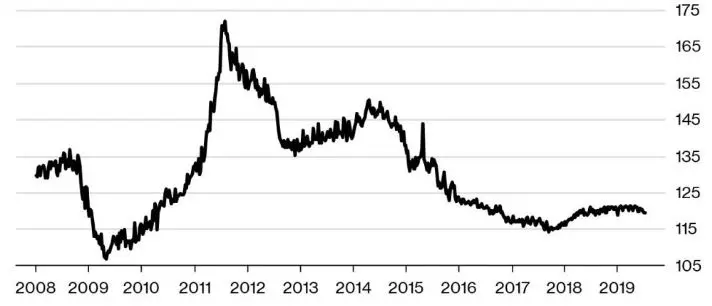
On the other hand, pessimistic analysts argue against a sustainable market shift, because due to the current lack of purchasing power among many buyer segments and a stagnant buyer market in India, where 90% of the world’s diamonds are polished, the supply deficit is unlikely to have a sustainably positive impact on price development. Who will ultimately be right can only be confirmed in the coming years. However, collectors of pink diamonds from the Argyle Mine are already among the winners, as the prices of pink diamonds from the Australian mine, which are the only ones in the world to have produced them, have quadrupled in the last 10 years, with a continuing upward trend.
Yet Western Australia also has “new prospects” to show. In the north of Western Australia, a Canadian company is exploring promising kimberlite formations that contain diamonds. Lithoquest Diamonds Inc. (TSX-V: LDI) is focusing all its efforts on this promising project, which, with its size of 1,500 km², holds good prospects for success.