Editor’s Note
This article contains a significant data discrepancy. The reported 2023 market size of USD 11.1 billion and the 2036 projection of USD 6.65 billion are contradictory, as a projected growth rate of 13.10% CAGR would result in a substantially larger future value, not a smaller one. Readers are advised to treat these specific figures with caution and seek clarification from the source.
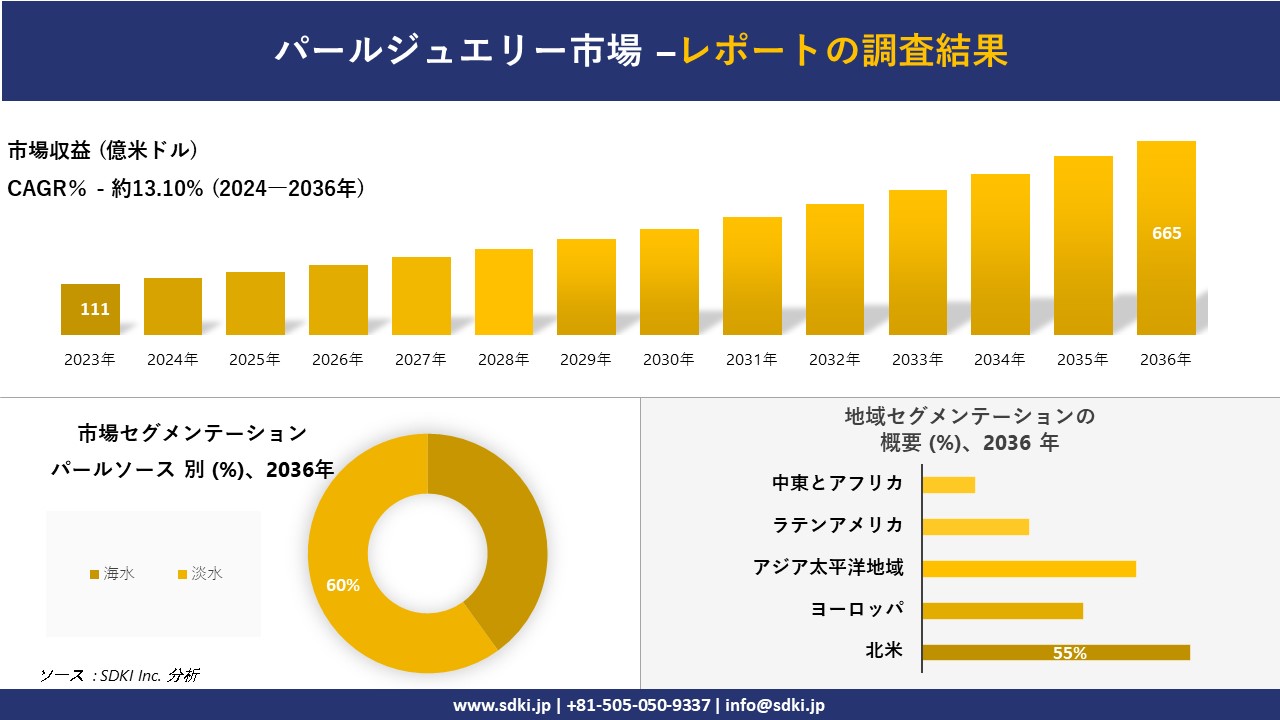
According to SDKI’s analysis, the pearl jewelry market size was recorded at approximately USD 11.1 billion in 2023 and is projected to reach revenues of about USD 6.65 billion by 2036. Furthermore, the market is poised to grow at a maximum CAGR of 13.10% during the forecast period.
SDKI’s market research analysis on pearl jewelry indicates that the market is expected to grow significantly, driven by the rising upper-middle-class and affluent populations worldwide contributing to increased demand for pearl jewelry. Additionally, pearl jewelry is gaining popularity as a fashion accessory, receiving immense support from celebrities and fashion influencers as premium fashion jewelry in global fashion shows and catalogs. Insights into pearl jewelry market trends show that, in percentage terms, approximately 18% of the global population was considered middle-income in 2020.
Furthermore, the decline in the supply of natural pearls and intensifying competition from other gemstones are considered other constraints that could negatively impact the growth of the pearl jewelry market.
Our research has identified recent developments among companies in the pearl jewelry market:
• In November 2022, LVMH Group announced the completion of its acquisition of Pedemonte Group. This acquisition allows LVMH to expand its product range and strengthen its position in the jewelry industry.
• In August 2023, Tasaki announced a collaboration with renowned photographer Tyler Mitchell for a highly anticipated new advertising campaign.
Our pearl jewelry market research segments the market based on pearl source into freshwater and saltwater. Among these, the freshwater segment is expected to hold the largest market share during the forecast period. Freshwater pearls are produced from freshwater mollusks, which typically generate multiple pearls within them, making freshwater pearls abundant and naturally more accessible during cultivation. Freshwater pearls are most often cream, white, or off-white, including shades of lavender, peach, pink, and others. Insights into pearl jewelry market trends indicate that manufacturers can transplant 20-30 mantle tissues into a single mussel, potentially recovering a large number of pearls from one mussel in a single harvest. This volume enables China to produce approximately 1,500 tons of freshwater pearls annually.
Insights into the pearl jewelry market indicate that the Asia-Pacific region contributes significantly to market growth due to the production of freshwater and natural pearls in countries such as China and Japan. Insights into pearl jewelry market trends show that 95% of the freshwater pearl jewelry sold worldwide comes from China alone. Furthermore, the increasing use of pearls in various colors with silver highlights and metals like platinum, tungsten, and steel for manufacturing pearl jewelry is also driving market growth across the Asia-Pacific region.
Additionally, the widespread popularity of pearl earrings, neckpieces, and rings across genders evokes a sense of confidence and grandeur. This has increased the demand for pearl jewelry in Japan. Insights into the pearl jewelry market trends indicate that Japan accounts for about 52.5% of the global pearl production value, making it one of the world’s largest pearl jewelry producing countries.
As stated in our research report, the most prominent players in the global pearl jewelry market are:
• LVMH
• Akuna Pearls
• Kailis Jewellery
• Jewelmer
• Pearl Paradise
In addition, the top 5 players in the Japanese market are:
• K. Mikimoto & Co., Ltd.
• PEARL JEWELRY ITO, INC.
• Pearl Falco Corporation
• TOKYO PEARL CO., LTD.
• TASAKI & Co., Ltd.
