Editor’s Note
The autumn auction season has opened with remarkable strength, as evidenced by blockbuster sales at Christie’s and Sotheby’s. This analysis explores the expert consensus on these results, which point to a robust recovery, especially within the high-end art market.
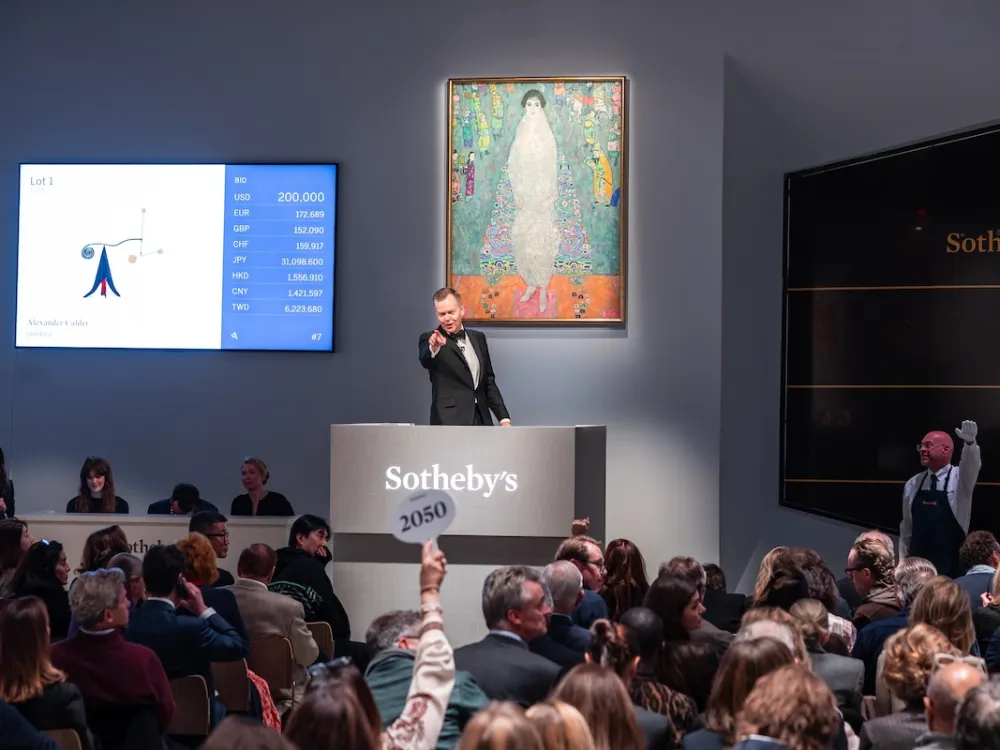
The autumn auction season commenced with major sales held successively at Christie’s and Sotheby’s. These events featured fierce bidding wars and astonishingly high hammer prices, indicating a pronounced recovery trend, particularly in the high-end market. How are experts viewing these auction results?
Christie’s 20th/21st Century Evening Sale in New York on the night of November 17 recorded a total sales figure of $690 million (approximately ¥107.6 billion at recent exchange rates). While it fell short of the pre-sale high estimate of $731.5 million (approx. ¥114.1 billion), it was still a strong result considering the downturn of the past two years (all hammer prices include buyer’s premium unless otherwise stated).
Sotheby’s two evening auctions on November 18th, “The Now & Contemporary” and the sale of works from the estate of the late Leonard A. Lauder (founder of Estée Lauder), also reinforced confidence in the recovering demand for high-end, high-value works. The combined total for the two sales was $706 million (approx. ¥110.1 billion), significantly exceeding the pre-sale estimate of $680.7 million (approx. ¥106.2 billion). Reacting to this outcome, Helena Newman, Sotheby’s Chairman for Europe, proudly stated, “New history was made at the Breuer Building.” Indeed, the numbers justify such confidence.
The driving force behind Sotheby’s remarkable $706 million evening sale total was several ultra-high-priced lots. Notably, Gustav Klimt’s “Portrait of Elisabeth Lederer” (1914-16) from the Lauder collection achieved the second-highest price ever paid for an artwork at auction, and the highest for a work from the 20th century onward, selling for $236.4 million (approx. ¥36.9 billion). The combined total for three Klimt works, including this one, reached $400 million (approx. ¥62.4 billion). For context, Leonardo da Vinci’s “Salvator Mundi,” which set the all-time record in 2017, sold for $450.3 million (approx. ¥70.2 billion), so the gap to second place remains substantial.
The adage in the auction world has long been, “Great art always sells well at auction.” Experts reiterated this sentiment this week. Art world commentator and musician Jeff Magid, a former contributor to ARTnews US, posted on Instagram on the 17th:
However, some experts offer a more measured view. For instance, Philip Hoffman, founder and art advisor at The Fine Art Group, told ARTnews US:
Nevertheless, Hoffman pointed out that the active bidding for works over $20 million (approx. ¥3.1 billion) seen in the week of November 17th was absent in the May auctions. He added that there is now a higher likelihood of famous works finding buyers, with a stronger tendency towards record-breaking figures.
The Klimt was won after a 20-minute bidding war involving six telephone bidders. Patti Wong, a former Sotheby’s executive and now, like Hoffman, part of an art advisory firm, dropped out when bidding reached $200 million. The final contest was between two bidders, settling at $205 million (approx. ¥32 billion). At that moment, Sotheby’s owner, billionaire Patrick Drahi, was seen beaming in a corner of the auction room.
Ultimately, the Lauder collection sale achieved a total of $527.5 million (approx. ¥82.3 billion), while “The Now & Contemporary” auction reached $178.5 million (approx. ¥27.8 billion). The top lot in the latter was a Jean-Michel Basquiat work selling for $48.3 million (approx. ¥7.5 billion). Vincent van Gogh’s “Le Semeur dans un champ de blé au soleil couchant (Sower in a Field at Sunset)” (1888) sold for $11.2 million (approx. ¥1.75 billion), setting a new record for a Van Gogh work in pen, ink, and pencil on paper.
In contrast, Maurizio Cattelan’s controversial solid gold toilet “America” (2016) ended with the disappointing result of receiving only one bid. Its starting price was $12.1 million (approx. ¥1.9 billion), equivalent to the market value of the gold, and the sole bidder won it at that price, with the final price including fees barely exceeding the gold’s value. It was reportedly purchased by Ripley’s Believe It or Not!, the American chain known for its “Odditorium” museums.
Bidding was also very active at Christie’s auction on the evening of the 17th. Mark Rothko’s “No. 31 (Yellow Stripe)” (1958) received 20 bids, finishing at $62.2 million (approx. ¥9.7 billion). Henri Matisse’s “Figure et bouquet (Tête ocre)” (1937) from the DIC Kawamura Memorial Museum collection, with about 30 bids, sold for $32.3 million (approx. ¥5 billion). Marc Chagall’s “The Dream of King David” (1966) saw a 32-bid contest, settling at $26.5 million (approx. ¥4.1 billion), more than double its high estimate.
After the sale, Alex Rotter, Christie’s Global President, told ARTnews US:
Jussi Pylkkänen, former Global President of Christie’s and founder of London-based art advisory firm Art Pylkkänen, said the week’s results, with “intense bidding wars for high-quality works over $10 million (approx. ¥1.56 billion), show the high-end market is back on track.” He offered this view:
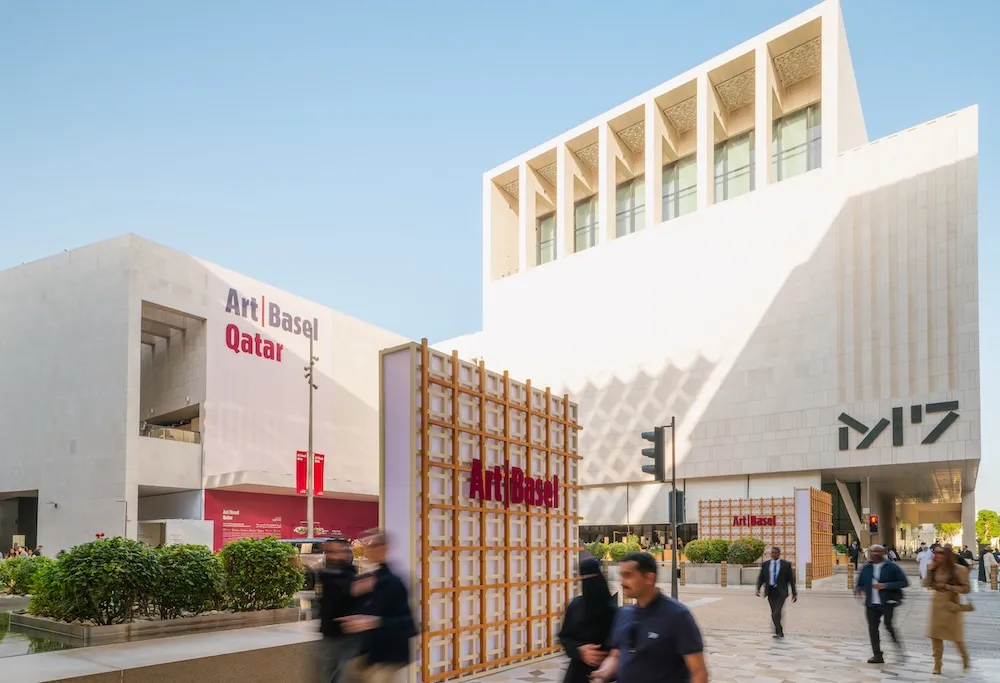
Cultural economist Clare McAndrew, who authors the annual Art Basel and UBS survey report, agrees with Hoffman, telling ARTnews US on the 19th:

Amanda Lo Iacono, former Deputy CEO of major auction house Phillips and founder of Counter A, a platform for art compliance, settlement, and logistics management, noted following the 18th’s results that “enthusiastic buyers remain in the market,” but cautioned that broader context is crucial for assessing market health.