Editor’s Note
This article discusses the rise of lab-grown diamonds, which are scientifically identical to their mined counterparts but face distinct challenges in the secondary market.
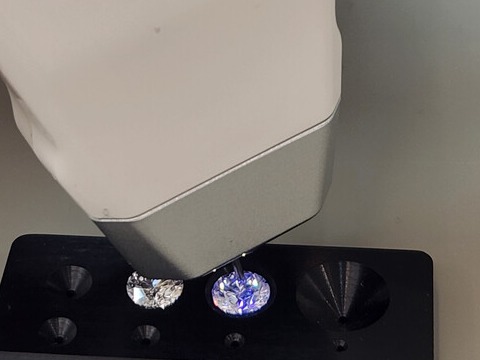
Lab-grown diamonds are chemically, optically, and physically identical to natural diamonds. Even the world’s top diamond brand has created its own line. They can only be distinguished from natural diamonds using advanced fluorescence equipment or synthetic/natural diamond identifiers. Unlike natural diamonds, they are difficult to resell.
A middle-aged woman in her 50s asked this question at a jewelry shop inside a department store in Seoul. An employee replied:
The woman tilted her head and asked, “So it’s not natural?” She ultimately left without making a purchase. Despite being the same diamond, the fact that it wasn’t ‘natural’ but was called a ‘real’ diamond raised doubts.
Lab-grown diamonds, literally meaning ‘lab-grown’ synthetic diamonds, have been introduced as a sustainable mineral and are emerging as an alternative to natural diamonds. A department store official explained, “They are 30-40% cheaper than natural diamond products and are popular among the MZ generation due to the advantage of having no mining process.” Online malls are also holding ‘lab-grown diamond’ exhibitions.
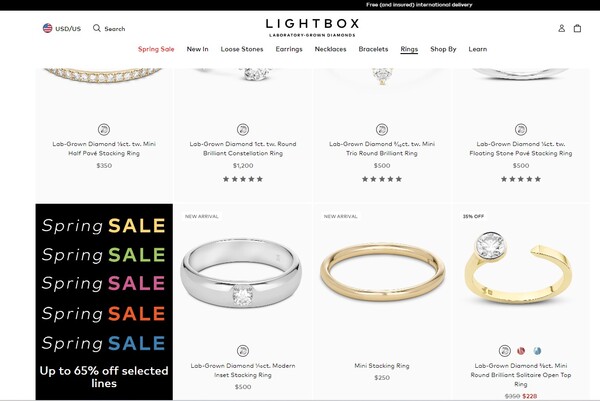
In South Korea, lab-grown diamond products began trending in the latter half of last year, gaining more popularity among the MZ generation than middle-aged and older consumers. Since the latter half of 2022, domestic department stores have started with pop-up stores, and lab-grown diamond brands have opened permanent shops.
Globally, the lab-grown diamond market is expanding rapidly. The market is being reshaped as De Beers, the world’s No. 1 diamond brand, launched its own lab-grown diamond brand. The market share of lab-grown diamonds has now risen to 6%. According to an AP report on February 14, sales of lab-grown diamonds increased by 16% last year compared to the previous year. Bain & Company predicted that the global penetration rate of synthetic diamonds increased to the 8% range by 2021 and is expected to reach 13.8% by 2025.
The difference lies in the ‘time’ and ‘space’ of creation. While natural diamonds are formed over billions of years under high pressure hundreds of kilometers underground in the mantle, lab-grown diamonds grow a rough stone by injecting methane gas and argon oxygen onto a natural diamond seed.
There are two main methods: the High-Pressure High-Temperature (HPHT) method artificially creates an environment similar to natural diamond formation, and the Chemical Vapor Deposition (CVD) method builds up carbon in a film form to create the same crystal structure as natural diamonds. Therefore, it is impossible to distinguish them with the naked eye; only advanced fluorescence equipment or synthetic/natural diamond identifiers can tell.
When lab-grown diamonds first appeared on the market, their prices were higher than now, and some companies were willing to buy them second-hand. However, the industry explains that with technological advancements leading to price drops since their debut, second-hand demand has disappeared.
Although demand for lab-grown diamonds has increased to account for about 50% of the domestic engagement ring market, the price for a 1-carat lab-grown diamond, which was around 3 million won in the latter half of last year, has now fallen to about 700,000 won. The diamond industry predicts that lab-grown diamond prices will gradually decline due to technological development.
said an official from the Korea Diamond Center’s Jongno branch in Seoul.
The natural diamond industry explains that lab-grown diamonds have different value as gemstones. Natural diamonds are valued as gems with ‘scarcity’. While natural diamonds can be sold in the second-hand market for 70-80% of their purchase price, lab-grown diamonds do not sell. Therefore, lab-grown diamonds have no ‘buy-back price’ when resold.
Lab-grown diamonds are closer to ‘accessories’. Their lack of scarcity makes it difficult to view them as valuables. As technology advances, their prices are trending downward, resulting in low exchange value. Considering scarcity, it’s better to purchase natural diamond products.
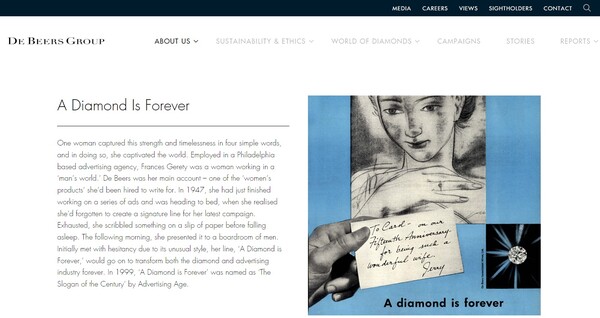
Although the arrival of lab-grown diamonds has begun to change the landscape of the diamond industry, the industry perspective is that the natural and lab-grown diamond markets will coexist. De Beers’ 1947 slogan “A Diamond Is Forever” established diamonds as the ‘king of gems’. While the emergence of lab-grown diamonds has caused price declines, the value as a precious item still lies with natural diamonds.
There is also a view that while lab-grown diamonds have lower carbon emissions during the production process, they are not 100% eco-friendly. According to a Frost & Sullivan report, lab-grown diamonds have 7 times less impact on the natural environment than natural diamonds, causing almost no soil pollution or carbon emissions, and consume about 18 liters of water per carat.
Some lab-grown diamond manufacturers are known to use renewable energy for all manufacturing processes or purchase carbon credits. Some question whether lab-grown diamonds can be viewed as ‘eco-friendly’, citing that the manufacturing process is not fully disclosed.
In 2021, the U.S. Federal Trade Commission (FTC) sent warning letters to eight companies marketing lab-grown diamonds as eco-friendly, pointing out that there is no guarantee the natural diamond seeds themselves are mined in an eco-friendly or ethical manner.
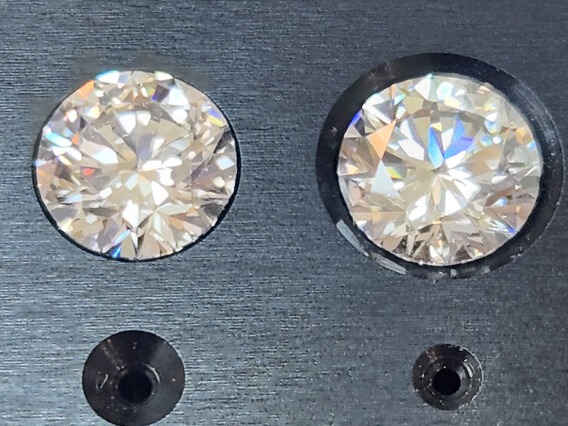
A study commissioned by the Diamond Producers Association (DPA) and conducted by Trucost ESG Analysis (part of S&P Global) reported that diamond rough produced by DPA member companies in 2016 emitted an average of 160 kg of CO2 per carat. This is lower than the average 511 kg of CO2 emitted per carat for synthetic diamond rough.