Editor’s Note
As consumer awareness of sustainability grows, lab-grown diamonds are reshaping the jewelry market. This article explores how these ethically produced alternatives are challenging traditional notions of value and luxury.
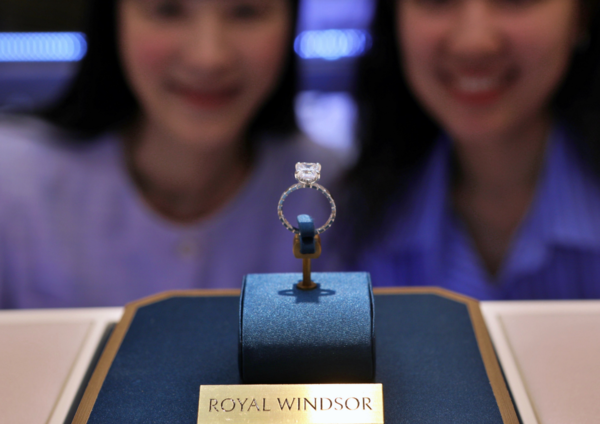
Diamonds, symbolizing ‘eternity’, have been valued for their scarcity, attracting attention not only as wedding gifts but also as investment products.
However, the accelerated supply of ‘Lab-Grown Diamonds’ produced in laboratories has recently led to a sharp decline in natural diamond prices. Companies like E-World and KDT Diamond have successively launched specialized lab-grown diamond brands, expanding into the market.
Lab-grown diamonds are a type of ‘cultivated’ diamond produced in a short time within laboratories under specific conditions. They are synthetic diamonds grown by using small natural diamonds as seeds, and are known to be 100% identical to natural diamonds in physical, chemical, and optical standards.
In contrast, their price is only one-third to one-fifth that of natural diamonds. While a natural diamond costs about 15 million won per carat in department stores, a lab-grown diamond costs around 3.5 to 4 million won, approximately 20% of the natural diamond price.
As their high cost-effectiveness gained popularity among younger generations, luxury conglomerate LVMH invested in a lab-grown diamond venture, and the global diamond brand De Beers also jumped into direct manufacturing.
The popularity of lab-grown diamonds is fueling a decline in natural diamond prices in the global market. De Beers has lowered the price of ‘Select Grade’ rough diamonds, which have high product value, by 40% over the past year. The price per carat dropped from $1,400 in July last year to $850 in July this year. Further price declines are also highly anticipated.
Additionally, lab-grown diamonds produced in laboratories have the significant advantage of being free from the environmental pollution caused by natural diamond mining and labor exploitation issues occurring in some conflict regions in Africa, such as Sierra Leone.
U.S. market research firm Allied Market Research projected that the lab-grown diamond market will grow to $49.9 billion (approximately 65.27 trillion won) by 2030.
Demand is also increasing domestically. According to the Korea International Trade Association, South Korea’s synthetic diamond imports in 2021 were about $5.79 million, a 3.3-fold increase compared to the previous year and a 22-fold increase compared to 2018.
Amid growing interest from young consumers due to the reasonable price and ethical production process of lab-grown diamonds, E-World, which operates ‘The Grace London’ and ‘Lloyd’, is leading the market in South Korea.
According to the industry on the 19th, E-World’s jewelry business division opened the second offline store for its lab-grown jewelry brand ‘The Grace London’, launched in May this year, at Lotte Department Store’s main branch. The Grace London has been so popular that it surpassed 100 million won in sales within one month of its launch in June this year.
E-World’s other jewelry brand ‘Lloyd’ also recently launched 0.5-carat lab-grown diamond rings and necklaces. As the lab-grown diamond market grows, group companies are successively launching related products.
SSG.com also opened an official lab-grown diamond brand section last year. SSG.com showcased about 350 products from three brands—’Segment A’, ‘John Paul Jewelry’, and ‘Dinecci’—highlighting their eco-friendliness and reasonable price range.