Editor’s Note
This article examines the shifting dynamics in the diamond market, where a boom in natural stones has given way to falling prices. Meanwhile, the market for synthetic diamonds is experiencing significant growth.
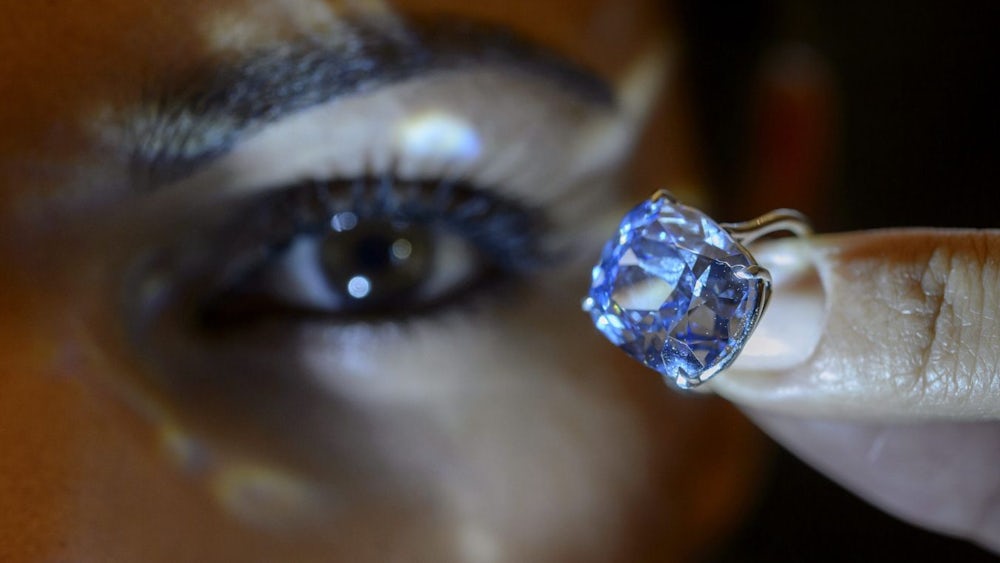
Synthetic diamonds are booming.
During the pandemic, natural gemstones experienced a boom. But now demand is falling, and with it, the price. What’s behind this.
Diamonds are a beautiful gift for a wedding. After all, ideally, love should be as enduring as they are. The good news for generous wedding guests (or people who simply like to treat themselves): The price of natural diamonds has been falling for months. Some market observers even claim it is in a veritable free fall. Market leader De Beers, for example, lowered prices for some products by 40 percent last year. Anyone comparing prices on the websites of common diamond portals with those from a year ago sees the same effect. How does this happen? Isn’t the right time to buy a diamond actually: always?
According to a study by the consulting firm Bain, demand also rose sharply in 2021, as luxury travel was hardly possible, but people wanted to spend their money on luxury. According to Freiesleben, it is completely normal for this boom to eventually flatten out. The US magazine Forbes anticipated this development as early as 2021. However, the now extremely reduced prices suggest that falling demand for rough diamonds also plays a role. And the new competitor is already certain: For a few years now, diamonds from the laboratory have been booming.
Laboratory diamonds, called synthetic diamonds in the industry, are not fake diamonds. They correspond chemically purely to natural diamonds, because during production, the natural circumstances of formation are imitated in various ways. What the carbon compounds experience under heat and pressure inside the earth is simulated in the laboratory or in industrial plants. The product is a stone that can be cut and processed just like natural rough diamonds.
Synthetic diamonds have never seen the inside of a mine, which makes them attractive for many from a social perspective. From a climate perspective, however, not necessarily: Production consumes a lot of energy. But above all, one argument outweighs for many customers: Lab diamonds are significantly cheaper than natural diamonds. Analyst Paul Ziminsky has been observing diamond price developments for a long time. He says the cost of synthetic diamonds has been falling rapidly since 2016 and will likely continue to do so. In August 2023, one pays $5,185 for a normal one-carat diamond from a natural source, and $1,425 for one from synthetic production, as reported by the news portal Quartz. The revenues of lab-grown stone manufacturers have multiplied in recent years, from $700 million in 2016 to $14.6 billion in the year-to-date 2023.
The synthetic stone is now pushing onto the market worldwide, with a market share already at 12.1 percent in 2022. For Germany, there are no valid figures, says Joachim Dünkelmann, managing director of the Federal Association of Jewelers, Jewelry and Watch Retailers.
But global developments show: Lab diamonds are booming. For this reason, Iris Arnold founded the company Novita Diamonds a year and a half ago. The company distributes lab diamonds and also sees opportunities in Germany.
Dünkelmann also confirms that the German market for synthetic diamonds will grow.
The distinction between synthetic and natural diamonds also plays a role for value investment. The fact that only a finite number of natural diamonds are in trade drives up their value. Carbon per se, however, is not a rarity, thus neither are synthetic diamonds. As long as production becomes ever cheaper, synthetic stones are not worthwhile as an investment. Therefore, traders are still cautious with the lab goods, according to Dünkelmann. However, a price low in the production of synthetic diamonds could be approaching, says entrepreneur Iris Arnold:
Whether the diamond price will continue to fall and whether synthetic diamonds will even displace natural gemstones one day remains to be seen. According to analyst Paul Ziminsky, it is unlikely anyway that the markets for natural and synthetic diamonds will balance. Instead, synthetic diamonds would rather be used for fashion purposes, while the value of natural diamonds will rise again over time. In general, however, diamonds are considered rather complicated value investments. For many, they are therefore probably better kept in a ring.