Editor’s Note
The pandemic’s profound impact on the luxury retail sector is clear, with the jewelry and watch industry experiencing a significant revenue decline. While e-commerce offered a partial buffer, the analysis suggests a slower-than-expected digital transition for high-end goods. This article examines the sector’s challenging 2020.

The retail trade for jewelry and watches was severely impacted in the pandemic year 2020 and by the accompanying measures.
The pandemic year tore a revenue hole into the coffers of the jewelry industry. While e-commerce business was able to grow, overall, progress with online trade and digitalization in the luxury segment is only hesitant.
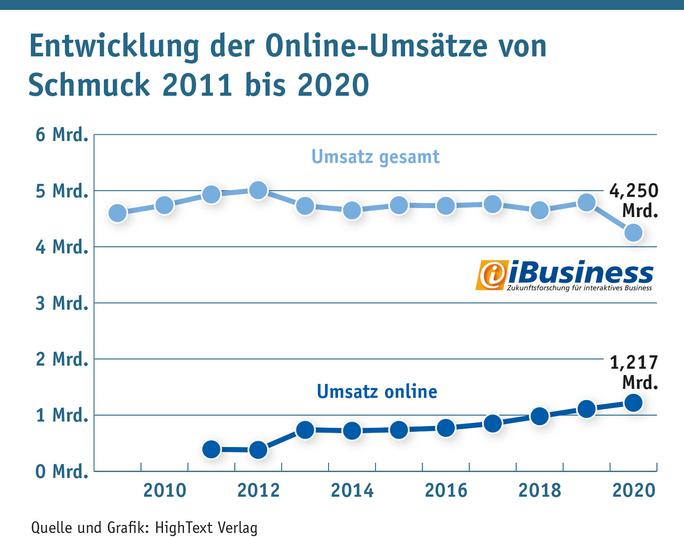
According to a comprehensive analysis by iBusiness.com, industry revenue declined by eleven percent in 2020. This is also evident from figures provided by the Jewelers’ Trade Association (BVJ). In contrast, revenues originating from e-commerce have grown. According to figures from the German E-Commerce and Distance Selling Trade Association (BEVH), the gross revenue in German online trade for “Jewelry & Watches” grew by 9.8 percent to 1.217 billion euros. Despite this revenue growth, the “Jewelry & Watches” segment this year remains among the product groups that have stayed at a comparatively low level online. Not least because the industry continues to resist online trade and digitalization quite successfully. By 2025, the market share of e-commerce is expected to reach a maximum of 35 percent.
Despite growth, online trade could not compensate for the revenue slump in the jewelry industry during the pandemic year.
In his opinion, the industry’s massive investments in digitalization and online marketing in 2020 did not lead to a better result.
The industry is indeed currently fighting on several fronts: The Corona pandemic shaped revenue development, compounded by store closures and structural changes within the industry. However, increased international competitive pressure is also among the challenges.
The watch industry is grappling with a particular problem: In the wristwatch market, the electronics industry is tactically challenging the traditional business with smart and connected watches. While the share of watches sold in specialist retail remains relatively stable, the share of mechanical and quartz-powered watches is declining to the benefit of electronic products.
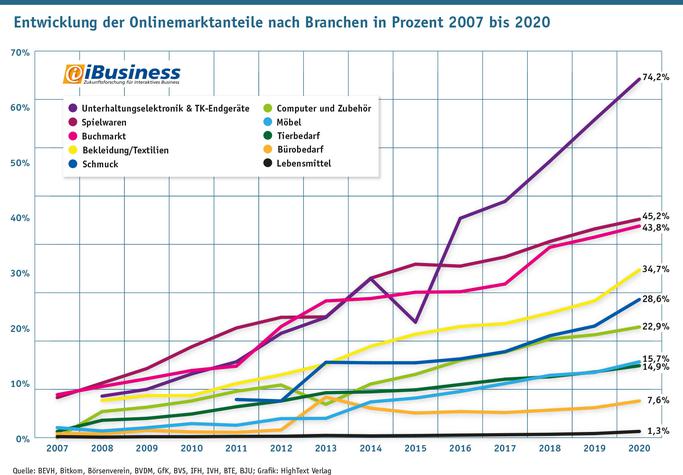
The revenue share of online trade in the jewelry industry is growing but will remain in a niche in the medium term.
It is clear that digitalization is not stopping at the jewelry industry: The Trend Index of Inhorgenta Munich shows how closely the various distribution channels in the jewelry & watch industry have now converged. A representative sample of 1,040 women and men aged 18 to 35 were asked where they prefer to buy high-quality jewelry or watches. At the top, with 44 percent, are local jewelers and watch retailers, followed by department stores with 40 percent, retailers’ online shops with 38 percent, and finally manufacturers’ online shops with 37 percent. Particularly concerning younger consumers, online is becoming increasingly important.
However, the growing importance of e-commerce and digitalization is meeting resistance from many industry representatives in the luxury segment. Consequently, discussions about competing sales channels will become more significant within the industry. For years, manufacturers and specialist retailers have resisted online trade. Not least to maintain the usual market mechanisms. For example, the Hamburg-based jewelry chain Wempe threatened to remove the luxury brand Nomos Glashütte from its assortment. The reason was Nomos’s online strategy: The Glashütte watch manufacturer announced it would sell its new watches directly on the portal Chronext in the future and offer refurbished watches via Chrono24. This also affected pricing, where confidentiality and discretion are two important pillars. Yet the watches ended up and continue to end up on the market with significant discounts. A highly emotional dilemma with online trade.
Moreover, millennials are an increasingly important consumer group that aligns its shopping behavior much more strongly with the internet than previous generations. And this also applies to luxury goods. This new customer group demands corresponding online shopping opportunities, which, however, must offer the same experiences as brick-and-mortar stores. Through such online shops, including those of major luxury brands, and direct sales, the traditional specialist retail model is increasingly being called into question. For luxury brands, e-commerce is quite attractive as it eliminates the jeweler’s margin. Very expensive goods are often still excluded from e-commerce, but the trend is clearly moving towards direct sales and internet sales.
Thus, although high-priced products are preferably purchased in stores, luxury consumers demand an exciting online experience. Designing this accordingly will be one of the upcoming tasks for the trade.