Editor’s Note
This article highlights a keynote speech on the challenges and future of the Korean jewelry industry, delivered at the 2024 Jewelry Festa. It underscores a significant contraction in the domestic market while pointing to evolving consumer trends and potential pathways for growth.
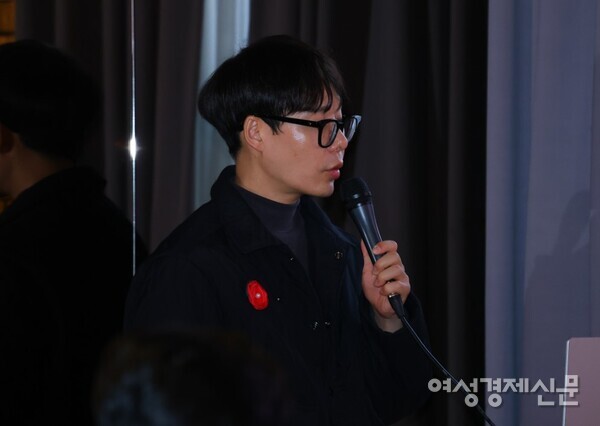
Researcher Park Se-heon of the Wolgok Jewelry Industry Research Institute delivered a keynote speech on ‘The Present and Future of K-Jewelry’ at the ‘2024 Jewelry Festa’ held at the Jeongdong 1928 Art Center Theater in Jongno-gu, Seoul, on the 11th.
According to Researcher Park, the size of the Korean jewelry market was recorded at KRW 7.7315 trillion, a 6.1% decrease compared to the previous survey. As of 2023, the domestic jewelry market size decreased by 11.4% to KRW 5.2569 trillion, while the imported jewelry market increased by 7.7% to KRW 2.4746 trillion.
In terms of market share, domestic jewelry held 68% and imported jewelry 32% of the total market, but in terms of growth potential, domestic was overshadowed by imports. Researcher Park pointed out, “The rise in gold prices has increased product selling prices and average order value, yet the market size has shrunk, meaning a clear decrease in sales volume.”
The discussion continued on the impact of the private consumption crisis on the jewelry industry.
Researcher Park identified three themes the jewelry industry must consider for the future: overseas expansion, liquid consumption, and enhancing competitiveness using AI.
Liquid consumption refers to consumption patterns that are not fixed, move frequently like liquid, and have very short trend cycles. Consumers with this tendency place high value on the purchasing experience but are characterized by weak loyalty to specific brands and strong environmental awareness.
Regarding strengthening AI competitiveness, he suggested, “If fashion jewelry brands, for which speed is crucial, can develop the capability to utilize this aspect to the maximum, productivity will definitely increase. From a jewelry business perspective, generative AI can be primarily used in concept planning, marketing and promotion, customer management, and product design development.”
He continued, “I believe generative AI will be most effectively applied in these two areas: ‘Marketing and Promotion’ and ‘Product Design Development’,” and introduced real cases produced together with CEO No So-dam of 1064 Studio and CEO Lee Soo-young of Grouping Media.