Editor’s Note
The record-breaking $17.6 million sale of a Patek Philippe watch is more than a headline—it’s a signal. This article examines what such astronomical figures reveal about the evolving priorities and future direction of high-end collectors.
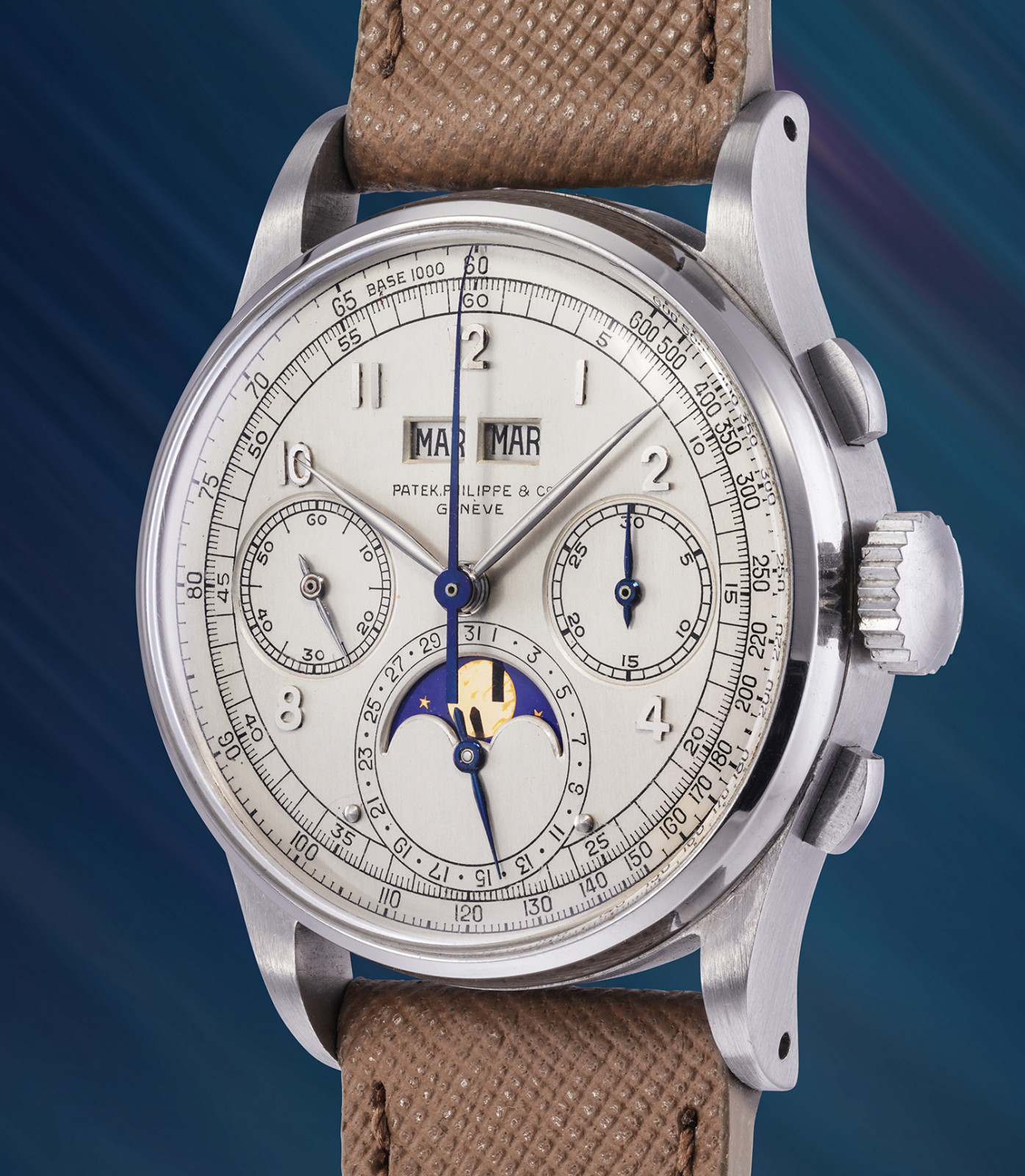
When a Patek Philippe 1518 sells at auction for US$17.6 million, it’s worth asking: what does this say about where collectors are—and where they’re headed?
The auction hammer fell at CHF 14 million this November, and with it came the inevitable headlines: another record, another eye-watering sum, another Patek Philippe reference 1518 in stainless steel proving its supremacy. At approximately US$17.6 million (HK$171 million), Phillips had just sold the most expensive vintage Patek Philippe wristwatch ever auctioned—the very first known steel example of a watch introduced in 1941 as the world’s first series-produced perpetual calendar chronograph.
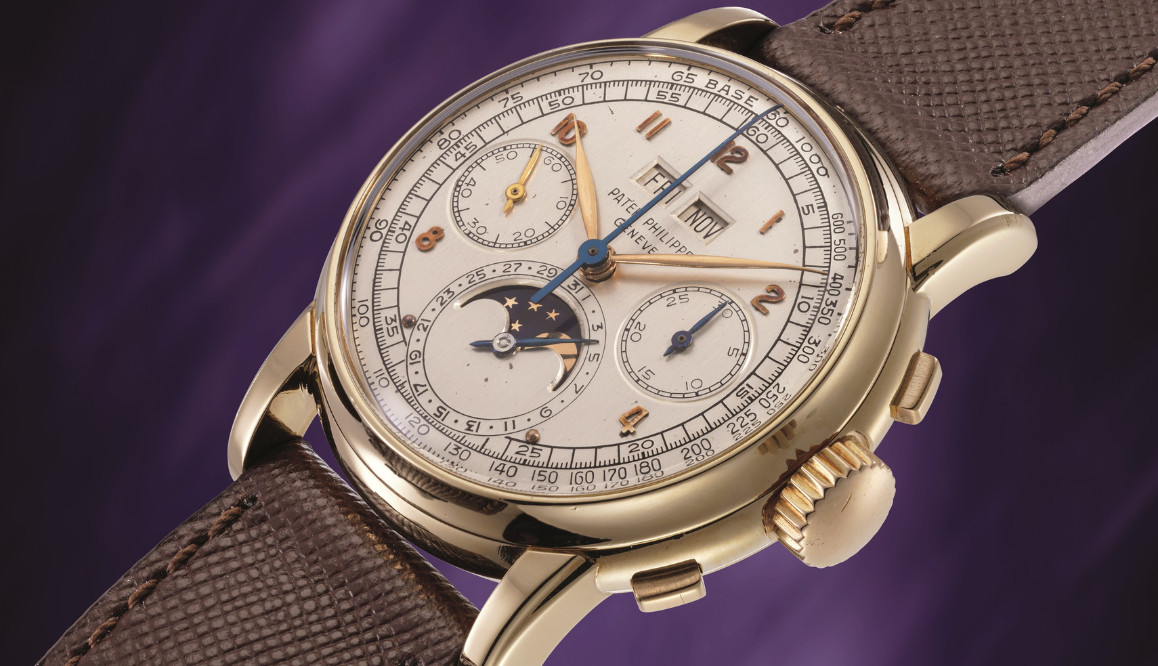
Yet lurking beneath the celebratory press releases is a question collectors increasingly whisper about: at what point does rarity become a liability rather than an asset? When a watch is one of only four known examples to survive over eight decades, how does one verify its authenticity with confidence? The murmurs surrounding this particular 1518—speculation about restoration, questions about originality—highlight a tension the market hasn’t fully resolved.
Consider the fundamentals that make the steel 1518 the collector’s Holy Grail. Of just 281 pieces produced—mostly in yellow gold, fewer than 60 in pink gold—only four were crafted in stainless steel. The paradox is irresistible: an ultra-complicated movement, representing a groundbreaking technical milestone that established Patek Philippe’s legacy in complicated wristwatches, housed in a ‘humble’ material traditionally reserved for utilitarian tool watches. That tension between high complication and modest casing is precisely what collectors have learned to prize. This November sale surpassed even the previous steel 1518 record Phillips set in 2016 at CHF 11 million (around US$11.1 million), proving that the market’s appreciation for such contradictions has only deepened.
But here’s the uncomfortable truth: extreme rarity creates an authentication vacuum. When only four examples exist, there’s no statistically meaningful population against which to compare details. Every idiosyncrasy becomes either “proof of uniqueness” or “evidence of restoration,” depending on who’s making the argument. Unlike more common references where collectors can cross-reference dozens or hundreds of examples to establish what’s “correct,” the steel 1518 exists in a category so rare that expertise itself becomes somewhat speculative.
Does this make the US$17.6 million purchase overrated? Not necessarily—but it does raise profound questions about what we’re actually valuing. If restoration is confirmed (and many in the collecting community believe it is), then buyers aren’t acquiring an untouched artefact but rather a carefully curated representation of what such a watch might have looked like. There’s nothing inherently wrong with that—museums restore paintings, after all—but it demands a different valuation framework.
The counterargument, of course, is that at this level of rarity, perfect originality is a fantasy. An 84-year-old watch that’s been worn, serviced and survived through decades will inevitably bear the marks of its journey. Perhaps the more sophisticated collector understands this and values the watch not for mythical perfection but for its historical significance and the role it played in horological evolution. The 1518, after all, wasn’t just another watch—it was the pioneering series-produced perpetual calendar chronograph that set the foundation for everything that followed.
Yet focusing solely on nine-figure watch sales misses the broader transformation underway. Look at Phillips’ “The Geneva Jewels Auction: V,” where the Vanderbilt Family Jewels collection achieved CHF 3.43 million (US$4.25 million, HK$41.6 million)—four times its low estimate. What drove that result wasn’t just the Tiffany & Co and Cartier names signed onto these pieces, but something collectors are increasingly demanding: provenance and narrative. Period jewels with distinguished histories and exquisite craftsmanship are commanding renewed passion, signalling that today’s buyers want more than objects—they want stories they can authenticate and defend.