Editor’s Note
This profile of Gimau Auction House highlights a refreshing approach in the luxury market. Moving beyond mere transactions, founder Guillermo Garza has built a business on the principles of transparency and trust, focusing on the intrinsic value and personal history of each item. In an industry often defined by opacity, their commitment to honest commerce offers a compelling alternative.
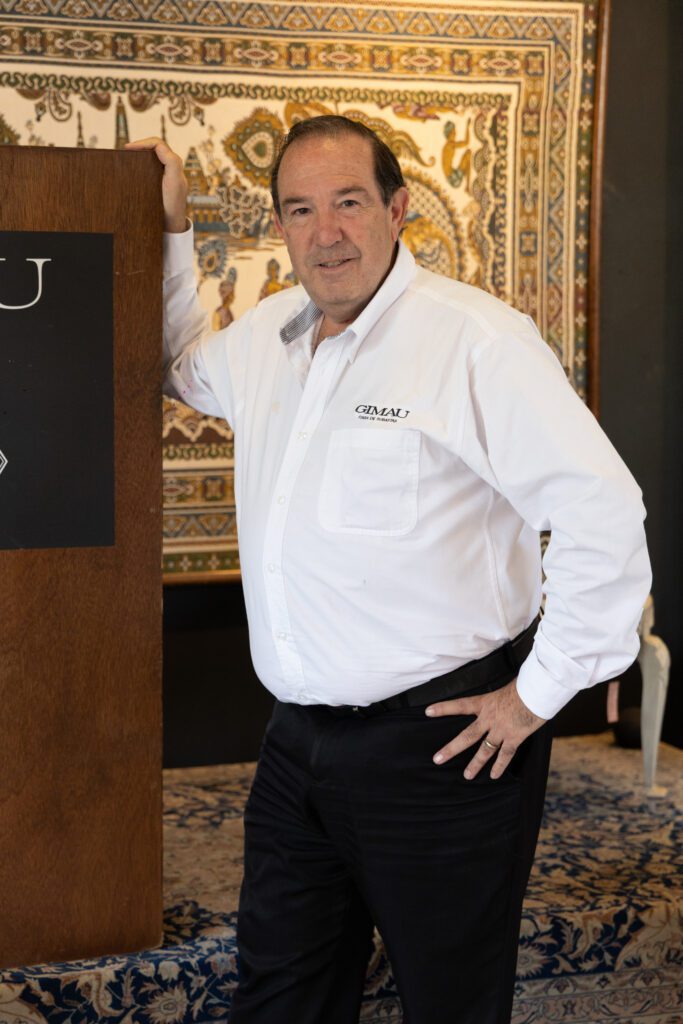
In a world where most seek to buy cheap and sell high, Guillermo Garza chose a different path: that of adding real value to those looking to part with an object that, at some point, meant something special.
From jewelry and watches to high-value art pieces, Gimau Auction House, located today in the urban center of San Pedro Garza García, operates under a philosophy uncommon in commerce: transparency, honesty, and trust.
Guillermo recounts that he worked for two jewelry factories and a company focused on diamonds. His closeness with clients and his trained eye made him notice a clear need: there was no one helping the public sell their pieces with real knowledge of their value.
Therefore, together with his wife Gloria Guadalupe Peña, he began shaping Gimau in the year 2000. He named it by combining his name with that of Mauricio Fernández, the current Mayor, with whom he had planned a partnership that couldn’t materialize due to his political commitments.
Two years later, in November 2002, they held their first auction. From one per year, they now have three auctions per month and boast a network of over 60 experts who evaluate everything from watches to works of art, including coins, stamps, and all kinds of objects.

“We have auctioned paintings by Rivera, Tamayo, Siqueiros… even objects from former presidents and great businessmen. But also jewelry that arrives with touching stories, like an old pocket watch, which we sold for 120,000 pesos when its owner asked for only 5,000,” he recounts.
That anecdote is one of the most emblematic for him. A woman approached desperately, seeking to make a sale due to a personal emergency. Garza, seeing its potential, lent her the money instead of buying it from her.
Months later, after a repair and a proper valuation, the watch reached a price that changed its owner’s life. Because when he tried to locate her, he realized she was in the hospital. By a “divine coincidence,” as his wife would say, the payment for the watch allowed her to cover the expenses.
Gimau has also had memorable moments, such as the auction of the belongings of Luis Donaldo Colosio and Diana Laura Riojas, which remained safeguarded for decades until their children decided to put them up for sale to support women with cancer.
Or the auction of the estate of Francisca de Hoyos de Santos, whose family decided to make it public.
“We had the opportunity to value everything she left for her children and grandchildren. It’s great that people know the provenance,” he recounts.

Transparency is the heart of their work model: the seller knows the estimated value, the public sees the piece, and bidders offer openly.
Today, from a colonial-style house in San Pedro, Gimau not only sells valuable pieces: it weaves relationships of trust with each client. Some people have cried with emotion after a successful auction.
In over 20 years, they have already conducted more than 760 auctions. Not surprising, as it is a community that values collecting and antiques.
To this day, everything that is auctioned—jewelry, art, furniture, antiques—belongs to private individuals. From entire inheritances to collections that travel from Europe, as well as some destined for charitable associations.