Editor’s Note
This article examines the quiet revolution underway in China’s luxury sector, where a new wave of domestic brands is leveraging cultural heritage and digital savvy to resonate with a younger, more discerning generation. It explores how “Made in China” is being redefined as a mark of quality and identity.
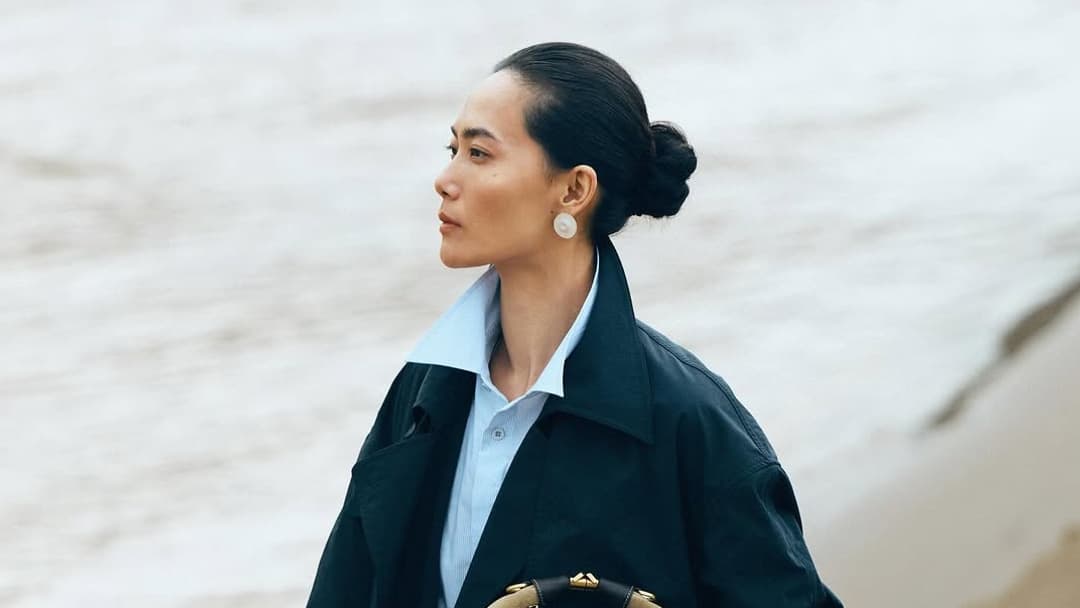
Songmont, To Summer, Laopu Gold, Mao Geping… These may be unfamiliar names, but they are disrupting the Chinese luxury market. Faced with a demanding, digitally native, and culturally confident generation, “Made in China” is becoming an asset, not just a challenger.
Songmont, Laopu Gold, Mao Geping… These names might mean nothing to you. Yet, they are the ones shaking up one of the world’s most coveted and scrutinized markets: luxury in China. Long confined to the role of challengers, these local brands are now asserting themselves with unexpected force, to the point of attracting the attention of Western giants. China no longer just wants to consume luxury; it wants to create it.
The most telling sign of this change is a discreet scene: Bernard Arnault, on a visit to China, steps into Songmont, then into Laopu Gold, a prodigy of Chinese jewelry. The man who embodies global luxury murmurs an “exquisite” before a 24-carat gold necklace.
An anecdote, certainly, but also the image of a shift. Indeed, for years, luxury in China was told in a foreign language: French logos, Italian craftsmanship, European narratives.
Today, a new generation of consumers, educated and culturally confident, no longer fully identifies with this. They want objects that speak their language, evoke their landscapes, and reflect their history. Faced with this demand, Chinese brands have learned to respond with a precision and sensitivity that Western houses sometimes struggle to capture. Here, local brands play at home, mastering the codes of live-streaming, the dynamics of Tmall communities, and podcasts that blend intimacy, empowerment, and culture. In Shanghai, some customers identify more with a Songmont-signed podcast episode than with a global Dior campaign.
Laopu Gold embodies this renewal with an almost narrative obviousness: 24-carat gold is sculpted here into dragons, phoenixes, or Tibetan mantras, and the pieces seem to be as much talismans as jewelry. Add to this fixed prices, exclusive product launches, and a base of loyal customers, and you get online sales multiplied by 4, growth of over 100% in some stores, and an estimated market value of $21.7 billion.
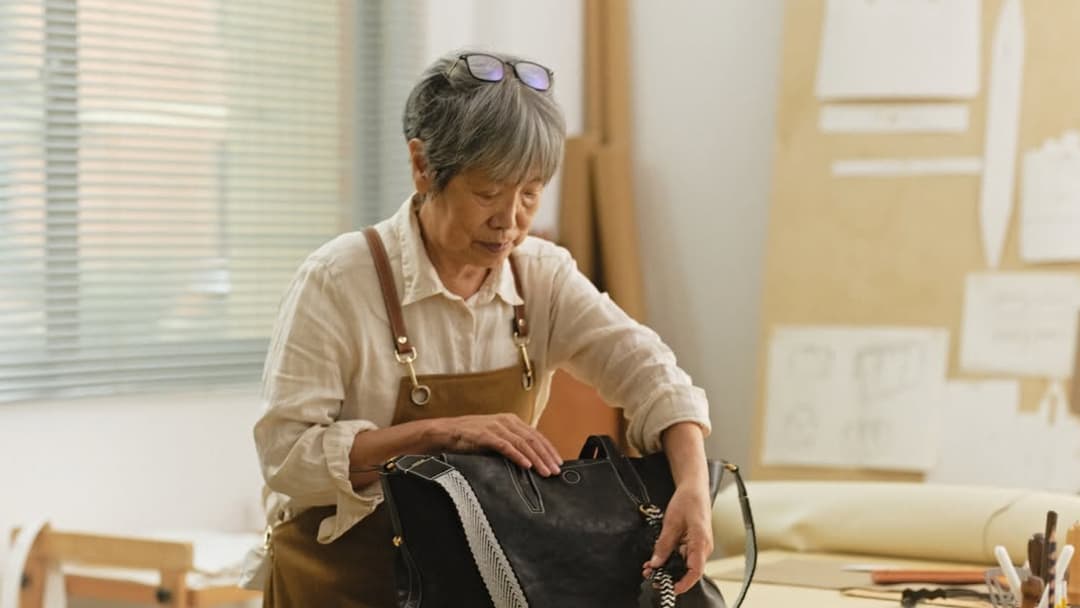
The leather goods brand Songmont is also enjoying clear success with a 90% increase in its online sales in two years, thanks notably to storytelling conceived by and for young women. On the brand’s website, one learns about the genesis of the house’s creation and its vision. Songmont’s first bag was handmade by Ms. Fu, Song’s mother, a talented artisan and sewing expert. The brand now employs “grannies,” seamstresses averaging 65 years old, who work for the house in Shanxin village, thus fighting ageism and unemployment.
Another notable Chinese brand is the perfumery house To Summer, in which the global beauty giant L’Oréal announced a minority investment, and whose sales double those of the American brand Bobbi Brown on Tmall.
To this quest for identity is now added the question of value for money. Indeed, the new Chinese generation is no longer content with desire; it calculates, compares, arbitrates. And the verdict is often harsh. The Max Mara 101801 coat, often seen as a bourgeois wardrobe essential, now exceeds $4,200. Many see this as a symbol of luxury that has become disconnected from the tangible value of its products.
Local brands capitalize on this point. The brand Icicle, for example, whose minimalist aesthetic could rival that of the Olsen sisters’ The Row, and also often nicknamed the “Chinese Hermès,” offers its “Aircoat” in cashmere-wool between $1,100 and $2,800. Nice material, careful manufacturing, “reasonable” price: the differential speaks for itself.
The same dynamic is at play in the leather goods sector. Where an Hermès model trades between $5,000 and $8,000, Songmont sells “similar” models for around $420. Between the heritage prestige of one and the contemporary agility of the other, many Chinese customers have decided: paying six to ten times more for a logo no longer has the same legitimacy.