Editor’s Note
This article highlights a critical resource allocation issue in India, where a scarce 1% of the nation’s limestone reserves is of high ‘chemical-grade’ quality, essential for various industries. With 95% of this premium material concentrated in just three districts and reportedly being diverted for cement production, it raises significant questions about long-term industrial strategy and sustainable resource management.
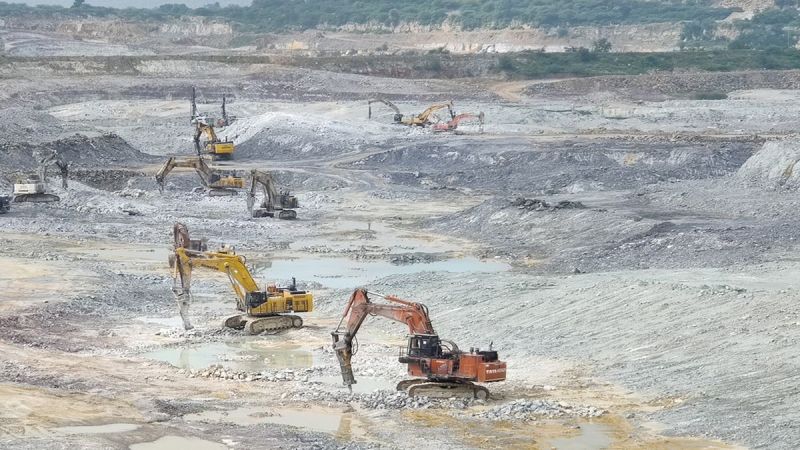
In India, approximately 95% of the available limestone is of cement grade and is abundantly available in most states, enabling cement production across nearly all regions. However, only about 1% of the country’s limestone reserves consist of high-quality ‘chemical-grade limestone’. A staggering 95% of this chemical-grade limestone is found solely in the districts of Nagaur, Jodhpur, and Pali. Consequently, the entire nation’s industrial demand for high-quality lime is being supplied from this region.
Despite this, the mining department recently auctioned mining blocks in these areas that were so large (10-10 kilometers each) that no one except major cement companies could dare to bid for them.
Farmers and small entrepreneurs in the area argue that the limestone mines reserved for the cement industry in Nagaur and Jodhpur districts should be de-reserved because only chemical-grade limestone is available here. Since lime kiln industries are micro, small, and medium-sized enterprises (MSMEs), they propose that these mining blocks be converted into smaller plots of 5-10 hectares and allocated under the category of ‘minor minerals’.
The majority of the limestone in these areas, particularly in Nagaur district, is located on land leased by farmers. Exploiting the mineral without their consent is not possible. For a long time, five or six large blocks of ten kilometers each were created in the Kheenvsar tehsil of Nagaur district and reserved for the cement industry. Several parties were allocated prospecting licenses for these blocks, but no work could commence due to local opposition.
Approximately 500 lime kiln and hydrated lime industries, all falling under the MSME category, are operational in these regions based on high-quality limestone. Being a rural industry, it has become a major source of employment in these rural areas. These industries provide direct employment to between 50,000 and 100,000 people and indirect employment to about 300,000 people.
Meghraj Lohia, President of the All India Lime Manufacturers Association, stated that his association has repeatedly raised the demand with NITI Aayog to classify chemical-grade limestone as a minor mineral. His organization presented its case at a NITI Aayog meeting in Delhi on December 19, 2018, regarding limestone policy. Recently, on April 19, 2024, NITI Aayog organized another meeting on ‘Limestone Policy’, where the association participated and reiterated this demand.