Editor’s Note
This report highlights robust growth in the Middle East’s secure logistics sector, projected to double in value by 2033. The sustained reliance on cash, alongside expanding financial infrastructure, remains a key driver for this market.
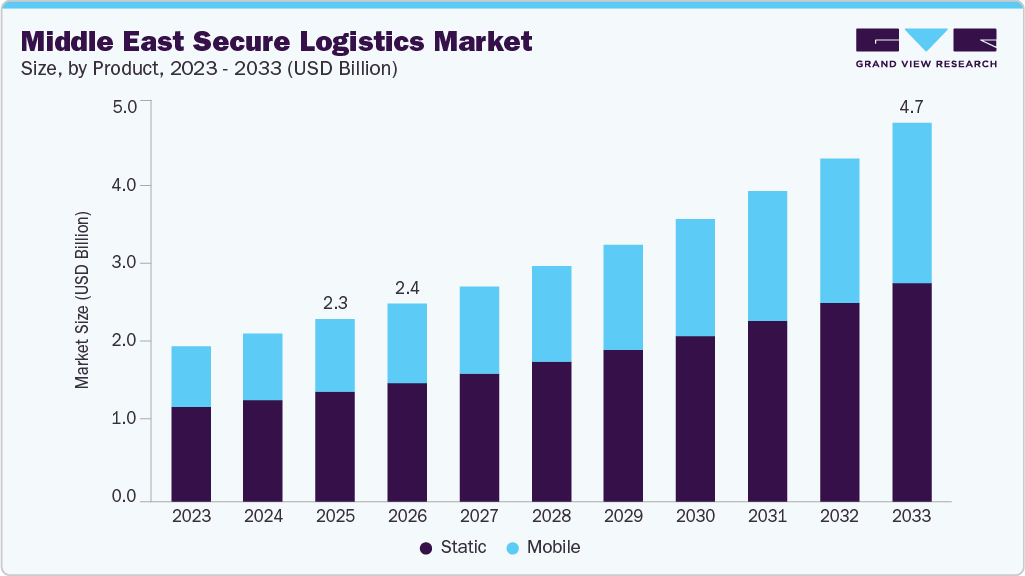
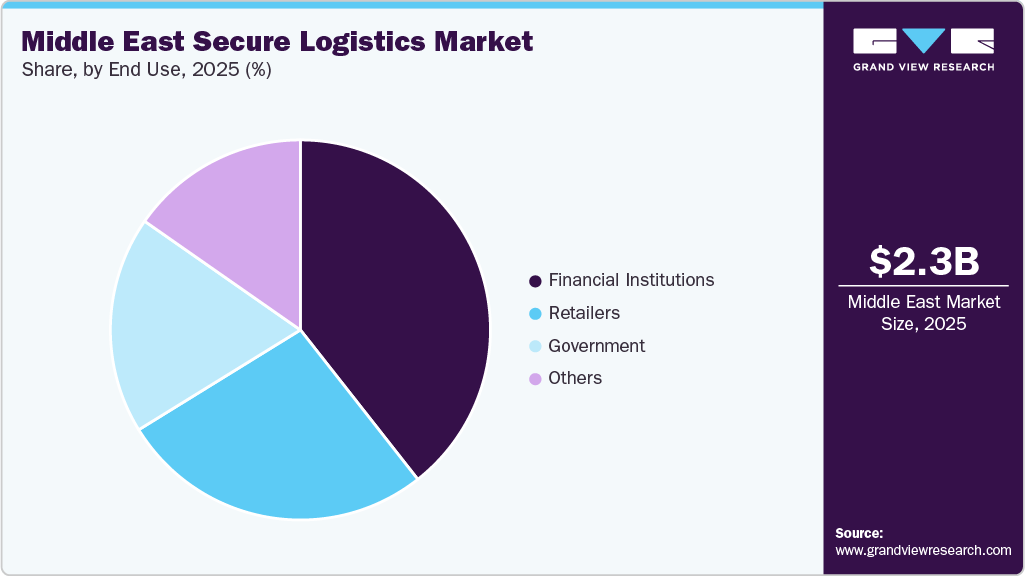
The Middle East secure logistics market size was estimated at USD 2.26 billion in 2025, and is projected to reach USD 4.70 billion by 2033, growing at a CAGR of 9.7% from 2026 to 2033. The market is witnessing steady growth, driven by the expansion of banking and ATM networks and sustained cash usage across retail and government transactions.
- The KSA secure logistics market accounted for a 45.9% share of Middle East in 2025.
- By type, the static segment accounted for the largest market share of 60.2% in 2025.
- By mode of transport, the road segment held the largest market share in 2025.
- By application, the cash management segment dominated the market in 2025.
- 2025 Market Size: USD 2.26 Billion
- 2033 Projected Market Size: USD 4.70 Billion
- CAGR (2026-2033): 9.7%
- KSA: Largest market in 2025
- UAE: Fastest growing market
The rising cross-border movement of valuables and increasing security requirements for high-value sectors such as oil & gas, aviation, and large-scale infrastructure projects are other factors projected to drive the market growth. Additionally, regional investments in smart cities, airport modernization, and large public events are accelerating demand for professional cash-in-transit (CIT), bullion transport, and secure vaulting services, supporting long-term market expansion despite increasing digital payment adoption.
Government-led initiatives aimed at expanding formal banking access across the Middle East have led to a steady increase in ATM networks and physical banking touchpoints. Publicly available data from institutions such as the World Bank and the IMF Financial Access Survey highlight continued investments in cash access infrastructure, particularly in emerging Middle Eastern economies. Each addition to the ATM and branch network increases the operational requirement for cash replenishment, transportation, and secure handling, reinforcing the role of specialized secure logistics providers in maintaining system reliability and service continuity.
Cash remains a widely used transaction medium across several Middle Eastern economies, particularly in small retail and transport services, as well as in certain government-linked disbursements. Government-authorized datasets, including the World Bank Global Findex, indicate that a meaningful share of the population continues to rely on cash for daily transactions despite the availability of digital payment alternatives. This sustained cash circulation requires organized cash collection, sorting, storage, and redistribution, thereby supporting consistent demand for secure logistics services across the banking and commercial sectors.
National development plans and public infrastructure programs across the Middle East have increased the movement of high-value assets and sensitive materials. Government authorities overseeing aviation, transport, energy, and large public facilities require secure transport solutions for cash, critical documents, and valuables associated with operations and large-scale projects. These requirements have increased engagement with licensed secure logistics providers capable of meeting regulatory, insurance, and risk-management standards set by public sector entities.